


A cross-sectional study exploring the relationship between the dietary inflammatory index and hyperlipidemia based on the National Health and Nutrition Examination Survey (2005-2018)
- PMID: 37653500
- PMCID: PMC10470145
- DOI: 10.1186/s12944-023-01908-x
A cross-sectional study exploring the relationship between the dietary inflammatory index and hyperlipidemia based on the National Health and Nutrition Examination Survey (2005-2018)
Erratum in
-
Correction: A cross‑sectional study exploring the relationship between the dietary inflammatory index and hyperlipidemia based on the National Health and Nutrition Examination Survey (2005-2018).Lipids Health Dis. 2023 Sep 27;22(1):161. doi: 10.1186/s12944-023-01924-x. Lipids Health Dis. 2023. PMID: 37752583 Free PMC article. No abstract available.
Abstract
Background: Hyperlipidemia is closely associated with dietary patterns and inflammation. However, the relationship between hyperlipidemia and the inflammatory potential of diets remains unexplored. The research was conducted to examine the relationship between hyperlipidemia and dietary inflammatory index (DII).
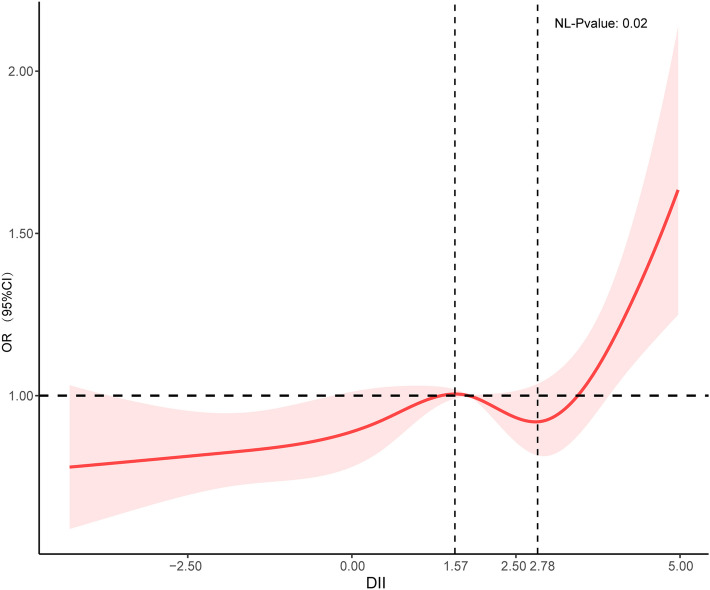
Methods: The data utilized in the research were acquired from the National Health and Nutrition Examination Survey (NHANES) from 2005 to 2018. The information on dietary intake was gathered by conducting 24-h dietary recall interviews. Restricted cubic spline (RCS) and Survey-weighted logistic regression were utilized to determine the association between DII and hyperlipidemia. Furthermore, stratification analysis was carried out.
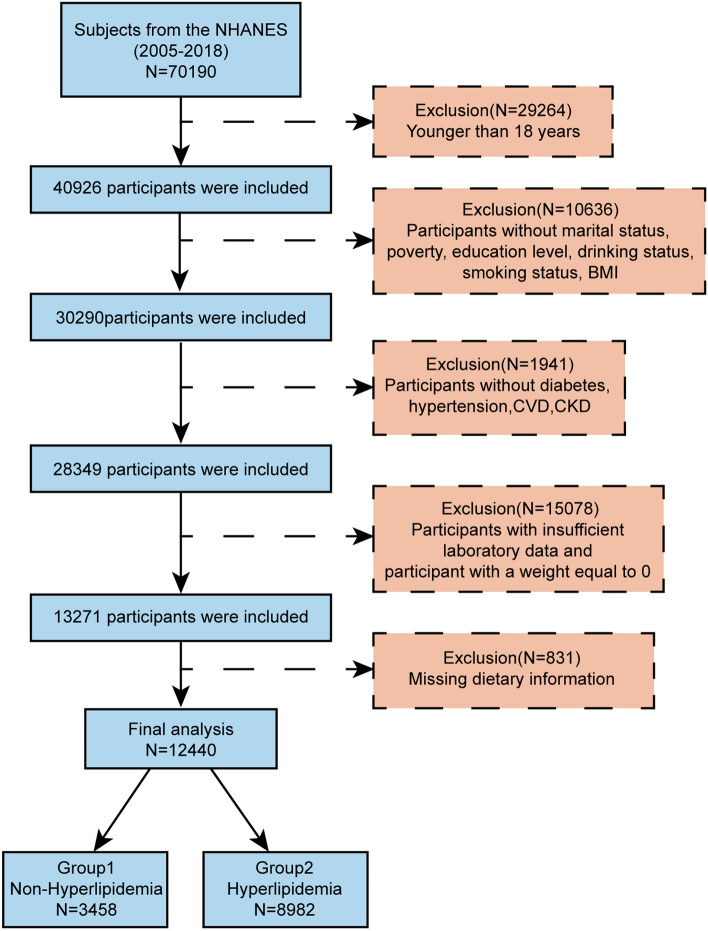
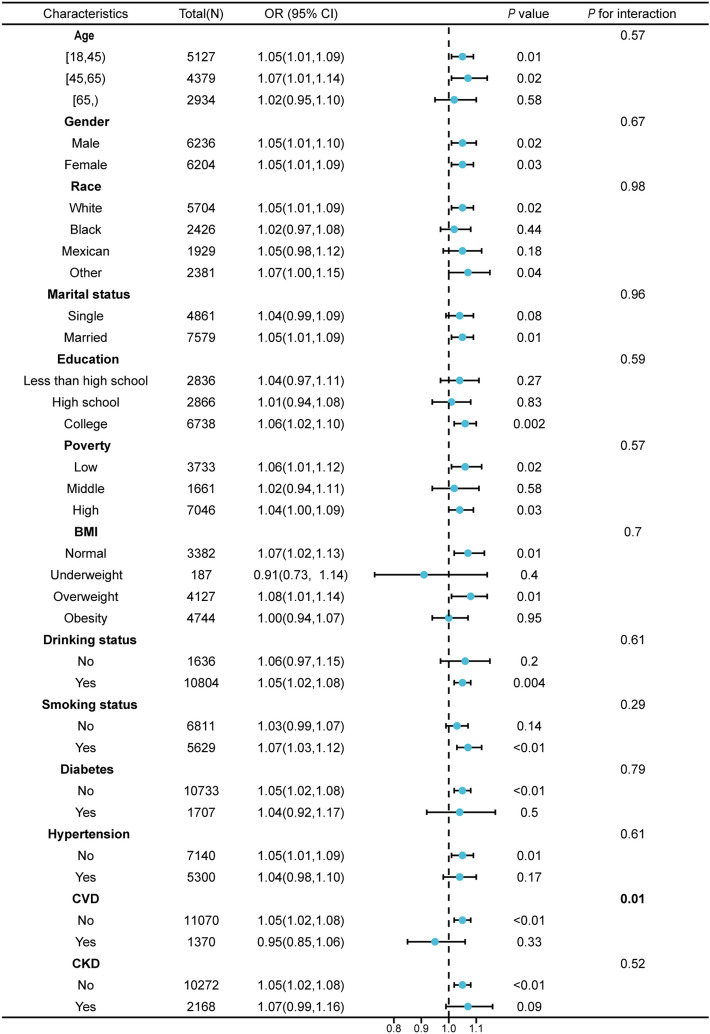
Results: This study included 8982 individuals with and 3458 without hyperlipidemia. Participants with hyperlipidemia exhibited higher DII scores than those without hyperlipidemia. Following adjustment for gender, age, race, education level, marital status, poverty, drinking status, diabetes, hypertension, smoking status, body mass index (BMI), chronic kidney disease (CKD), cardiovascular disease (CVD), and hemoglobin (Hb), the association between the prevalence of hyperlipidemia and DII remained significant. The RCS data demonstrated that the hyperlipidemia prevalence did not exhibit an increase until the DII score was approximately 2.78. Stratification analysis revealed that the association between DII and hyperlipidemia persisted in all subgroups.
Conclusions: DII was associated with hyperlipidemia, and the threshold DII score for the risk of hyperlipidemia was 2.78.
Keywords: Diet; Dietary inflammatory index; Hyperlipidemia; Inflammation; National Health and Nutrition.
© 2023. BioMed Central Ltd., part of Springer Nature.
Conflict of interest statement
The authors declare no competing interests.
Figures
References
-
- Estruch R, Martínez-González MA, Corella D, Basora-Gallisá J, Ruiz-Gutiérrez V, Covas MI, Fiol M, Gómez-Gracia E, López-Sabater MC, Escoda R, Pena MA, Diez-Espino J, Lahoz C, Lapetra J, Sáez G, Ros E. PREDIMED Study Investigators. Effects of dietary fibre intake on risk factors for cardiovascular disease in subjects at high risk. J Epidemiol Community Health. 2009;63(7):582–8. doi: 10.1136/jech.2008.082214. - DOI - PubMed
MeSH terms
LinkOut - more resources
Full Text Sources
