


Estimating disparities in breast cancer screening programs towards mortality, case fatality, and DALYs across BRICS-plus
- PMID: 37653535
- PMCID: PMC10472654
- DOI: 10.1186/s12916-023-03004-4
Estimating disparities in breast cancer screening programs towards mortality, case fatality, and DALYs across BRICS-plus
Abstract
Background: Numerous studies over the past four decades have revealed that breast cancer screening (BCS) significantly reduces breast cancer (BC) mortality. However, in BRICS-plus countries, the association between BCS and BC case fatality and disability are unknown. This study examines the association of different BCS approaches with age-standardized mortality, case-fatality, and disability-adjusted life years (DALYs) rates, as well as with other biological and sociodemographic risk variables, across BRICS-plus from a national and economic perspective.
Methods: In this ecological study applying mixed-effect multilevel regression models, a country-specific dataset was analyzed by combining data from the Global Burden of Disease study 2019 on female age-standardized BC mortality, incidence, and DALYs rates with information on national/regional BCS availability (against no such program or only a pilot program) and BCS type (only self-breast examination (SBE) and/or clinical breast examination (CBE) [SBE/CBE] versus SBE/CBE with mammographic screening availability [MM and/or SBE/CBE] versus SBE/CBE/mammographic with digital mammography and/or ultrasound (US) [DMM/US and/or previous tests] in BRICS-plus countries.
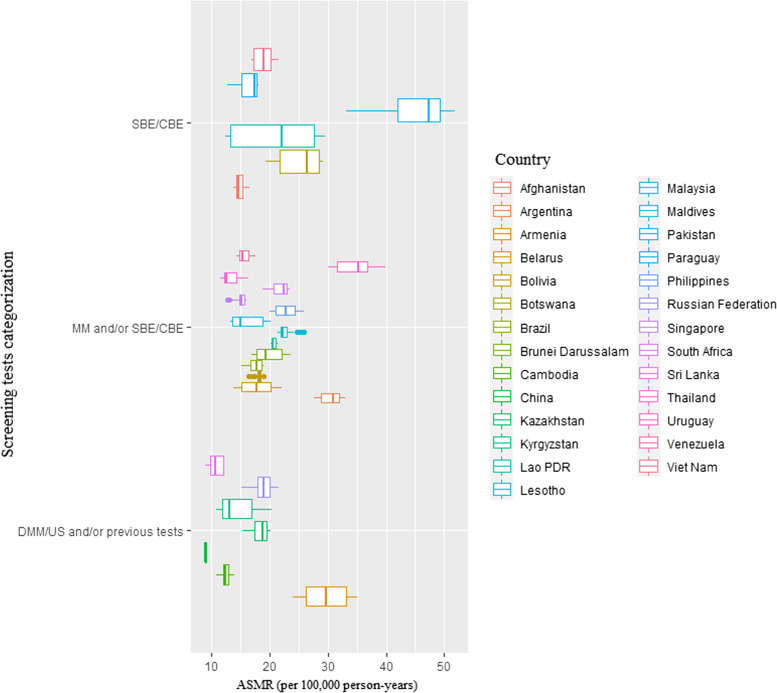
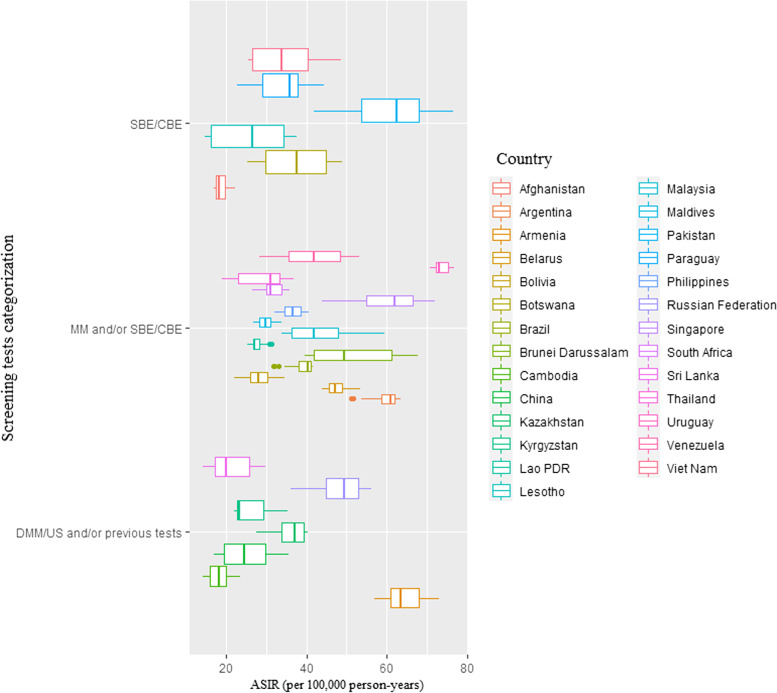
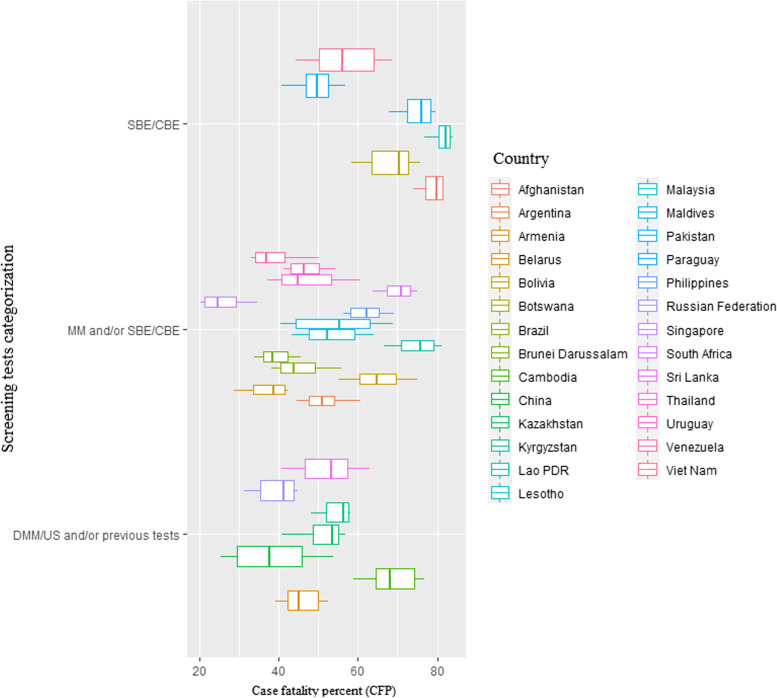
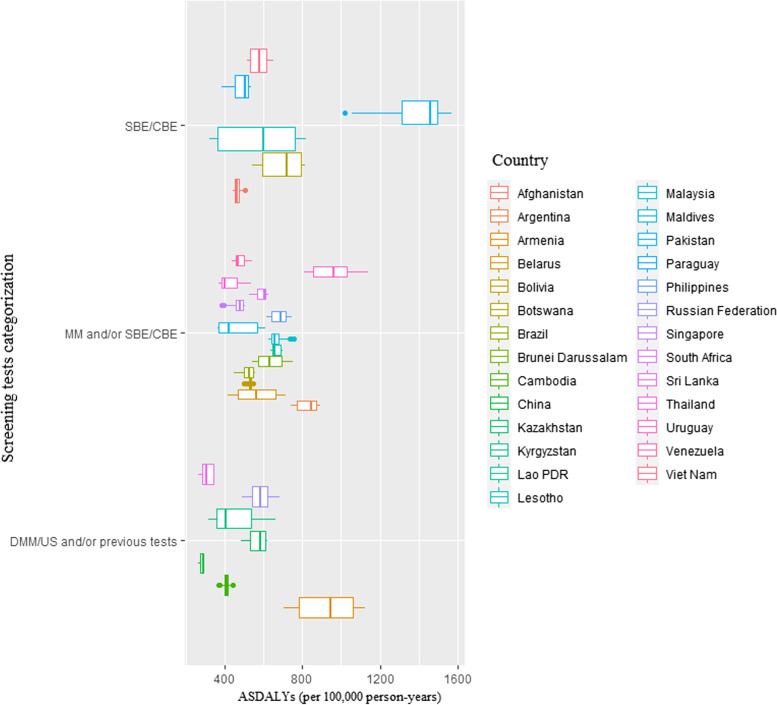
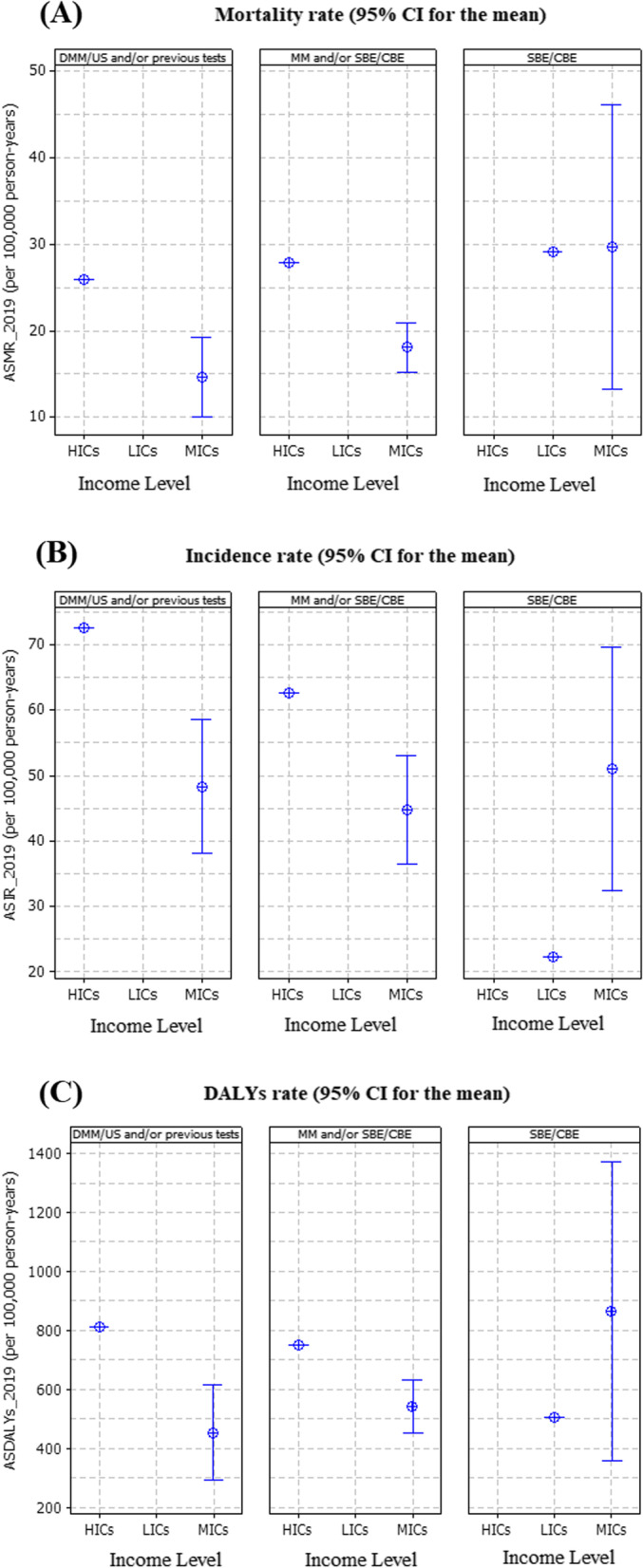
Results: Compared to self/clinical breast examinations (SBE/CBE) across BRICS-plus, more complex BCS program availability was the most significant predictor of decreased mortality [MM and/or SBE/CBE: - 2.64, p < 0.001; DMM/US and/or previous tests: - 1.40, p < 0.001]. In the BRICS-plus, CVD presence, high BMI, second-hand smoke, and active smoking all contributed to an increase in BC mortality and DALY rate. High-income and middle-income regions in BRICS-plus had significantly lower age-standardized BC mortality, case-fatality, and DALYs rates than low-income regions when nationwide BC screening programs were implemented.
Conclusions: The availability of mammography (digital or traditional) and BCS is associated with breast cancer burden in BRICS-plus countries, with regional variations. In light of high-quality evidence from previous causal studies, these findings further support the preventive role of mammography screening for BCS at the national level. Intervening on BCS related risk factors may further reduce the disease burden associated with BC.
Keywords: BRICS-plus; Breast cancer screening; CVD; Case fatality; Disability; Mortality.
© 2023. BioMed Central Ltd., part of Springer Nature.
Conflict of interest statement
The authors declare that they have no competing interests.
Figures

References
-
- Sung H, Ferlay J, Siegel RL, Laversanne M, Soerjomataram I, Jemal A, et al. Global Cancer Statistics 2020: GLOBOCAN estimates of incidence and mortality worldwide for 36 cancers in 185 countries. CA Cancer J Clin. 2021;71(3):209–249. - PubMed
-
- Barba D, León-Sosa A, Lugo P, Suquillo D, Torres F, Surre F, et al. Breast cancer, screening and diagnostic tools: all you need to know. Crit Rev Oncol Hematol. 2021;157:103174. - PubMed
-
- Lauby-Secretan B, Scoccianti C, Loomis D, Benbrahim-Tallaa L, Bouvard V, Bianchini F, et al. Breast-cancer screening—viewpoint of the IARC Working Group. N Engl J Med. 2015;372(24):2353–2358. - PubMed
Publication types
MeSH terms
LinkOut - more resources
Full Text Sources
Medical
Miscellaneous
