


Impact of differentiated service delivery models on retention in HIV care and viral suppression among people living with HIV in sub-Saharan Africa: A systematic review and meta-analysis of randomised controlled trials
- PMID: 37655428
- PMCID: PMC10840667
- DOI: 10.1002/rmv.2479
Impact of differentiated service delivery models on retention in HIV care and viral suppression among people living with HIV in sub-Saharan Africa: A systematic review and meta-analysis of randomised controlled trials
Abstract
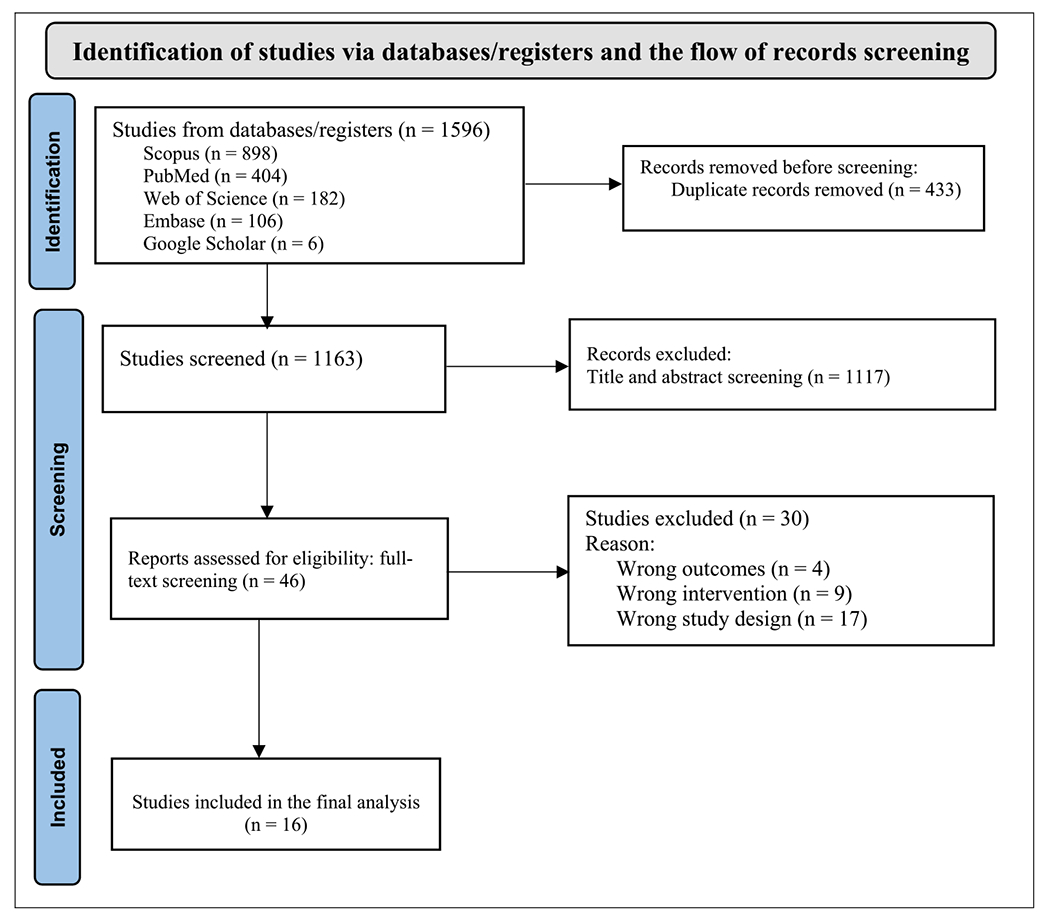
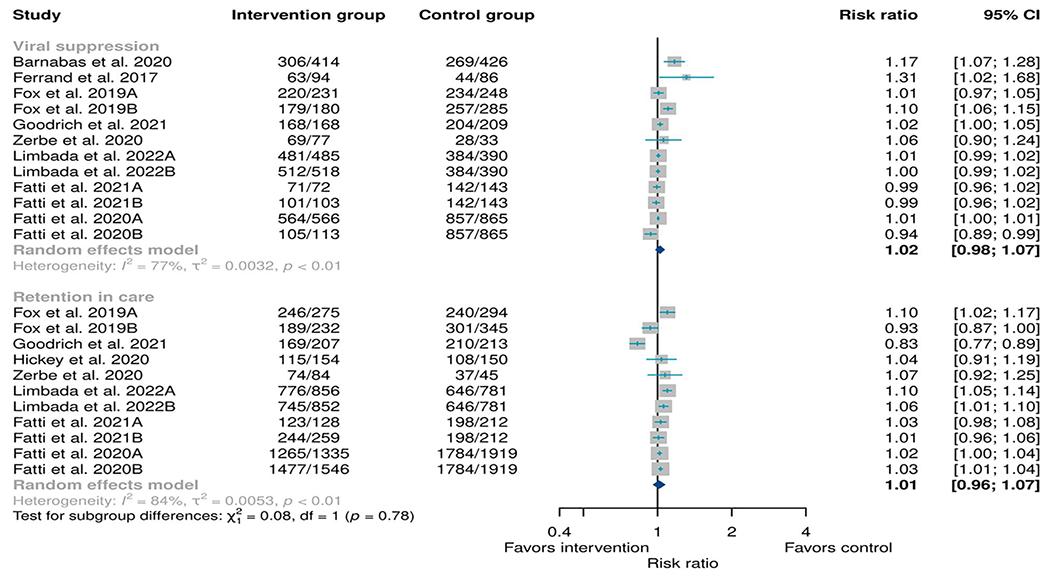
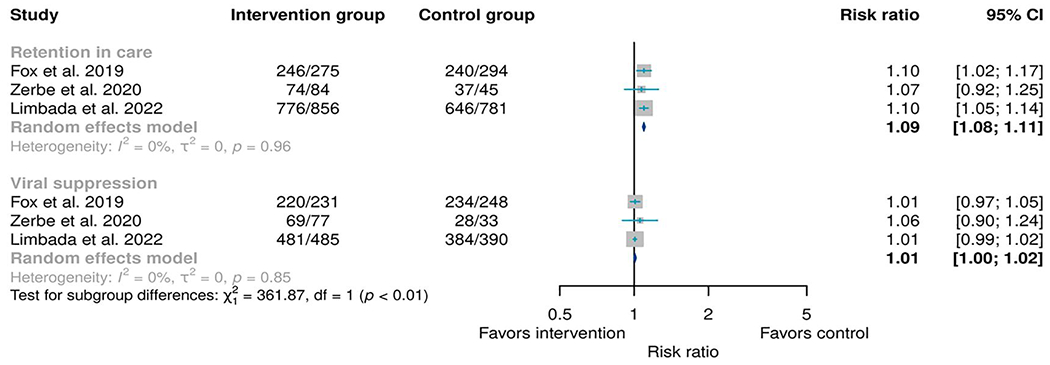
Differentiated service delivery (DSD) models, such as adherence clubs (ACs), are client-centred approaches where clinically stable people living with HIV (PLHIV) meet to receive various services, including psychosocial support, brief symptoms screening, and refills of antiretroviral medications, among others. We conducted a review to assess the impact of DSD models, including ACs, on sustaining retention in care (RC) and achieving viral suppression (VS) among PLHIV in sub-Saharan Africa. The review protocol was registered in PROSPERO (CRD42023418988). We searched the literature from PubMed, Scopus, Web of Science, Embase and Google Scholar from their inception through May 2023. Eligible randomised controlled trials of adherence clubs were reviewed to assess impact on retention and viral suppression. Random effect models were used to estimate the risk ratios (RR) and 95% confidence intervals (CI). The literature search yielded a total of 1596 records of which 16 randomised clinical trials were determined to be eligible. The trials were conducted in diverse populations among adults and children with a total of 13,886 participants. The RR between any DSD models and standard of care (SoC) was 1.09 (95% CI: 1.08-1.11, I2 : 0%, p: <0.96) and 1.01 (95% CI: 1.00-1.02, I2 : 0%, p: <0.85) for RC and VS, respectively. The RR between ACs and SoC was 1.01 (95% CI: 0.96-1.07, I2 : 84%, p: <0.01) and 1.02 (95% CI: 0.98-1.07, I2 : 77%, p: <0.01) for RC and VS, respectively. DSD models, including ACs, show comparable effectiveness to SoC in maintaining care and achieving viral suppression for stable PLHIV. To maximise adoption, an implementation science approach is crucial for designing effective strategies and overcoming challenges.
Keywords: adherence clubs; adherence to antiretroviral treatment; retention in HIV care; sub-Saharan Africa; viral suppression.
© 2023 John Wiley & Sons Ltd.
Conflict of interest statement
CONFLICT OF INTEREST STATEMENT
Authors declare that there is no conflict of interest.
Figures
References
-
- UNAIDS. Global HIV & AIDS Statistics — Fact Sheet; 2022. Published May 3, 2022. Accessed 3 May 2023. https://www.unaids.org/en/resources/fact-sheet
-
- WHO African Region. World AIDS Day; 2022. Published May 2, 2022. Accessed 3 May 2023. https://www.afro.who.int/regional-director/speeches-messages/world-aids-...
Publication types
MeSH terms
Substances
Grants and funding
LinkOut - more resources
Full Text Sources
Medical
