. 2023 Sep 1;18(9):e0290984.
doi: 10.1371/journal.pone.0290984. eCollection 2023.

A robot intervention for adults with ADHD and insomnia-A mixed-method proof-of-concept study

Affiliations

A robot intervention for adults with ADHD and insomnia-A mixed-method proof-of-concept study

Siri Jakobsson Støre et al. PLoS One. .

Abstract

Objective: To investigate individual effects of a three-week sleep robot intervention in adults with ADHD and insomnia, and to explore participants' experiences with the intervention.

Methods: A proof-of-concept study with a mixed-methods design (n = 6, female = 4) where a repeated ABA single-case study was combined with interviews. Data were collected with the Consensus Sleep Diary, wrist actigraphy, questionnaires on symptoms of insomnia, arousal, emotional distress, and ADHD, and through individual interviews.

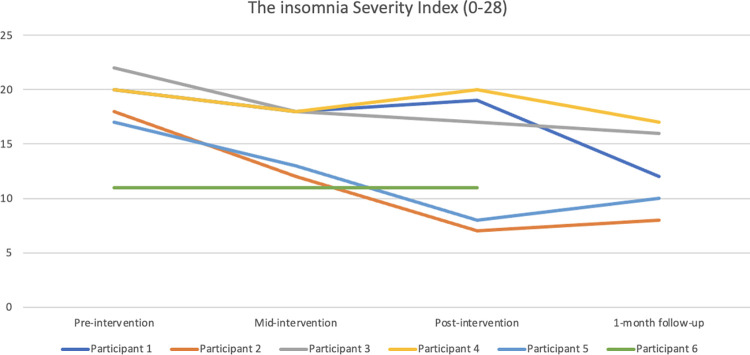
Results: Visual analysis of the sleep diary and actigraphy variables did not support any effects from the robot intervention. Half of participants reported clinically relevant reductions on the Insomnia Severity Index from pre- to post-intervention. No changes regarding ADHD or arousal. Thematic analysis of the interviews resulted in three themes: (1) A pleasant companion, (2) Too much/not enough, and (3) A new routine.

Conclusion: Adjustments of the intervention ought to be made to match the needs of patients with both ADHD and insomnia before the next trial is conducted.


Conflict of interest statement

The authors have declared that no competing interests exist.

Figures

Fig 1
Fig 1. Study flow chart.
Fig 2
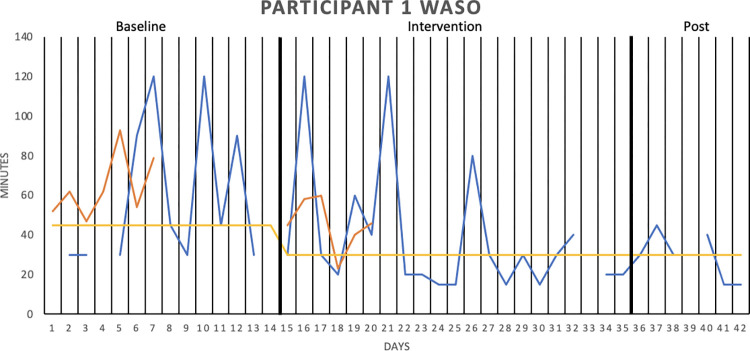
Fig 2. Wake After Sleep Onset (WASO), in minutes for Participant 1.
WASO was measured over two baseline weeks, three intervention weeks, and one week post-intervention. The sleep diary is represented by the blue lines, the actigraphy by the orange lines, and the median of each phase by the yellow lines.
Fig 3
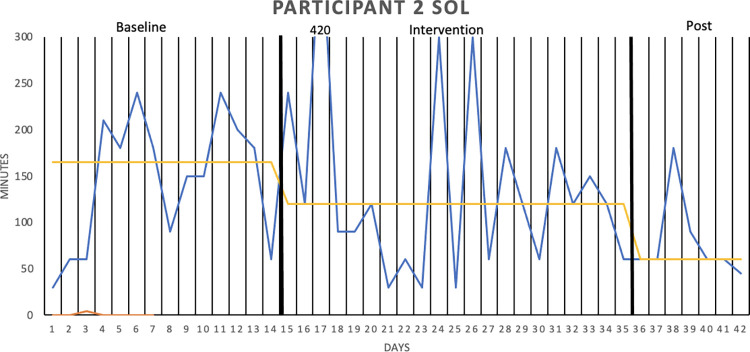
Fig 3. Sleep onset latency (SOL), in minutes for Participant 2.
SOL was measured over two baseline weeks, three intervention weeks, and one week post-intervention. The sleep diary is represented by the blue lines, the actigraphy by the orange lines, and the median of each phase by the yellow lines.
Fig 4
Fig 4. Sleep onset latency (SOL), in minutes for Participant 3.
SOL was measured over two baseline weeks, three intervention weeks, and one week post-intervention. The sleep diary is represented by the blue lines, the actigraphy by the orange lines, and the median of each phase by the yellow lines.
Fig 5
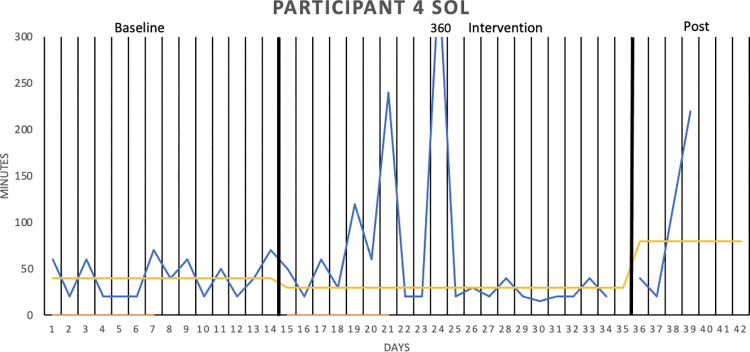
Fig 5. Sleep onset latency (SOL), in minutes for Participant 4.
SOL was measured over two baseline weeks, three intervention weeks, and one week post-intervention. The sleep diary is represented by the blue lines, the actigraphy by the orange lines, and the median of each phase by the yellow lines.
Fig 6
Fig 6. Sleep onset latency (SOL), in minutes for Participant 5.
SOL was measured over two baseline weeks, three intervention weeks, and one week post-intervention. The sleep diary is represented by the blue lines, the actigraphy by the orange lines, and the median of each phase by the yellow lines.
Fig 7
Fig 7. Pre-intervention, mid-intervention, post-intervention, and 1-month follow-up assessments with The Insomnia Severity Index.
Fig 8
Fig 8. Pre-, post-, and 1-month follow-up assessments with the Pre-Sleep Arousal Scale (PSAS).
Fig 9
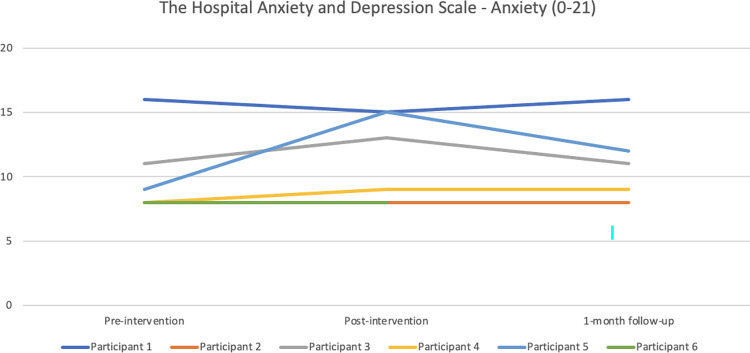
Fig 9. Pre-, post-, and 1-month follow-up assessments with the Hospital Anxiety and Depression Scale—anxiety scale.
Fig 10
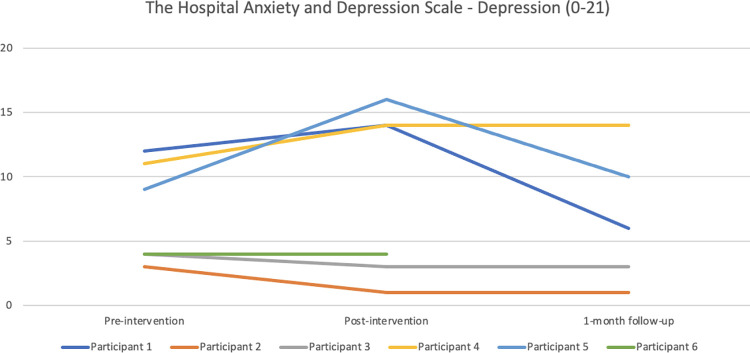
Fig 10. Pre-, post-, and 1-month follow-up assessments with the Hospital Anxiety and Depression Scale—depression scale.
Fig 11
Fig 11. Pre-, post-, and 1-month follow-up assessments with the Adult ADHD Self-Report Scale (ASRS)—inattention scale.
Fig 12
Fig 12. Pre-, post-, and 1-month follow-up assessments with the Adult ADHD Self-Report Scale (ASRS)—hyperactivity/impulsivity scale.

References

    1. Song P, Zha M, Yang Q, Zhang Y, Li X, Rudan I, et al.. The prevalence of adult attention-deficit hyperactivity disorder: A global systematic review and meta-analysis. J. Glob. Health 2021; 11: 04009. doi: 10.7189/jogh.11.04009 - DOI - PMC - PubMed
    1. American Psychiatric Association. Diagnostic and Statistical Manual of Mental Disorders, 5th edition. American Psychiatric Publishing, 2013.
    1. Gjervan B, Torgersen T, Nordahl HM, & Rasmussen K. (2012). Functional impairment and occupational outcome in adults with ADHD. J. Atten. Disord. 2012; 16: 544–552. doi: 10.1177/1087054711413074 - DOI - PubMed
    1. Siebelink NM, Kaijadoe SPT, van Horssen FM, Holtland JNP, Bögels SM, Buitelaar JK et al.. Mindfulness for children with ADHD and mindful parenting (MindChamp): A qualitative study on feasibility and effects. J. Atten. Disord. 2021; 25(13): 1931–1942. doi: 10.1177/1087054720945023 - DOI - PMC - PubMed

    1. Hvolby A. Associations of sleep disturbance with ADHD: implications for treatment. ADHD Atten Def Hyp Disord 2015; 7: 1–18. doi: 10.1007/s12402-014-0151-0 - DOI - PMC - PubMed

Associated data