


Does mid-luteal progesterone predict pregnancy in intrauterine insemination cycles following sequential clomiphene citrate and gonadotropin treatment?
- PMID: 37657005
- PMCID: PMC10476853
- DOI: 10.1097/MD.0000000000034754
Does mid-luteal progesterone predict pregnancy in intrauterine insemination cycles following sequential clomiphene citrate and gonadotropin treatment?
Abstract
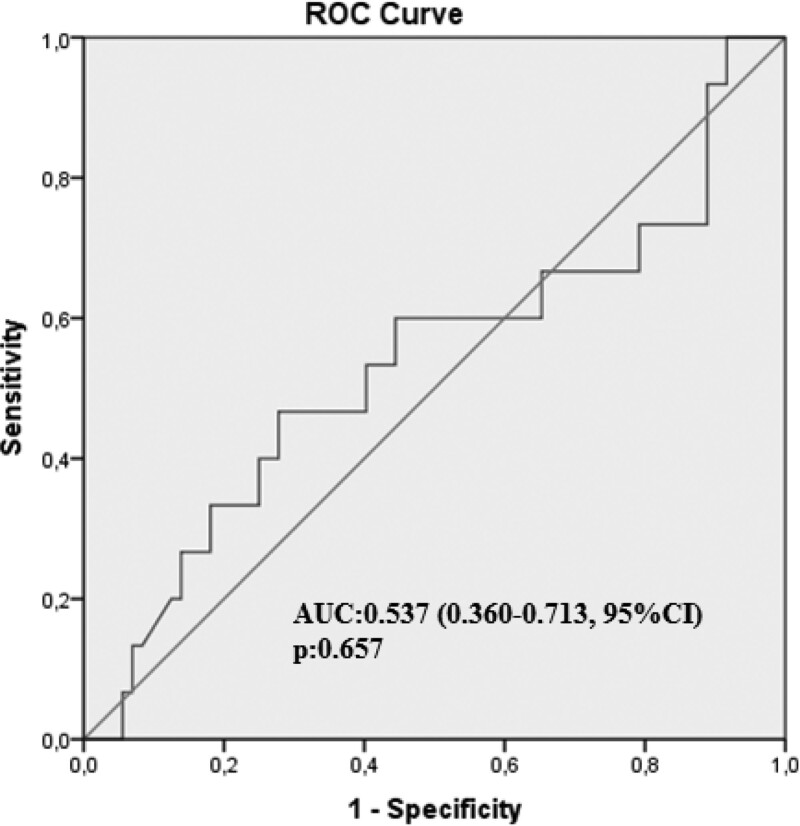
This study aimed to determine whether serum mid-luteal progesterone (MLP) levels measured in the current treatment cycles of infertile women undergoing controlled ovarian hyperstimulation and intrauterine insemination following the sequential use of clomiphene citrate and gonadotropin may predict pregnancy. A total of 107 consecutive anovulatory women were included in this prospective cohort study. Patients with other causes of infertility were also excluded from the study. None of the patients received progesterone treatment for luteal phase support. The data recorded for each woman included age, body mass index, infertility type and duration, basal hormone levels, and previous and current cycle characteristics with MLP levels. Ovulation was confirmed using MLP and sonographic evaluation in all patients. An MLP level of > 3 ng/mL was regarded as a sign of ovulation. After treatment, the patients were divided into 2 groups according to the presence or absence of pregnancy, and the obtained data were compared between the groups. There were no significant differences in age, body mass index, or basal hormone levels between the 2 groups (all P > .05). However, the duration of infertility was significantly shorter in the pregnancy group (P = .003). The anovulation rate in this cohort was 18.7% (n = 20). A total of 15 (14%) were examined. MLP levels were 25.1 ± 13.8 ng/mL and 18.3 ± 14.5 ng/mL in the pregnant and nonpregnant groups, respectively (P:.089). Based on the receiver operating characteristic curve analysis, it was determined that there was no predictive value of the mid-luteal phase progesterone level for pregnancy in patients in whom ovulation was detected. Mid-luteal serum progesterone levels did not predict pregnancy in infertile women who underwent controlled ovarian hyperstimulation with sequential clomiphene citrate plus gonadotropin treatment and intrauterine insemination.
Copyright © 2023 the Author(s). Published by Wolters Kluwer Health, Inc.
Conflict of interest statement
The authors have no conflicts of interest to disclose.
Figures
References
-
- Tonguc E, Var T, Onalan G, et al. Comparison of the effectiveness of single versus double intrauterine insemination with three different timing regimens. Fertil Steril. 2010;94:1267–70. - PubMed
-
- Judd S, Terry A, Petrucco M, et al. The source of pulsatile secretion of progesterone during the human follicular phase. J Clin Endocrinol Metab. 1992;74:299–305. - PubMed
-
- De Geyter C, De Geyter M, Huber PR, et al. Progesterone serum levels during the follicular phase of the menstrual cycle originate from the crosstalk between the ovaries and the adrenal cortex. Hum Reprod. 2002;17:933–9. - PubMed
-
- Stocco C, Telleria C, Gibori G. The molecular control of corpus luteum formation, function, and regression. Endocr Rev. 2007;28:117–49. - PubMed
MeSH terms
Substances
LinkOut - more resources
Full Text Sources
Medical
