


Association between post-stroke cognitive impairment and gut microbiota: A PRISMA-compliant systematic review and meta-analysis
- PMID: 37657030
- PMCID: PMC10476824
- DOI: 10.1097/MD.0000000000034764
Association between post-stroke cognitive impairment and gut microbiota: A PRISMA-compliant systematic review and meta-analysis
Abstract
Background: Accumulating evidence has indicated a possible connection between post-stroke cognitive impairment (PSCI) and gut microbiota imbalance. To further investigate this association, the present work was designed to systematically assess the dissimilarity of gut microbiota between PSCI and healthy individuals or stroke patients.
Methods: A meta-analysis and systematic review was conducted by searching various databases including PubMed, Web of Science, Embase, VIP, CNKI, and Wangfang for relevant studies. The pooled outcomes were used to estimate the combined dissimilarity of gut microbiota composition between PSCI and healthy individuals or patients with stroke.
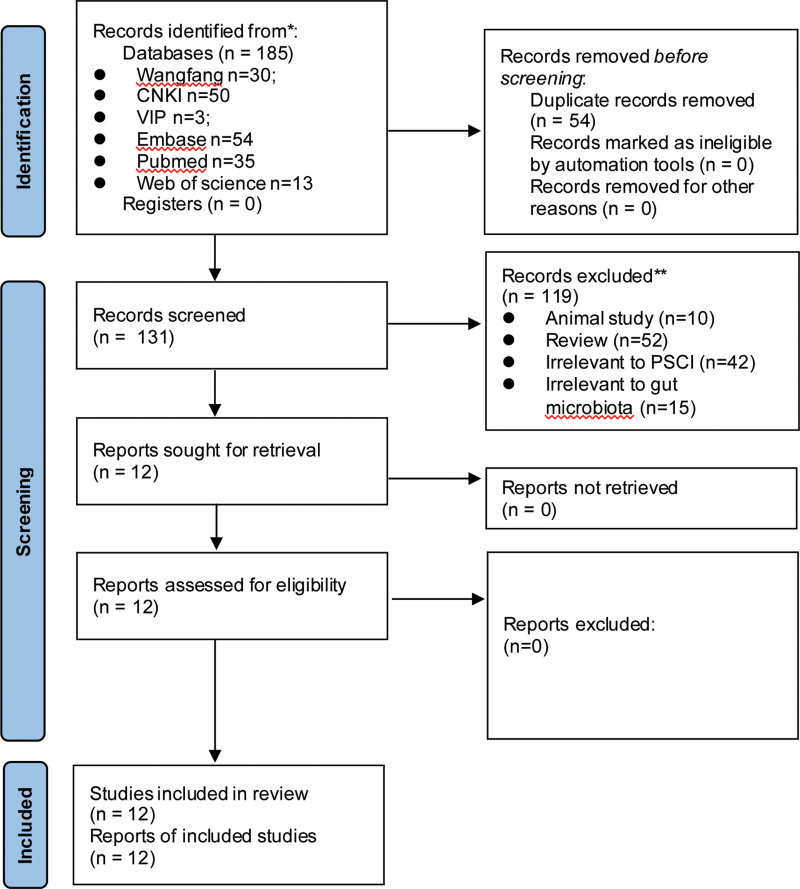
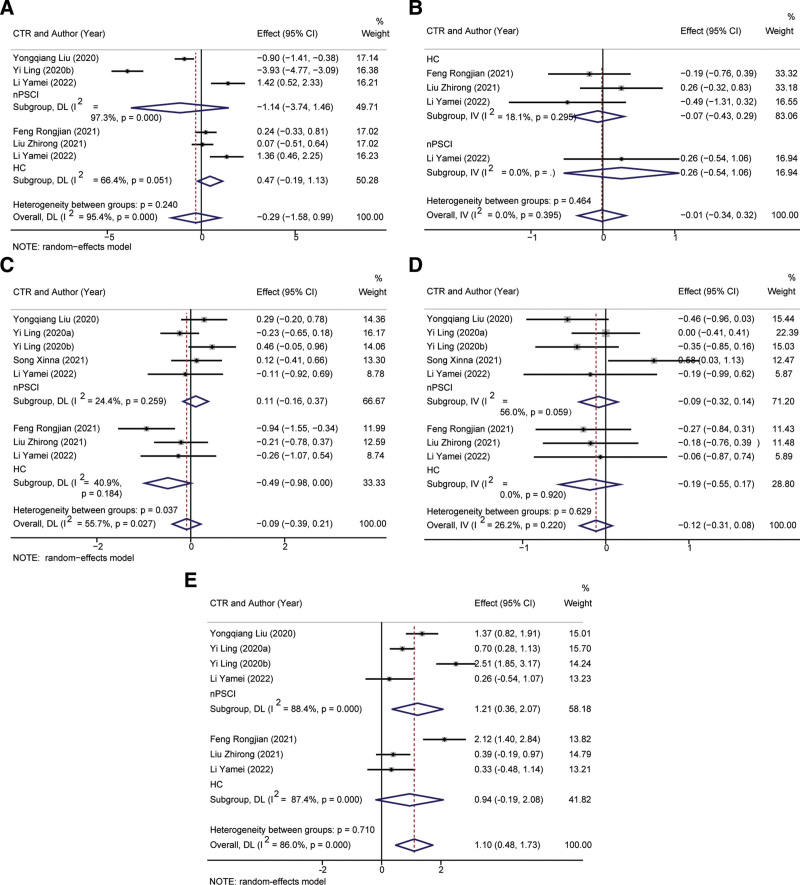
Results: Nine eligible studies were included in this meta-analysis. The results showed that there were no significant changes in observed richness indexes (Chao1 and ACE) and Shannon index. Notably, a significant decrease in Simpson index was observed in PSCI patients in comparison to the healthy individuals (-0.31, 95% CI: -0.62 to -0.01, P = 0.04). Moreover, the microbiota composition at the phylum level (increased abundance of Proteobacteria), family level (increased abundance of Bacteroidaceae, Lachnospiraceae, and Veillonellaceae; decreased abundance of Enterobacteriaceae), and genus level (increased abundance of Bacteroides, Clostridium XIVa, and Parabacteroides; decreased abundance of Prevotella and Ruminococcus) was found to be significantly different between PSCI and controls.
Conclusion: This meta-analysis suggests a significant shift of observed species and microbiota composition in PSCI compared to healthy individuals or patients with stroke.
Copyright © 2023 the Author(s). Published by Wolters Kluwer Health, Inc.
Conflict of interest statement
The authors have no conflicts of interest to disclose.
Figures
References
-
- Mozaffarian D, Benjamin EJ, Go AS, et al. Heart disease and stroke statistics-2016 update: a report from the American Heart Association. Circulation. 2016;133:e38–360. - PubMed
-
- Delavaran H, Jönsson AC, Lövkvist H, et al. Cognitive function in stroke survivors: a 10-year follow-up study. Acta Neurol Scand. 2017;136:187–94. - PubMed
-
- Munsch F, Sagnier S, Asselineau J, et al. Stroke location is an independent predictor of cognitive outcome. Stroke. 2016;47:66–73. - PubMed
-
- Duering M, Zieren N, Hervé D, et al. Strategic role of frontal white matter tracts in vascular cognitive impairment: a voxel-based lesion-symptom mapping study in CADASIL. Brain. 2011;134(Pt 8):2366–75. - PubMed
Publication types
MeSH terms
LinkOut - more resources
Full Text Sources
Medical
Miscellaneous
