


A population-based study of transformed marginal zone lymphoma: identifying outcome-related characteristics
- PMID: 37658062
- PMCID: PMC10474107
- DOI: 10.1038/s41408-023-00903-w
A population-based study of transformed marginal zone lymphoma: identifying outcome-related characteristics
Abstract
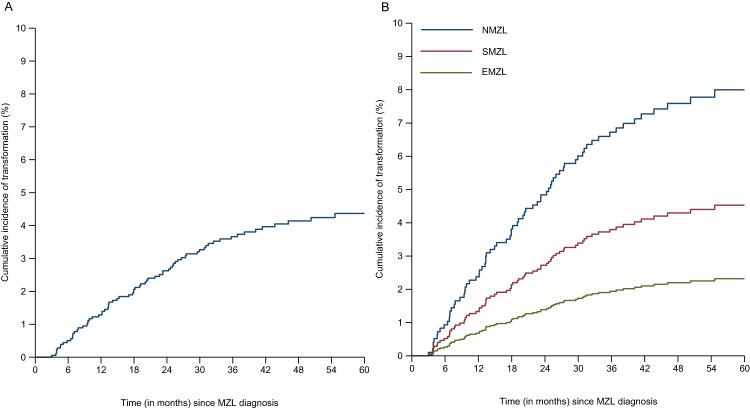
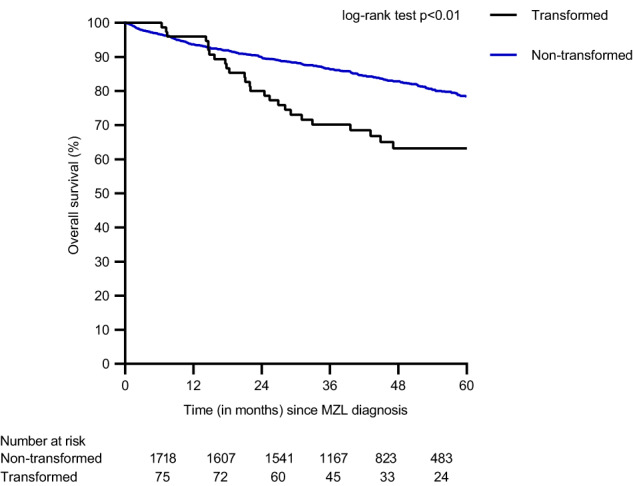
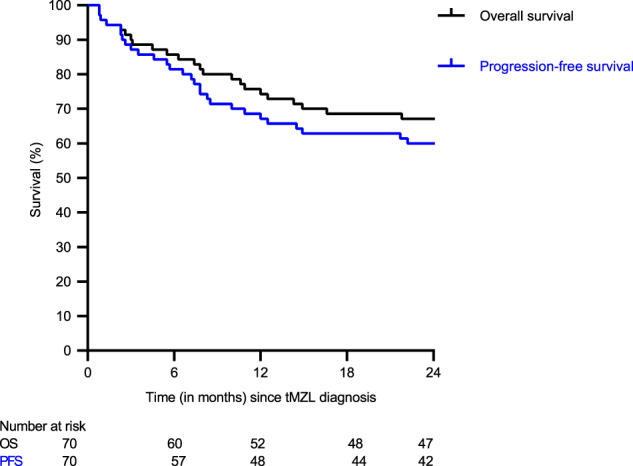
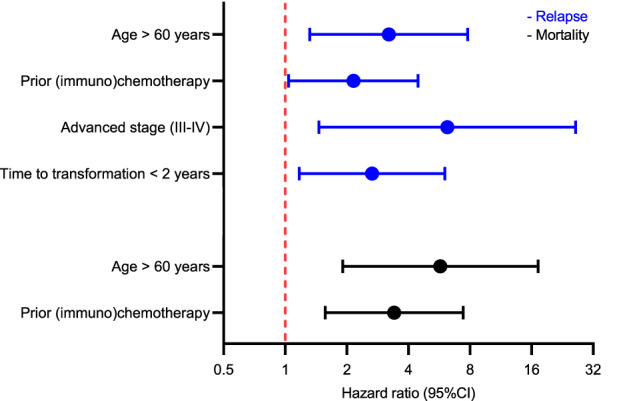
Histological transformation of marginal zone lymphoma (tMZL) into diffuse large B-cell lymphoma is associated with poor outcomes. Clinical characteristics associated with transformation risk and outcome after transformation are largely unknown due to scarcity of data. In this population-based study, competing risk analyses were performed to elucidate clinical characteristics associated with developing transformation among 1793 MZL patients using the Netherlands Cancer Registry. Cox regression analyses were performed to elucidate clinical characteristics associated with risk of relapse and mortality after transformation. Transformation occurred in 75 (4%) out of 1793 MZL patients. Elevated LDH and nodal MZL subtype at MZL diagnosis were associated with an increased risk, and radiotherapy with a reduced risk of developing tMZL. Most tMZL patients received R-(mini)CHOP (n = 53, 71%). Age >60 years and (immuno)chemotherapy before transformation were associated with an increased risk of relapse and mortality after transformation. Two-year progression-free survival (PFS) and overall survival (OS) were 66% (95% CI 52-77%) and 75% (95% CI 62-85%) for R-(mini)CHOP-treated tMZL patients, as compared to a PFS and OS both of 41% (95% CI 19-63%) for patients treated otherwise. Our study offers comprehensive insights into characteristics associated with transformation and survival after transformation, thereby optimizing guidelines and patient counseling.
© 2023. Springer Nature Limited.
Conflict of interest statement
ST received consultation fees from van Takeda, Incyte Biosciences, and Roche Pharma. MC received financial support for clinical trials from Celgene, Bristol-Myers Squibb, and Gilead. AD received research funding from Takeda. The remaining authors declare no competing financial interests.
Figures
References
-
- Registry NC Netherlands Comprehensive Cancer Organisation (IKNL). 2022. https://iknl.nl/nkr-cijfers.
-
- Maeshima AM, Taniguchi H, Toyoda K, Yamauchi N, Makita S, Fukuhara S, et al. Clinicopathological features of histological transformation from extranodal marginal zone B-cell lymphoma of mucosa-associated lymphoid tissue to diffuse large B-cell lymphoma: an analysis of 467 patients. Br J Haematol. 2016;174:923–31. doi: 10.1111/bjh.14153. - DOI - PubMed
Publication types
MeSH terms
LinkOut - more resources
Full Text Sources
Research Materials
