. 2023 Sep 2;3(1):94.
doi: 10.1038/s43705-023-00302-z.

Phagotrophic protists preserve antibiotic-resistant opportunistic human pathogens in the vegetable phyllosphere

Affiliations

Phagotrophic protists preserve antibiotic-resistant opportunistic human pathogens in the vegetable phyllosphere

Chenshuo Lin et al. ISME Commun. .

Abstract

Food safety of leafy greens is an emerging public health issue as they can harbor opportunistic human pathogens (OHPs) and expose OHPs to consumers. Protists are an integral part of phyllosphere microbial ecosystems. However, our understanding of protist-pathogen associations in the phyllosphere and their consequences on public health remains poor. Here, we examined phyllosphere protists, human pathogen marker genes (HPMGs), and protist endosymbionts from four species of leafy greens from major supermarkets in Xiamen, China. Our results showed that Staphylococcus aureus and Klebsiella pneumoniae were the dominant human pathogens in the vegetable phyllosphere. The distribution of HPMGs and protistan communities differed between vegetable species, of which Chinese chive possessed the most diverse protists and highest abundance of HPMGs. HPMGs abundance positively correlated with the diversity and relative abundance of phagotrophic protists. Whole genome sequencing further uncovered that most isolated phyllosphere protists harbored multiple OHPs which carried antibiotic resistance genes, virulence factors, and metal resistance genes and had the potential to HGT. Colpoda were identified as key phagotrophic protists which positively linked to OHPs and carried diverse resistance and virulence potential endosymbiont OHPs including Pseudomonas nitroreducens, Achromobacter xylosoxidans, and Stenotrophomonas maltophilia. We highlight that phyllosphere protists contribute to the transmission of resistant OHPs through internalization and thus pose risks to the food safety of leafy greens and human health. Our study provides insights into the protist-OHP interactions in the phyllosphere, which will help in food safety surveillance and human health.


Conflict of interest statement

The authors declare no competing interests.

Figures
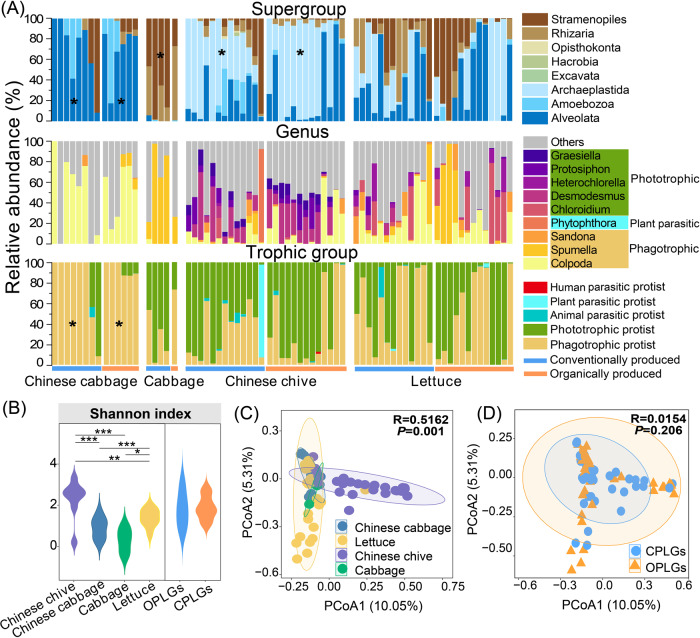
Fig. 1
Fig. 1. Distribution and taxonomic composition of phyllosphere protists in the leafy greens.
A Protistan community composition of vegetable species presenting the proportion of the different protist supergroups, genera, and trophic groups. B Diversity index of protistan community across different vegetable species and different production systems (OPLGs vs CPLGs). C Principal coordinate analysis showing the distribution pattern of phyllosphere protistan communities in the four studied vegetable species and D different production systems. Significant differences in protistan taxa and diversity (compared to other vegetables) across vegetable species are indicated with asterisks (sign test, *p < 0.05, **p < 0.01, ***p < 0.001). “OPLGs” represents organically produced leafy greens and “CPLGs” represents conventionally produced leafy greens.
Fig. 2
Fig. 2. Absolute abundance of human pathogen marker genes in the vegetable phyllosphere.
Values presented in the heatmap were log-transformed. The bar plot on the left indicates the total absolute abundance and detection rate of each human pathogen marker gene (HPMG). The bar plot on the top shows the total abundance of HPMGs from each vegetable species, respectively. The red text represents pathogenic protists. Marker genes of Klebsiella pneumoniae and Cronobacter spp. showed the highest abundance in the phyllosphere of Chinese chives (sign test, **p < 0.01). “OPLGs” represents organically produced leafy greens and “CPLGs” represents conventionally produced leafy greens.
Fig. 3
Fig. 3. Correlations between phyllosphere protists and human pathogen marker genes.
A Diversity and B relative abundance of phyllosphere protists and the absolute abundance of the most prevalent human pathogen marker genes (HPMGs) (Staphylococcus aureus tufA, Pseudomonas aeruginosa regA, Klebsiella pneumoniae phoE, and Cronobacter spp. ITS). C The relative importance of microbial characteristics (diversity based on Shannon index and relative abundance) in predicting the abundance of P. aeruginosa regA and K. pneumoniae phoE in the phyllosphere of leafy greens. **p < 0.01. D Spearman correlations between the absolute abundance of HPMGs and microbial taxa (ASV) (≥ |0.7|; p < 0.01) indicate that colpoda was the key protist closely linked to HPMGs.
Fig. 4
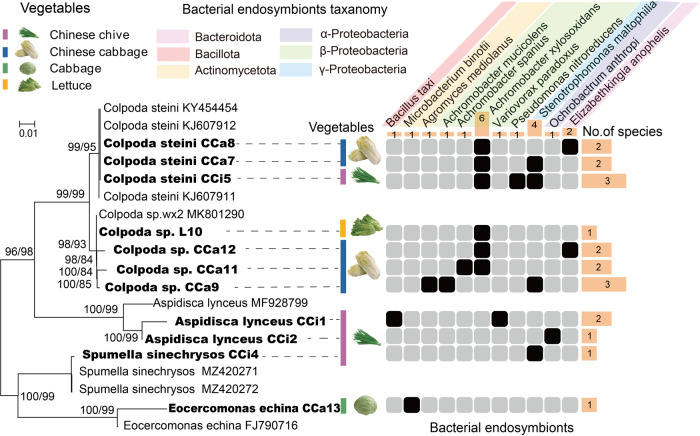
Fig. 4. Maximum-likelihood phylogenetic trees of isolated phyllosphere protists and their bacterial endosymbionts.
Sequences obtained in this study were marked in bold. Orange bars on the right and the top display the total number of endosymbionts bacteria isolated from phyllosphere protists, and the detection frequency of each endosymbiont bacteria, respectively.
Fig. 5
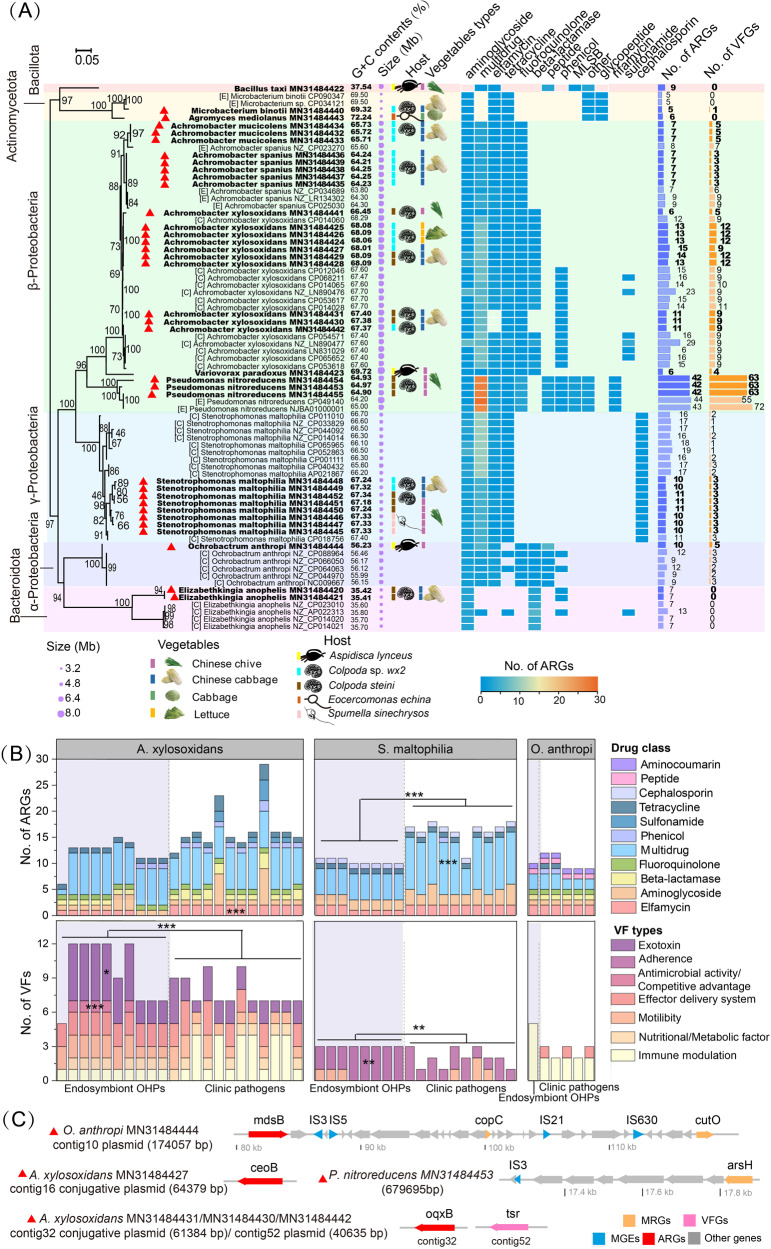
Fig. 5. Key features of endosymbiont genomes isolated from phyllosphere protists.
A Maximum-likelihood phylogenetic trees of endosymbiont genomes and reference genomes with 1000 trials. Sequences obtained in this study were marked in bold. Potential human opportunistic pathogens are marked with a red triangle. [E] and [C] represent the reference genomes from the environment and the clinic, respectively. The size of the purple circles indicates the genome size of each endosymbiont isolate. Heatmap denotes ARG types carried by the corresponding genomes, the purple, orange, and green bars display the total number of ARGs and VFGs carried by the corresponding isolates, respectively. B Comparative analysis of ARGs and VFs carried by clinical genomes and three endosymbiont genomes (A. xylosoxidans O. anthropi and S. maltophilia). C Schematic of the genetic organization of ARGs, MRGs, and MGEs. *p < 0.05, **p < 0.01, ***p < 0.001.

References

    1. Ferreira G, Turk Z. An overview of organic vegetable production in the United States. USDA Economic Research Service. 2016;VGS-357-SA2. https://www.ers.usda.gov/webdocs/outlooks/74639/60319_vgs-357-sa2_organi....
    1. Zhou SYD, Zhu D, Giles M, Yang XR, Daniell T, Neilson R, et al. Phyllosphere of staple crops under pig manure fertilization, a reservoir of antibiotic resistance genes. Environ Pollut. 2019;252:227–35. - PubMed
    1. Lenzi A, Marvasi M, Baldi A. Agronomic practices to limit pre- and post-harvest contamination and proliferation of human pathogenic Enterobacteriaceae in vegetable produce. Food Control. 2021;119:107486.
    1. Neil KP, Gwen B, Kathryn MCOJ, Eija T, Carlota M, Musser KA, et al. A novel vehicle for transmission of Escherichia coli O157:H7 to humans: multistate outbreak of E. coli O157:H7 infections associated with consumption of ready-to-bake commercial prepackaged cookie dough-United States, 2009. Clin Infect Dis. 2012;54:511–8. - PubMed
    1. Liu Q, Jin X, Feng X, Yang H, Fu C. Inactivation kinetics of Escherichia coli O157:H7 and Salmonella Typhimurium on organic carrot (Daucus carota L.) treated with low concentration electrolyzed water combined with short-time heat treatment. Food Control. 2019;106:106702.