


The biased M3 mAChR ligand PD 102807 mediates qualitatively distinct signaling to regulate airway smooth muscle phenotype
- PMID: 37660916
- PMCID: PMC10520882
- DOI: 10.1016/j.jbc.2023.105209
The biased M3 mAChR ligand PD 102807 mediates qualitatively distinct signaling to regulate airway smooth muscle phenotype
Abstract
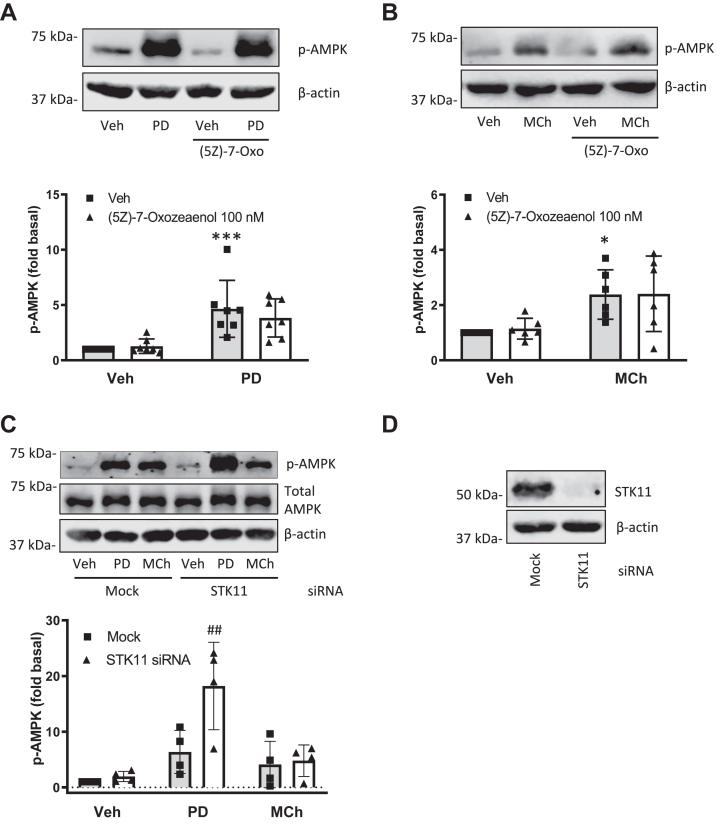
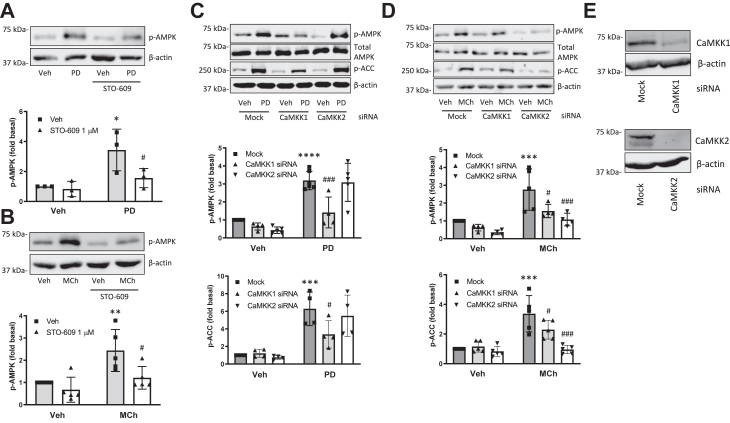
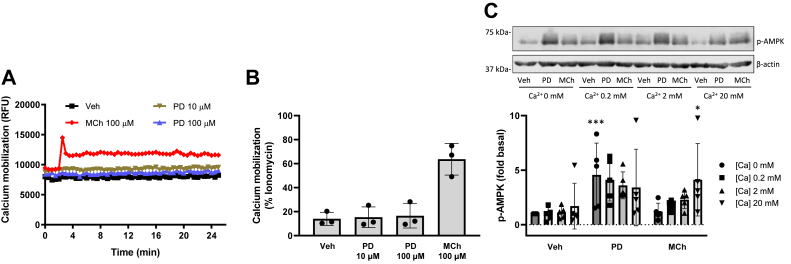
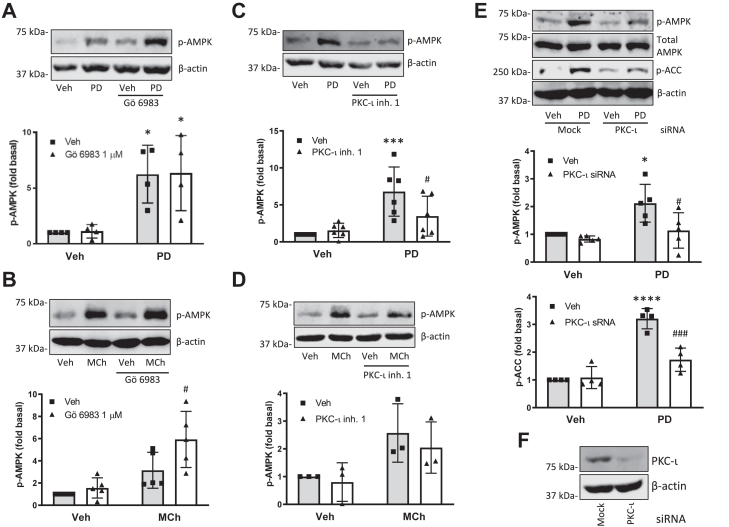
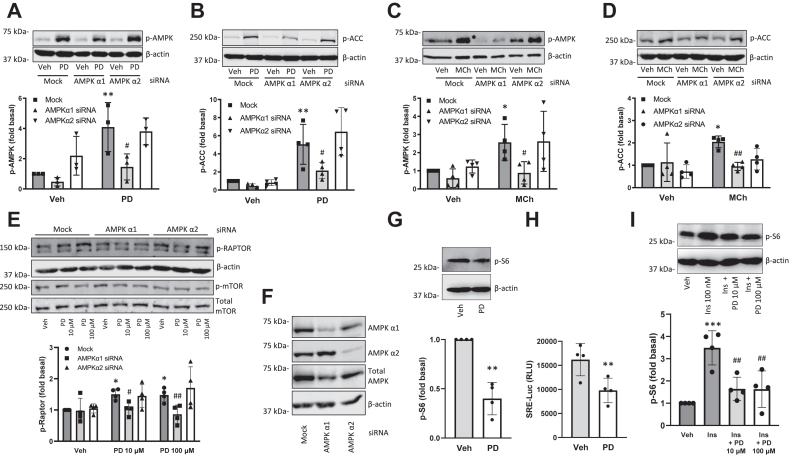
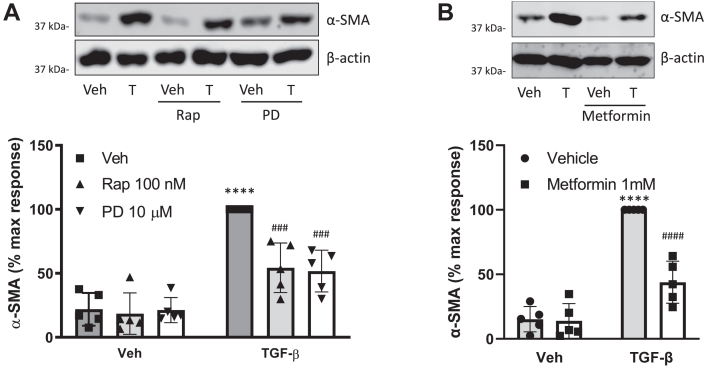
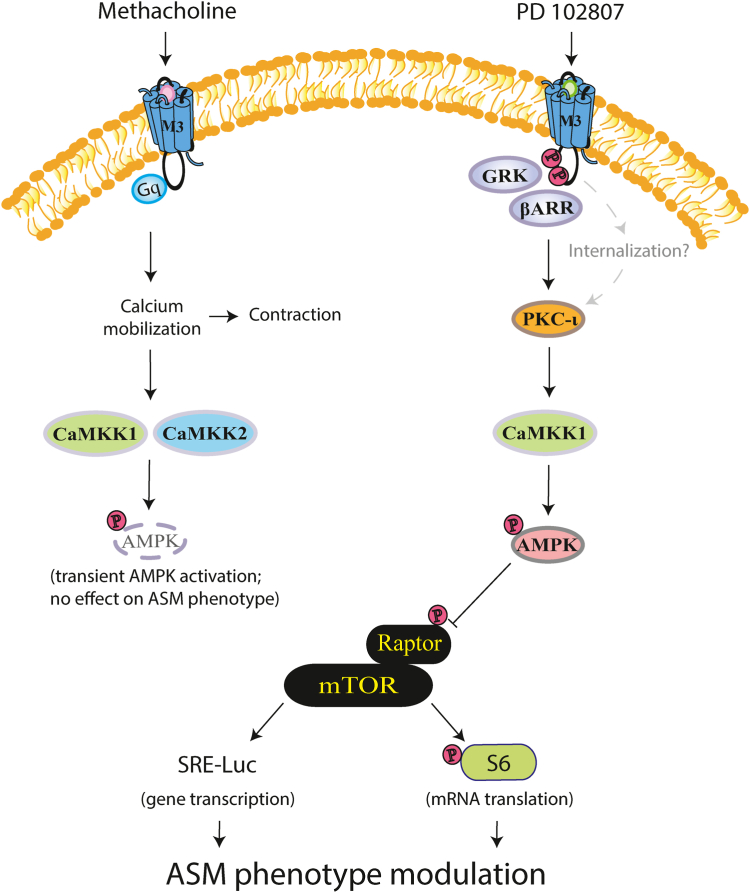
Airway smooth muscle (ASM) cells attain a hypercontractile phenotype during obstructive airway diseases. We recently identified a biased M3 muscarinic acetylcholine receptor (mAChR) ligand, PD 102807, that induces GRK-/arrestin-dependent AMP-activated protein kinase (AMPK) activation to inhibit transforming growth factor-β-induced hypercontractile ASM phenotype. Conversely, the balanced mAChR agonist, methacholine (MCh), activates AMPK yet does not regulate ASM phenotype. In the current study, we demonstrate that PD 102807- and MCh-induced AMPK activation both depend on Ca2+/calmodulin-dependent kinase kinases (CaMKKs). However, MCh-induced AMPK activation is calcium-dependent and mediated by CaMKK1 and CaMKK2 isoforms. In contrast, PD 102807-induced signaling is calcium-independent and mediated by the atypical subtype protein kinase C-iota and the CaMKK1 (but not CaMKK2) isoform. Both MCh- and PD 102807-induced AMPK activation involve the AMPK α1 isoform. PD 102807-induced AMPK α1 (but not AMPK α2) isoform activation mediates inhibition of the mammalian target of rapamycin complex 1 (mTORC1) in ASM cells, as demonstrated by increased Raptor (regulatory-associated protein of mTOR) phosphorylation as well as inhibition of phospho-S6 protein and serum response element-luciferase activity. The mTORC1 inhibitor rapamycin and the AMPK activator metformin both mimic the ability of PD 102807 to attenuate transforming growth factor-β-induced α-smooth muscle actin expression (a marker of hypercontractile ASM). These data indicate that PD 102807 transduces a signaling pathway (AMPK-mediated mTORC1 inhibition) qualitatively distinct from canonical M3 mAChR signaling to prevent pathogenic remodeling of ASM, thus demonstrating PD 102807 is a biased M3 mAChR ligand with therapeutic potential for the management of obstructive airway disease.
Keywords: G protein-coupled receptor; airway; airway smooth muscle; asthma; biased receptor pharmacology.
Copyright © 2023 The Authors. Published by Elsevier Inc. All rights reserved.
Conflict of interest statement
Conflict of interest The authors declare that they have no conflicts of interest with the contents of this article.
Figures
References
-
- Gross N.J., Skorodin M.S. Role of the parasympathetic system in airway obstruction due to emphysema. N. Engl. J. Med. 1984;311:421–425. - PubMed
-
- Bos I.S., Gosens R., Zuidhof A.B., Schaafsma D., Halayko A.J., Meurs H., et al. Inhibition of allergen-induced airway remodelling by tiotropium and budesonide: a comparison. Eur. Respir. J. 2007;30:653–661. - PubMed
-
- Kistemaker L.E., Bos I.S., Hylkema M.N., Nawijn M.C., Hiemstra P.S., Wess J., et al. Muscarinic receptor subtype-specific effects on cigarette smoke-induced inflammation in mice. Eur. Respir. J. 2013;42:1677–1688. - PubMed
-
- Pera T., Zuidhof A., Valadas J., Smit M., Schoemaker R.G., Gosens R., et al. Tiotropium inhibits pulmonary inflammation and remodelling in a Guinea pig model of copd. Eur. Respir. J. 2011;38:789–796. - PubMed
-
- Gosens R., Bos I.S., Zaagsma J., Meurs H. Protective effects of tiotropium bromide in the progression of airway smooth muscle remodeling. Am. J. Respir. Crit. Care Med. 2005;171:1096–1102. - PubMed
Grants and funding
LinkOut - more resources
Full Text Sources
Miscellaneous
