


Exploring the structure of the university-students obsessive-compulsive tendency scale in Iranian university students: a network analysis study
- PMID: 37661261
- PMCID: PMC10476335
- DOI: 10.1186/s13104-023-06474-0
Exploring the structure of the university-students obsessive-compulsive tendency scale in Iranian university students: a network analysis study
Abstract
Introduction: A risk factor for developing obsessive-compulsive disorder (OCD) in non-clinical samples is obsessive-compulsive tendencies (OCT). An OCT scale has recently been developed for university students (UOC) and showed promising psychometric properties. However, no validated Persian language scale evaluates OCT in non-clinical samples. Accordingly, this study aimed to validate the Persian version of the UOC in Iranian university students.
Methods: Three hundred sixty-eight university students (54.6% females, mean ages: 22.4 ± 4.51) entered the study. The Persian version of UOC was evaluated concerning the structure of Exploratory Factor Analysis (EFA), Confirmatory factor analysis (CFA), and Exploratory graph analysis (EGA). Regarding the construct validity, the concurrent validity was assessed between the UOC and The Obsessive-Compulsive Inventory-Revised (OCI-R), Kessler Psychological Distress Scale (K10), and Yale-Brown Obsessive-Compulsive Scale (Y-BOCS). We calculated Cronbach's alpha to evaluate the reliability of the UOC. All statistical calculations were done in R programming language (in R-Studio Desktop version 4.2.1).
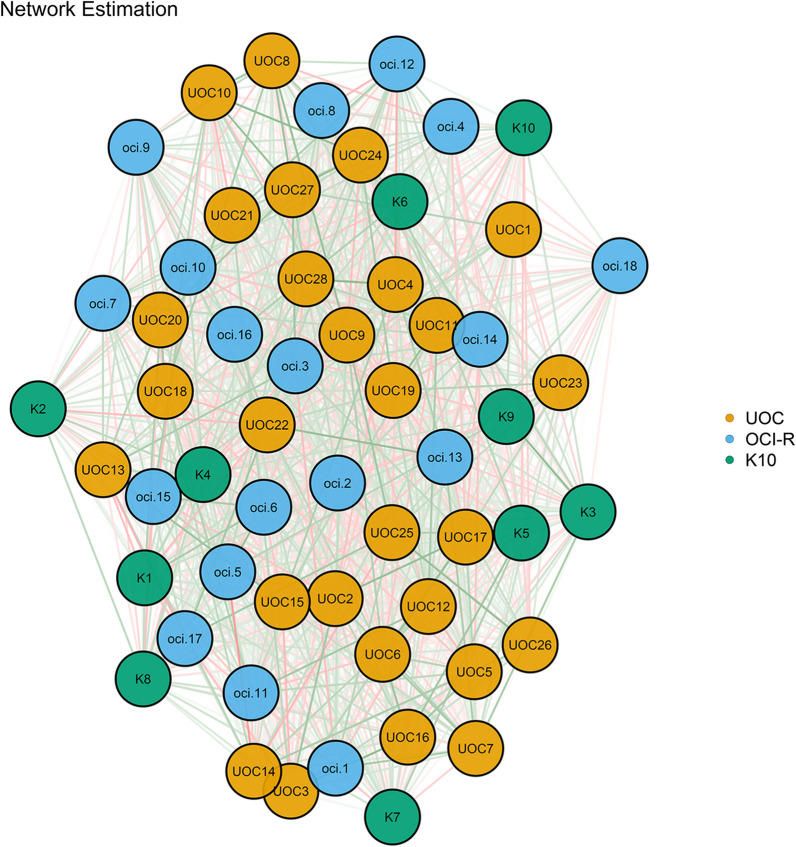
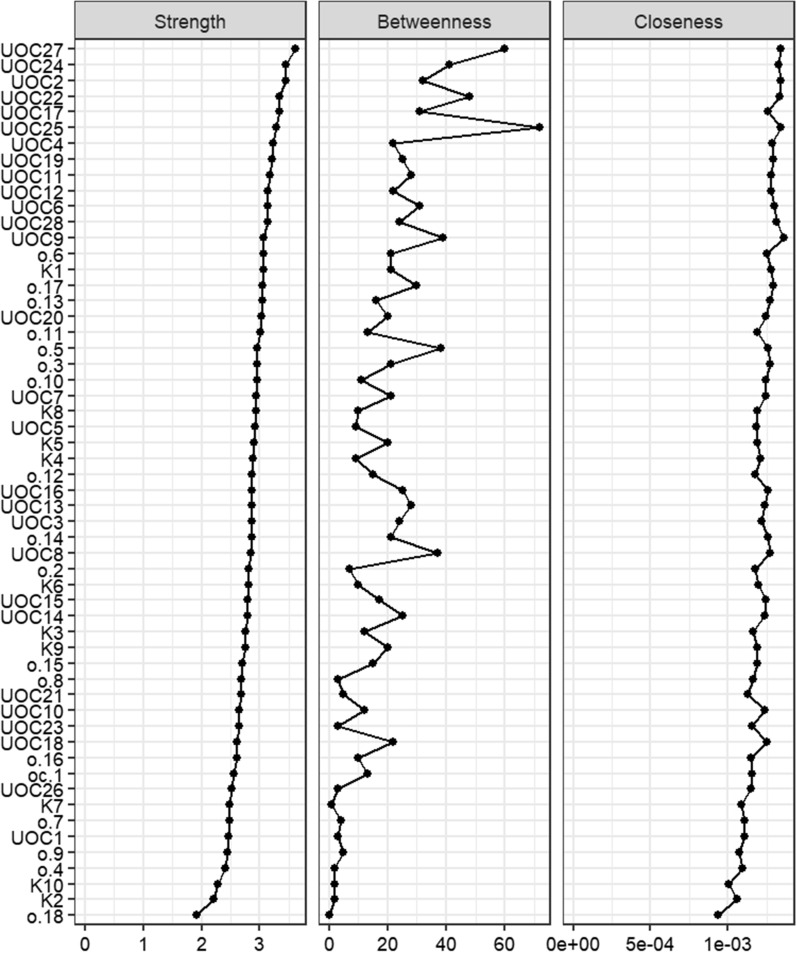
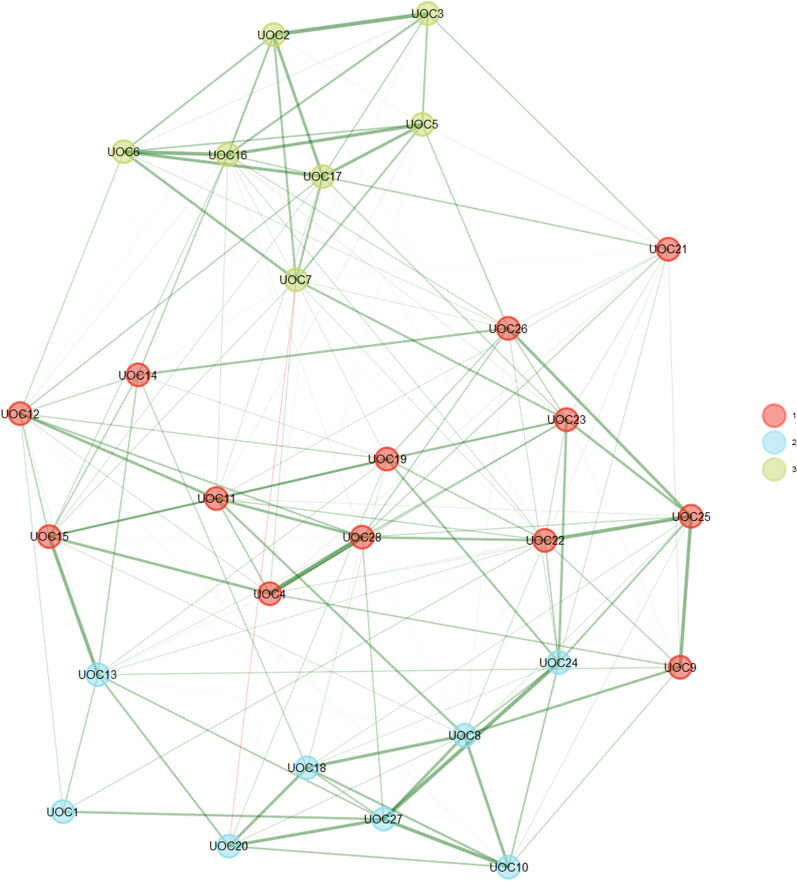
Results: The Persian version of UOC showed a convenient internal consistency with Cronbach's alpha coefficient for the total scale 0.88. UOC scores were significantly correlated with OCI-R, K-10, and YBOCS. The EFA and EGA showed four and three-factor solutions with 25 and 28 items, respectively. Also, CFA showed that these two solutions were reliable, and the three-factors solution showed higher fit indexes. Finally, the results showed that item-27 was the most central item in the UOC network structure.
Conclusion: The findings from the present study indicated that the Persian version of UOC has acceptable psychometric properties. So, this scale can be used for examining obsessive-compulsive tendencies in Iranian university students.
Keywords: Network Analysis; Obsessive–compulsive disorder; Obsessive–compulsive tendencies.
© 2023. BioMed Central Ltd., part of Springer Nature.
Conflict of interest statement
All authors report no financial and non-financial conflicts of interest to disclose.
Figures
References
-
- Steelman Z, Soror A, Limayem M, Worrell D. Obsessive compulsive tendencies as predictors of dangerous mobile phone usage. 2012.
MeSH terms
LinkOut - more resources
Full Text Sources
Research Materials
