


Probiotics: mechanism of action, health benefits and their application in food industries
- PMID: 37664108
- PMCID: PMC10470842
- DOI: 10.3389/fmicb.2023.1216674
Probiotics: mechanism of action, health benefits and their application in food industries
Erratum in
-
Corrigendum: Probiotics: mechanism of action, health benefits and their application in food industries.Front Microbiol. 2024 Feb 14;15:1378225. doi: 10.3389/fmicb.2024.1378225. eCollection 2024. Front Microbiol. 2024. PMID: 38419640 Free PMC article.
Abstract
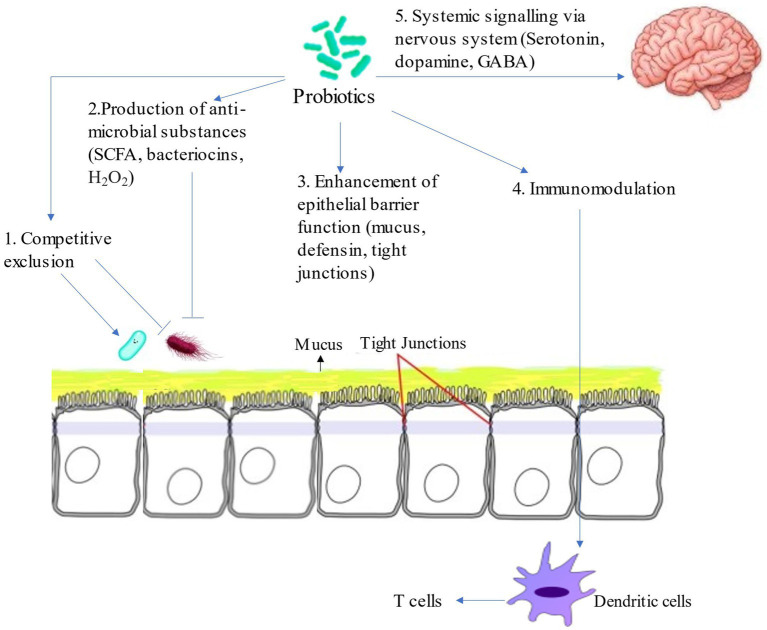
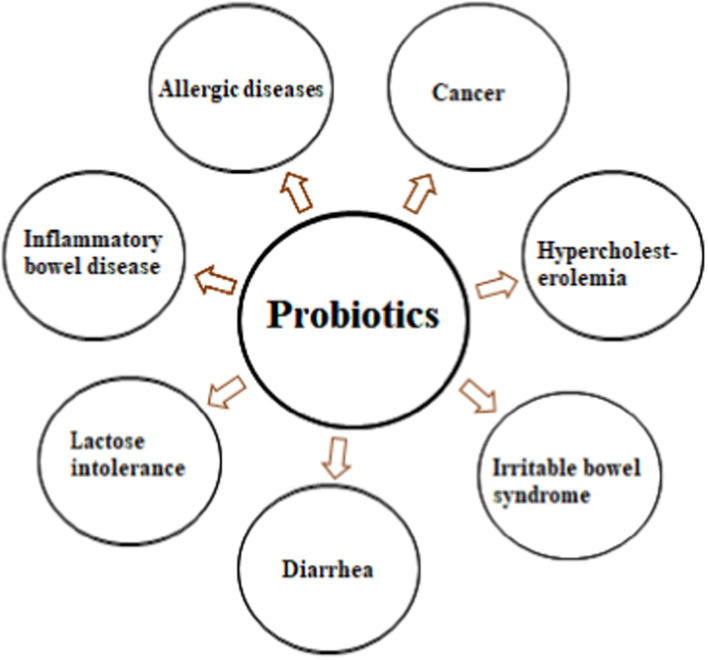
Probiotics, like lactic acid bacteria, are non-pathogenic microbes that exert health benefits to the host when administered in adequate quantity. Currently, research is being conducted on the molecular events and applications of probiotics. The suggested mechanisms by which probiotics exert their action include; competitive exclusion of pathogens for adhesion sites, improvement of the intestinal mucosal barrier, gut immunomodulation, and neurotransmitter synthesis. This review emphasizes the recent advances in the health benefits of probiotics and the emerging applications of probiotics in the food industry. Due to their capability to modulate gut microbiota and attenuate the immune system, probiotics could be used as an adjuvant in hypertension, hypercholesterolemia, cancer, and gastrointestinal diseases. Considering the functional properties, probiotics are being used in the dairy, beverage, and baking industries. After developing the latest techniques by researchers, probiotics can now survive within harsh processing conditions and withstand GI stresses quite effectively. Thus, the potential of probiotics can efficiently be utilized on a commercial scale in food processing industries.
Keywords: anti-allergic and gastrointestinal diseases; functional foods; immunomodulation; lactic acid bacteria; probiotics.
Copyright © 2023 Latif, Shehzad, Niazi, Zahid, Ashraf, Iqbal, Rehman, Riaz, Aadil, Khan, Özogul, Rocha, Esatbeyoglu and Korma.
Conflict of interest statement
The authors declare that the research was conducted in the absence of any commercial or financial relationships that could be construed as a potential conflict of interest.
Figures
References
-
- Ahire J., Jakkamsetty C., Kashikar M. S., Lakshmi S. G., Madempudi R. S. (2021). In vitro evaluation of probiotic properties of Lactobacillus plantarum UBLP40 isolated from traditional indigenous fermented food. Probiotics Antimicrob Proteins 13, 1413–1424. doi: 10.1007/s12602-021-09775-7 - DOI - PubMed
-
- al-Sheraji S. H., Ismail A., Manap M. Y., Mustafa S., Yusof R. M., Hassan F. A. (2013). Prebiotics as functional foods: a review. J. Funct. Foods 5, 1542–1553. doi: 10.1016/j.jff.2013.08.009, PMID: - DOI
-
- Arbex P. M., Moreira M. E. C., Toledo R. C. L., de Morais Cardoso L., Pinheiro-Sant'ana H. M., Benjamin L. A., et al. (2018). Extruded sorghum flour (Sorghum bicolor L.) modulate adiposity and inflammation in high fat diet-induced obese rats. J. Funct. Foods 42, 346–355. doi: 10.1016/j.jff.2018.01.010 - DOI
Publication types
LinkOut - more resources
Full Text Sources
Other Literature Sources
Molecular Biology Databases
