Prevalence and Risk Factors of Neonatal Hyperbilirubinemia in a Semi-Rural Area of the Democratic Republic of Congo: A Cohort Study
- PMID: 37669757
- PMCID: PMC10551084
- DOI: 10.4269/ajtmh.23-0293
Prevalence and Risk Factors of Neonatal Hyperbilirubinemia in a Semi-Rural Area of the Democratic Republic of Congo: A Cohort Study
Abstract
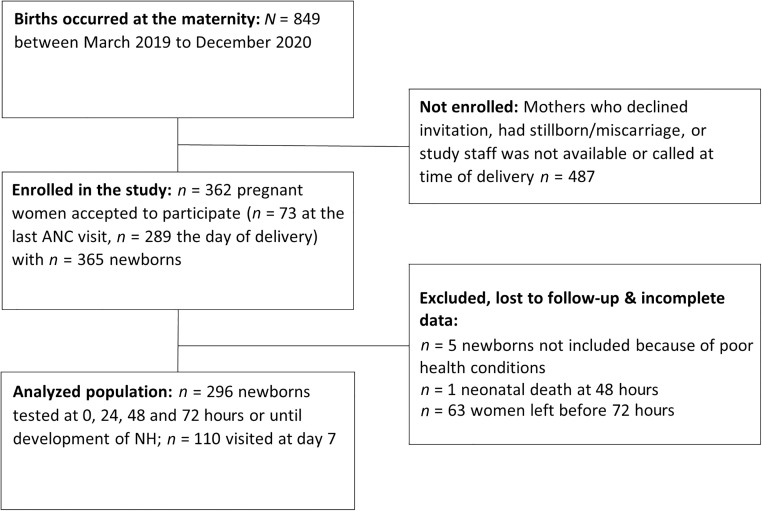
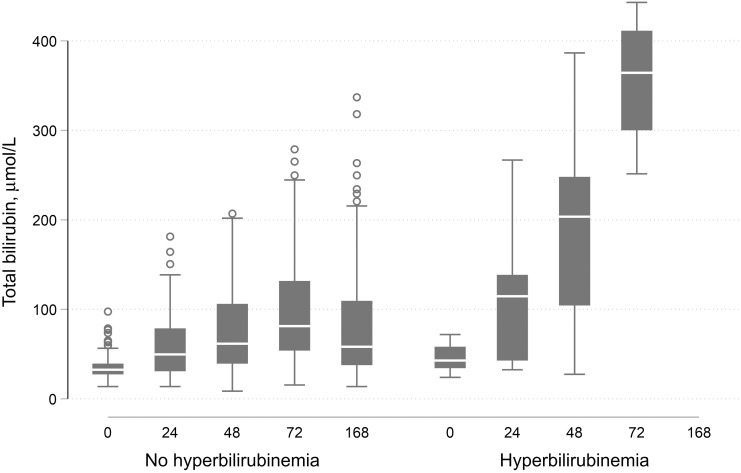
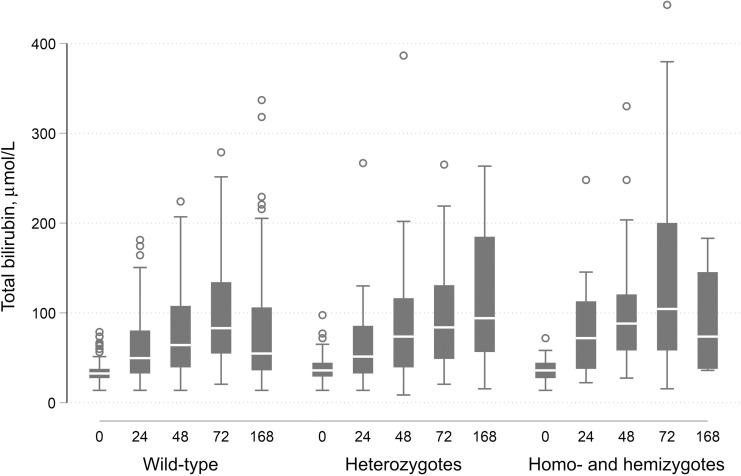
Neonatal hyperbilirubinemia (NH) is a frequent condition that, if left untreated, can lead to neurological disability and death. We assessed the prevalence of NH and associated neonatal and maternal risk factors in 362 mothers and 365 newborns in a semi-rural area of the Democratic Republic of Congo. In addition, we explored the knowledge and practices of mothers regarding this condition. We collected demographic data, anthropometric data, and obstetric and medical anamneses. We examined newborns at birth and at 24, 48, and 72 hours and measured bilirubin at birth in umbilical cord and capillary blood and thereafter in capillary blood. Hemoglobin, hematocrit, ABO group, Rhesus factor, glucose-6-phosphate dehydrogenase (G6PD) deficiency, Hemoglobin S (HbS), and malaria were assessed in mothers and newborns. Among 296 newborns (all time points available), 5.7% developed NH (95% CI: 3.4-9.0) between 24 and 72 hours according to National Institute for Health and Care Excellence (NICE) UK guidelines. There was a significantly higher risk in newborns with G6PD deficiency (homo- and hemizygous adjusted Odd Ratio [aOR]: 21.0, 95% CI: 4.1-105.9), preterm births (aOR: 6.1, 95% CI: 1.4-26.9), newborns with excessive birth weight loss (aOR: 5.8, 95% CI: 1.4-23.2), and hyperbilirubinemia at birth (aOR: 14.8, 95% CI: 2.7-79.6). Newborns with feto-maternal ABO incompatibility and G6PD deficiency had significantly higher bilirubin at birth than others. More than 60% of mothers had adequate knowledge of NH, but compliance with phototherapy in the absence of symptoms was low. Although risk factors for NH are common in this area, prevalence was not high, suggesting a need for better case definition. Implementation of point-of-care devices for diagnosis and awareness programs on risk prevention could help reduce neonatal morbidity and mortality associated with hyperbilirubinemia in these areas.
Trial registration: ClinicalTrials.gov NCT03880591.
Conflict of interest statement
De-identified participant data are available from the Mahidol Oxford Tropical Medicine Data Access Committee upon request (
Figures
References
-
- Lawn JE. et al. , 2014. Every newborn: progress, priorities, and potential beyond survival. Lancet 384: 189–205. - PubMed
-
- Aynalem YA, Mulu GB, Akalu TY, Shiferaw WS, 2020. Prevalence of neonatal hyperbilirubinaemia and its association with glucose-6-phosphate dehydrogenase deficiency and blood-type incompatibility in sub-Saharan Africa: a systematic review and meta-analysis. BMJ Paediatr Open 4: e000750. - PMC - PubMed
-
- UNICEF , 2022. UNICEF Data: Monitoring the Situation of Children and Women. Available at: https://data.unicef.org/country/cod. Accessed March 16, 2022.
-
- Keren R, Tremont K, Luan X, Cnaan A, 2009. Visual assessment of jaundice in term and late preterm infants. Arch Dis Child Fetal Neonatal Ed 94: F317–F322. - PubMed
-
- Moyer VA, Ahn C, Sneed S, 2000. Accuracy of clinical judgment in neonatal jaundice. Arch Pediatr Adolesc Med 154: 391–394. - PubMed
Publication types
MeSH terms
Associated data
Grants and funding
LinkOut - more resources
Full Text Sources
Medical
Miscellaneous