


RAS signaling and immune cells: a sinister crosstalk in the tumor microenvironment
- PMID: 37670322
- PMCID: PMC10481548
- DOI: 10.1186/s12967-023-04486-9
RAS signaling and immune cells: a sinister crosstalk in the tumor microenvironment
Abstract
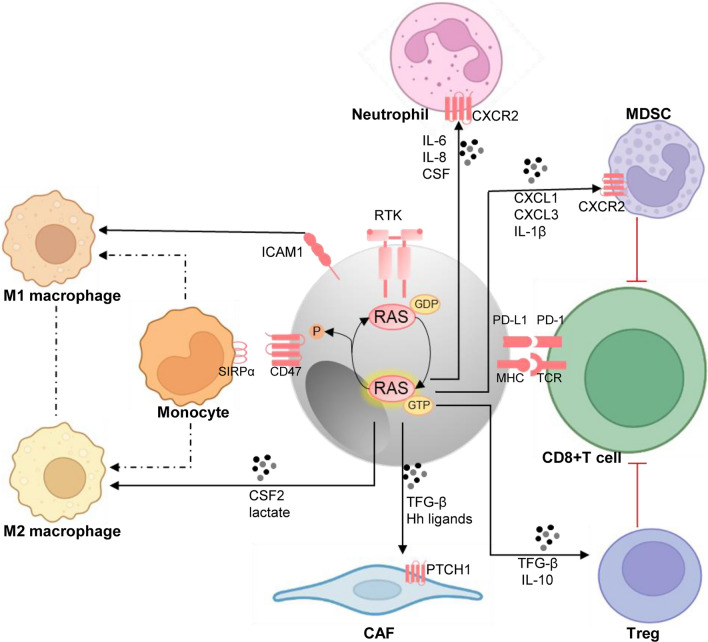
The rat sarcoma virus (RAS) gene is the most commonly mutated oncogene in cancer, with about 19% of cancer patients carrying RAS mutations. Studies on the interaction between RAS mutation and tumor immune microenvironment (TIM) have been flourishing in recent years. More and more evidence has proved that RAS signals regulate immune cells' recruitment, activation, and differentiation while assisting tumor cells to evade immune surveillance. This review concluded the direct and indirect treatment strategies for RAS mutations. In addition, we updated the underlying mechanisms by which RAS signaling modulated immune infiltration and immune escape. Finally, we discussed advances in RAS-targeted immunotherapies, including cancer vaccines and adoptive cell therapies, with a particular focus on combination strategies with personalized therapy and great potential to achieve lasting clinical benefits.
Keywords: Adoptive cell therapy; Cancer vaccine; Immune cell infiltration; Immune escape; RAS mutation.
© 2023. BioMed Central Ltd., part of Springer Nature.
Conflict of interest statement
The authors declare that they have no competing interests.
Figures



References
-
- Hanahan D, Weinberg RA. Hallmarks of cancer: the next generation. Cell. 2011;144(5):646–674. - PubMed
-
- Dias Carvalho P, Guimarães CF, Cardoso AP, Mendonça S, Costa ÂM, Oliveira MJ, et al. KRAS oncogenic signaling extends beyond cancer cells to orchestrate the microenvironment. Cancer Res. 2018;78(1):7–14. - PubMed
-
- Nissley DV, McCormick F. RAS at 40: update from the RAS initiative. Cancer Discov. 2022;12(4):895–898. - PubMed
Publication types
MeSH terms
Substances
LinkOut - more resources
Full Text Sources
