


Increasing access to screening for blood-borne viruses and sexually transmissible infections for Aboriginal and Torres Strait Islander Australians: evaluation of the Deadly Liver Mob program's 'cascade of care' across nine sites in New South Wales, Australia
- PMID: 37670361
- PMCID: PMC10478220
- DOI: 10.1186/s12954-023-00850-6
Increasing access to screening for blood-borne viruses and sexually transmissible infections for Aboriginal and Torres Strait Islander Australians: evaluation of the Deadly Liver Mob program's 'cascade of care' across nine sites in New South Wales, Australia
Erratum in
-
Correction: Increasing access to screening for blood-borne viruses and sexually transmissible infections for Aboriginal and Torres Strait Islander Australians: evaluation of the Deadly Liver Mob program's 'cascade of care' across nine sites in New South Wales, Australia.Harm Reduct J. 2024 Feb 7;21(1):34. doi: 10.1186/s12954-024-00927-w. Harm Reduct J. 2024. PMID: 38326826 Free PMC article. No abstract available.
Abstract
Background: Aboriginal and Torres Strait Islander Australians are disproportionately impacted by blood-borne viruses (BBVs) and sexually transmissible infections (STIs). Stigma remains one of the key barriers to testing and treatment for BBVs and STIs, particularly among Aboriginal and Torres Strait Islander people. The Deadly Liver Mob (DLM) is a peer-delivered incentivised health promotion program by and for Aboriginal and Torres Strait Islander Australians. The program aims to increase access to BBV and STI education, screening, treatment, and vaccination for Aboriginal and Torres Strait Islander Australians in recognition of the systemic barriers for First Nations people to primary care, including BBV- and STI-related stigma, and institutional racism. This paper presents routinely collected data across nine sites on the 'cascade of care' progression of Aboriginal and Torres Strait Islander clients through the DLM program: hepatitis C education, screening, returning for results, and recruitment of peers.
Methods: Routinely collected data were collated from each of the DLM sites, including date of attendance, basic demographic characteristics, eligibility for the program, recruitment of others, and engagement in the cascade of care.
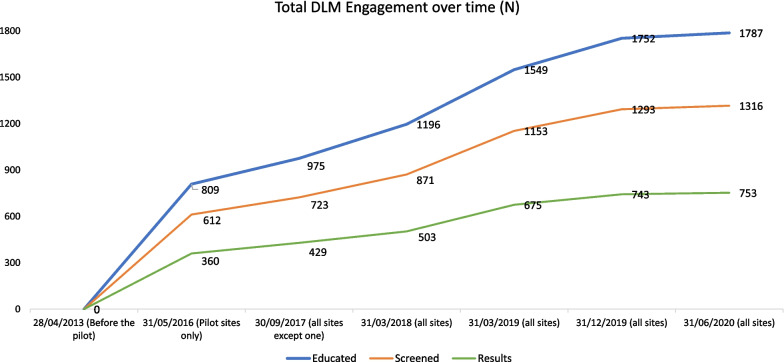
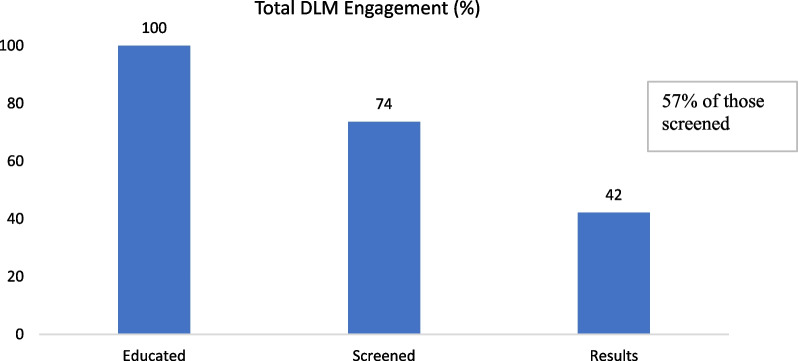
Results: Between 2013 and 2020, a total of 1787 Aboriginal and Torres Strait Islander clients were educated as part of DLM, of which 74% went on to be screened and 42% (or 57% of those screened) returned to receive their results. The total monetary investment of the cascade of care progression was approximately $56,220. Data highlight the positive impacts of the DLM program for engagement in screening, highlighting the need for culturally sensitive, and safe programs led by and for Aboriginal and Torres Strait Islander people. However, the data also indicate the points at which clients 'fall off' the cascade, underscoring the need to address any remaining barriers to care.
Conclusions: The DLM program shows promise in acting as a 'one stop shop' in addressing the needs of Aboriginal and Torres Strait Islander people in relation to BBVs and STIs. Future implementation could focus on addressing any potential barriers to participation in the program, such as co-location of services and transportation.
Keywords: Aboriginal and Torres Strait Islander people; Blood-borne viruses; Health promotion; Hepatitis C; Sexually transmissible infections.
© 2023. BioMed Central Ltd., part of Springer Nature.
Conflict of interest statement
The authors declare that some authors of this paper have been involved in the development and implementation of the DLM program.
Figures
References
-
- Australian Bureau of Statistics. Aboriginal and Torres Strait Islander people: Census. Canberra: ABS; 2022.
-
- Institute K. Bloodborne viral and sexually transmissible infections in Aboriginal and Torres Strait Islander people: Annual surveillance report 2018. Sydney: Kirby Institute, UNSW Sydney; 2018.
-
- Institute K. HIV, viral hepatitis and sexually transmissible infections in Australia: annual surveillance report 2021. Sydney: Kirby Institute, UNSW Sydney; 2021.
-
- Heard S, Zolala F, Maher L. Australian Needle Syringe Program Survey National Data Report 2018–2022: Prevalence of HIV, HCV and injecting and sexual behaviour among NSP attendees. Sydney: Kirby Institute, UNSW Sydney; 2023.
-
- Institute K. Progress towards hepatitis C elimination among Aboriginal and Torres Strait Islander people in Australia: monitoring and evaluation report, 2021. Sydney: Kirby Institute, UNSW Sydney; 2021.
Publication types
MeSH terms
LinkOut - more resources
Full Text Sources
Medical
