Review
. 2024 Sep;34(5):1328-1336.
doi: 10.1177/11206721231199779. Epub 2023 Sep 5.

Precisional modulation of translaminar pressure gradients for ophthalmic diseases

Affiliations
Review

Precisional modulation of translaminar pressure gradients for ophthalmic diseases

Ethan Waisberg et al. Eur J Ophthalmol. 2024 Sep.

Abstract

The translaminar pressure gradient (TLPG) refers to two forces at the lamina cribosa of the optic nerve: the anteriorly acting intracranial pressure (ICP), and posteriorly-acting intraocular pressure (IOP). It has been proposed that controlling the translaminar pressure gradient at regular intervals may preserve the optic nerve and slow the course of glaucoma. The precisional modulation of this TLPG is a recently introduced concept that may play a role in the treatment of ophthalmic diseases such as glaucoma. In this manuscript, we review the applications of pressurized goggles on ophthalmic diseases. We also elaborate upon current investigations in modulation of the TLPG including goggles and the multi-pressure dial goggle. We discuss future research directions for ophthalmic diseases including spaceflight associated neuro-ocular syndrome (SANS), a large physiological barrier to future long-duration spaceflight.

Keywords: Translaminar pressure gradient; glaucoma; long-duration spaceflight; spaceflight associated neuro-ocular syndrome.


Conflict of interest statement

Declaration of conflicting interestsThe authors declared no potential conflicts of interest with respect to the research, authorship, and/or publication of this article. Dr. Berdahl is the founder and CEO of Equinox Ophthalmic, Inc.

Figures
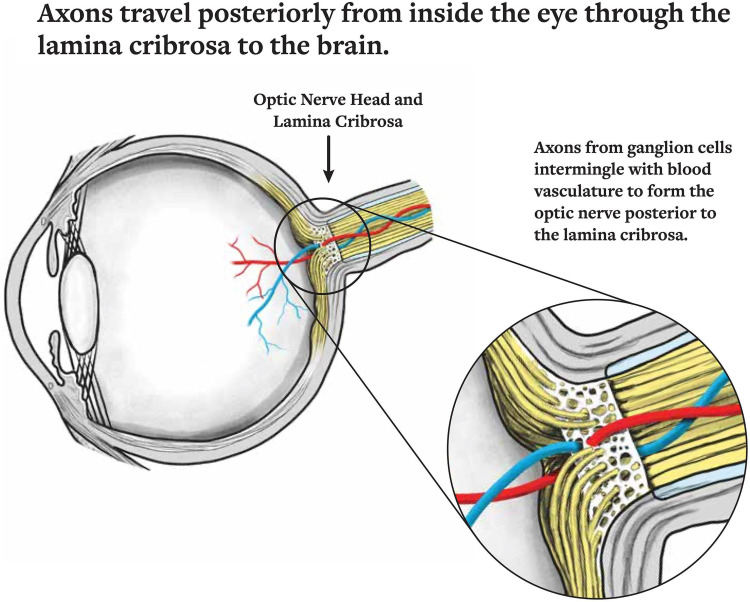
Figure 1.
Figure 1.
The ocular axons travel from the eye through the lamina cribrosa backwards to the brain. This connection represents an important relationship between intraocular pressure and intracranial pressure. Reprinted from Berdahl JP, Ferguson TJ, Samuelson TW. Periodic normalization of the translaminar pressure gradient prevents glaucomatous damage. Med Hypotheses. Permissions obtained from Elsevier and Rightslink by Copyright Clearance Center, Inc.
Figure 2.
Figure 2.
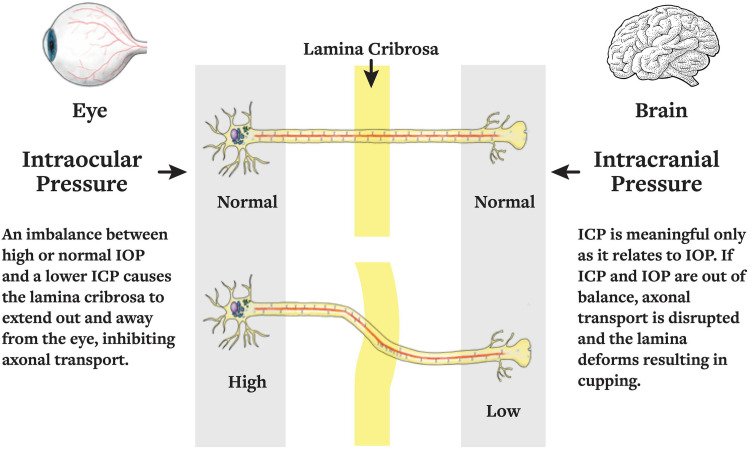
The translaminar pressure gradient can be modulated with changes to intraocular pressure and intracranial pressure in disease. Thus, also representing that pressure modulation may help to reverse the translaminar pressure gradient back to equilibrium. Reprinted from Berdahl JP, Ferguson TJ, Samuelson TW. Periodic normalization of the translaminar pressure gradient prevents glaucomatous damage. Med Hypotheses. Permissions obtained from Elsevier and Rightslink by Copyright Clearance Center, Inc.
Figure 3.
Figure 3.
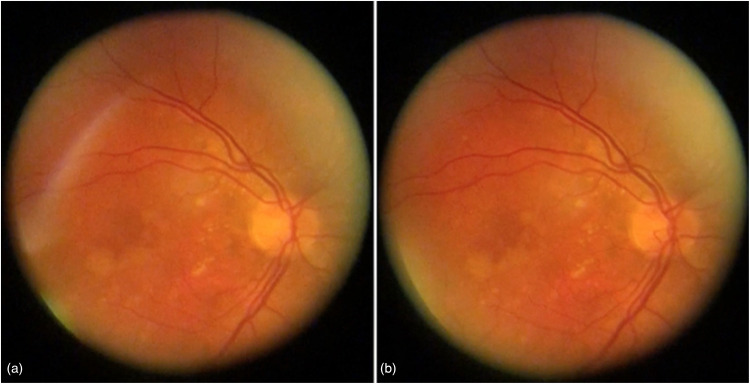
Spontaneous venous pulsations illustrated with still figures with (a) showcasing venous collapse of the retinal vein and (b) showcasing venous dilation of the retinal vein. Reprinted with permission from Laurent C, Hong SC, Cheyne KR, Ogbuehi KC. The Detection of Spontaneous Venous Pulsation with Smartphone Video Ophthalmoscopy. Clin Ophthalmol. under Creative Commons Attribution - Non Commercial (unported, v3.0) License.
Figure 4.
Figure 4.
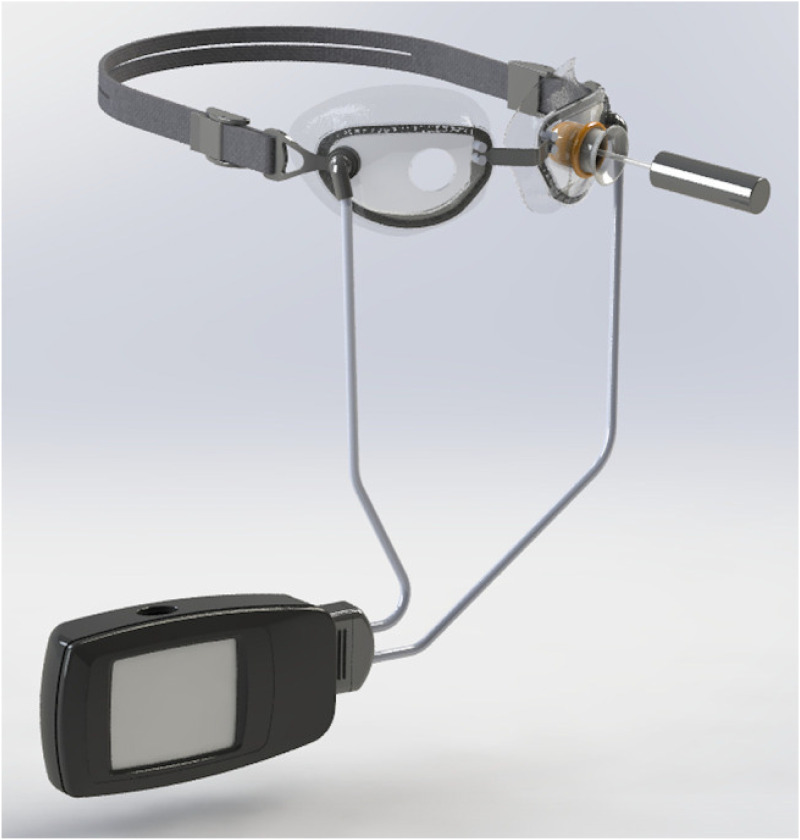
Multi-pressure dial (MPD) goggles that allows for precisional application of negative pressure with an access port for pneumatonometry measurements during negative pressure application. Reprinted with permission from Ferguson TJ, Radcliffe NM, Van Tassel SH, Baartman BJ, Thompson VM, Lindstrom RL, Ibach MJ, Berdahl JP. Overnight Safety Evaluation of a Multi-Pressure Dial in Eyes with Glaucoma: Prospective, Open-Label, Randomized Study. Clin Ophthalmol. under Creative Commons Attribution – Non Commercial (unported, v3.0) License.

References

    1. Allison K, Patel D, Alabi O. Epidemiology of glaucoma: The past, present, and predictions for the future. Cureus 2020. doi: 10.7759/cureus.11686 - DOI - PMC - PubMed
    1. Waisberg E, Micieli JA. Neuro-Ophthalmological optic nerve cupping: an overview. Eye Brain 2021; 13: 255–268. doi: 10.2147/EB.S272343 - DOI - PMC - PubMed
    1. Abe RY, Gracitelli CPB, Diniz-Filho A, et al. Lamina cribrosa in glaucoma: diagnosis and monitoring. Curr Ophthalmol Rep 2015; 3: 74–84. doi: 10.1007/s40135-015-0067-7 - DOI - PMC - PubMed
    1. Schuster AK, Erb C, Hoffmann EM, et al. The diagnosis and treatment of glaucoma. Dtsch Arztebl Int 2020. doi: 10.3238/arztebl.2020.0225 - DOI - PMC - PubMed
    1. Waisberg E, Ong J, Masalkhi M, et al. Anatomical considerations for reducing ocular emergencies during spaceflight. Ir J Med Sci 2023. doi: 10.1007/s11845-023-03407-5 - DOI - PMC - PubMed

LinkOut - more resources