


Mechanisms of acupuncture-electroacupuncture on inflammatory pain
- PMID: 37678839
- PMCID: PMC10515556
- DOI: 10.1177/17448069231202882
Mechanisms of acupuncture-electroacupuncture on inflammatory pain
Abstract
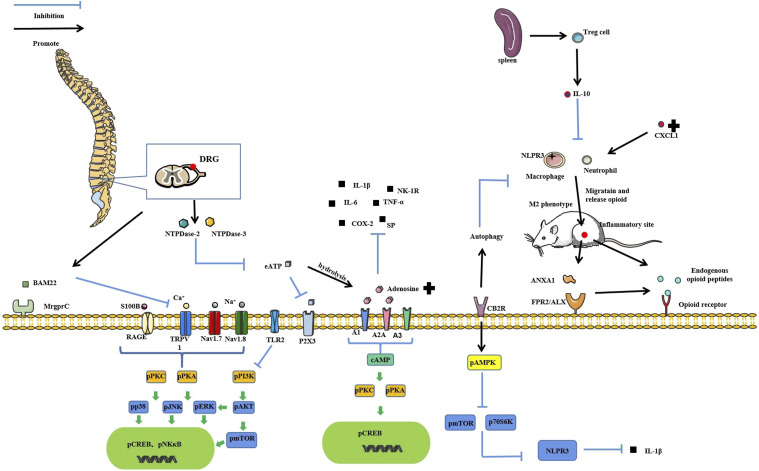
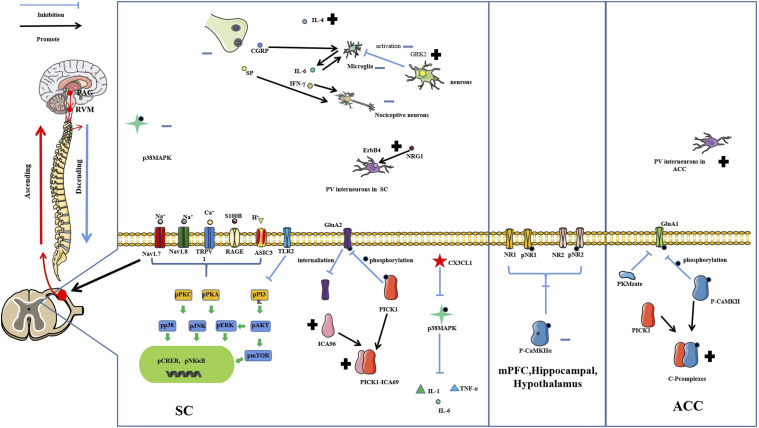
Acupuncture, as a traditional treatment, has been extensively used in China for thousands of years. According to the World Health Organization (WHO), acupuncture is recommended for the treatment of 77 diseases. And 16 of these diseases are related to inflammatory pain. As a combination of traditional acupuncture and modern electrotherapy, electroacupuncture (EA) has satisfactory analgesic effects on various acute and chronic pain. Because of its good analgesic effects and no side effects, acupuncture has been widely accepted all over the world. Despite the increase in the number of studies, the mechanisms via which acupuncture exerts its analgesic effects have not been conclusively established. A literature review of related research is of great significance to elaborate on its mechanisms and to inform on further research directions. We elucidated on its mechanisms of action on inflammatory pain from two levels: peripheral and central. It includes the mechanisms of acupuncture in the periphery (immune cells and neurons, purinergic pathway, nociceptive ion channel, cannabinoid receptor and endogenous opioid peptide system) and central nervous system (TPRV1, glutamate and its receptors, glial cells, GABAergic interneurons and signaling molecules). In this review, we collected relevant recent studies to systematically explain the mechanisms of acupuncture in treating inflammatory pain, with a view to providing direction for future applications of acupuncture in inflammatory pain and promoting clinical development.
Keywords: Acupuncture; analgesia; central nerve system; inflammatory pain; peripheral nerve system.
Conflict of interest statement
The author(s) declared no potential conflicts of interest with respect to the research, authorship, and/or publication of this article.
Figures
References
-
- Luo C, Kuner T, Kuner R. Synaptic plasticity in pathological pain. Trends Neurosci 2014; 37(6): 343–355. - PubMed
-
- Schoneboom BA, Perry SM, Barnhill WK, Giordano NA, Wiltse Nicely KL, Polomano RC. Answering the call to address chronic pain in military service members and veterans: progress in improving pain care and restoring health. Nurs Outlook 2016; 64(5): 459–484. - PubMed
-
- Jackson T, Thomas S, Stabile V, Han X, Shotwell M, McQueen K. Prevalence of chronic pain in low-income and middle-income countries: a systematic review and meta-analysis. Lancet 2015; 385 Suppl 2(Suppl 2): S10. - PubMed
-
- Breivik H, Collett B, Ventafridda V, Cohen R, Gallacher D. Survey of chronic pain in Europe: prevalence, impact on daily life, and treatment. Eur J Pain 2006; 10(4): 287–333. - PubMed
Publication types
MeSH terms
Substances
LinkOut - more resources
Full Text Sources
Medical
Research Materials
