


Transcending Language Barriers in Obstetrics and Gynecology: A Critical Dimension for Health Equity
- PMID: 37678884
- PMCID: PMC10510840
- DOI: 10.1097/AOG.0000000000005334
Transcending Language Barriers in Obstetrics and Gynecology: A Critical Dimension for Health Equity
Abstract
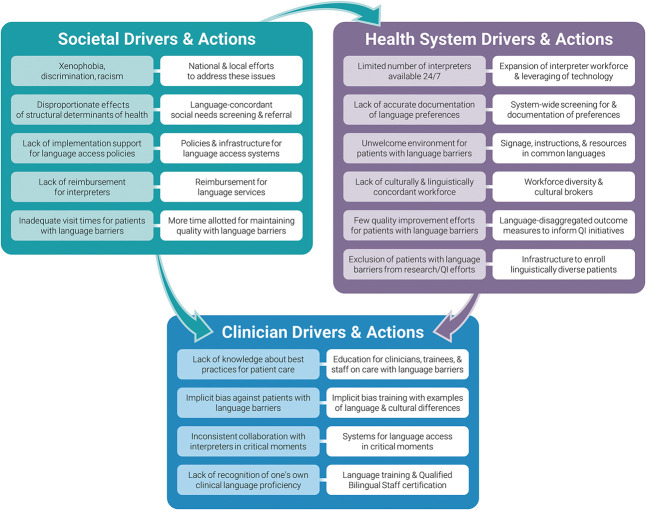
There is growing evidence that language discordance between patients and their health care teams negatively affects quality of care, experience of care, and health outcomes, yet there is limited guidance on best practices for advancing equitable care for patients who have language barriers within obstetrics and gynecology. In this commentary, we present two cases of language-discordant care and a framework for addressing language as a critical lens for health inequities in obstetrics and gynecology, which includes a variety of clinical settings such as labor and delivery, perioperative care, outpatient clinics, and inpatient services, as well as sensitivity around reproductive health topics. The proposed framework explores drivers of language-related inequities at the clinician, health system, and societal level. We end with actionable recommendations for enhancing equitable care for patients experiencing language barriers. Because language and communication barriers undergird other structural drivers of inequities in reproductive health outcomes, we urge obstetrician-gynecologists to prioritize improving care for patients experiencing language barriers.
Copyright © 2023 The Author(s). Published by Wolters Kluwer Health, Inc.
Conflict of interest statement
Financial Disclosure Caroline Mitchell reports that she and her institution received payment from Scynexis, Inc., and she received payment from Ferring Pharmaceuticals. The other authors did not report any potential conflicts of interest.
Figures
References
Publication types
MeSH terms
Grants and funding
LinkOut - more resources
Full Text Sources
