


A framework for multi-faceted content analysis of social media chatter regarding non-medical use of prescription medications
- PMID: 37680768
- PMCID: PMC10483682
- DOI: 10.1186/s44247-023-00029-w
A framework for multi-faceted content analysis of social media chatter regarding non-medical use of prescription medications
Abstract
Background: Substance use, including the non-medical use of prescription medications, is a global health problem resulting in hundreds of thousands of overdose deaths and other health problems. Social media has emerged as a potent source of information for studying substance use-related behaviours and their consequences. Mining large-scale social media data on the topic requires the development of natural language processing (NLP) and machine learning frameworks customized for this problem. Our objective in this research is to develop a framework for conducting a content analysis of Twitter chatter about the non-medical use of a set of prescription medications.
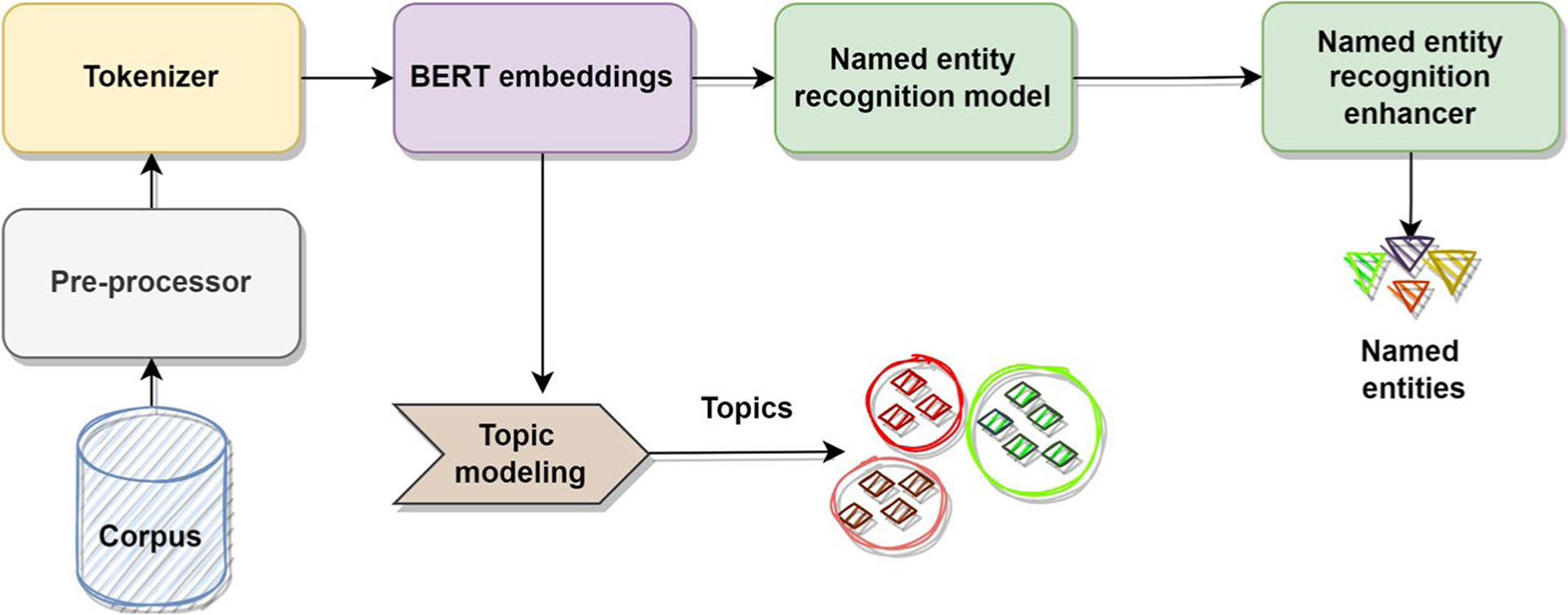
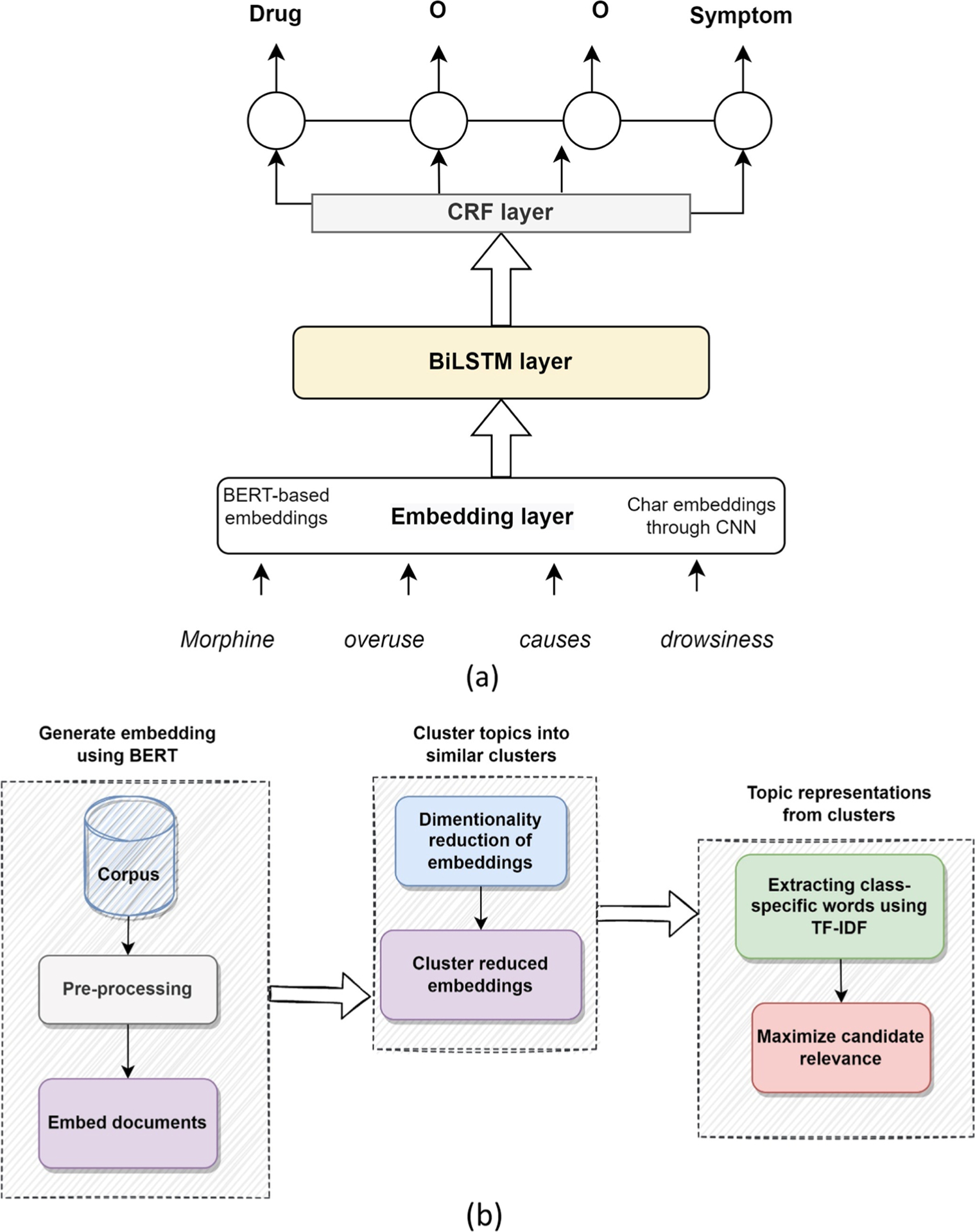
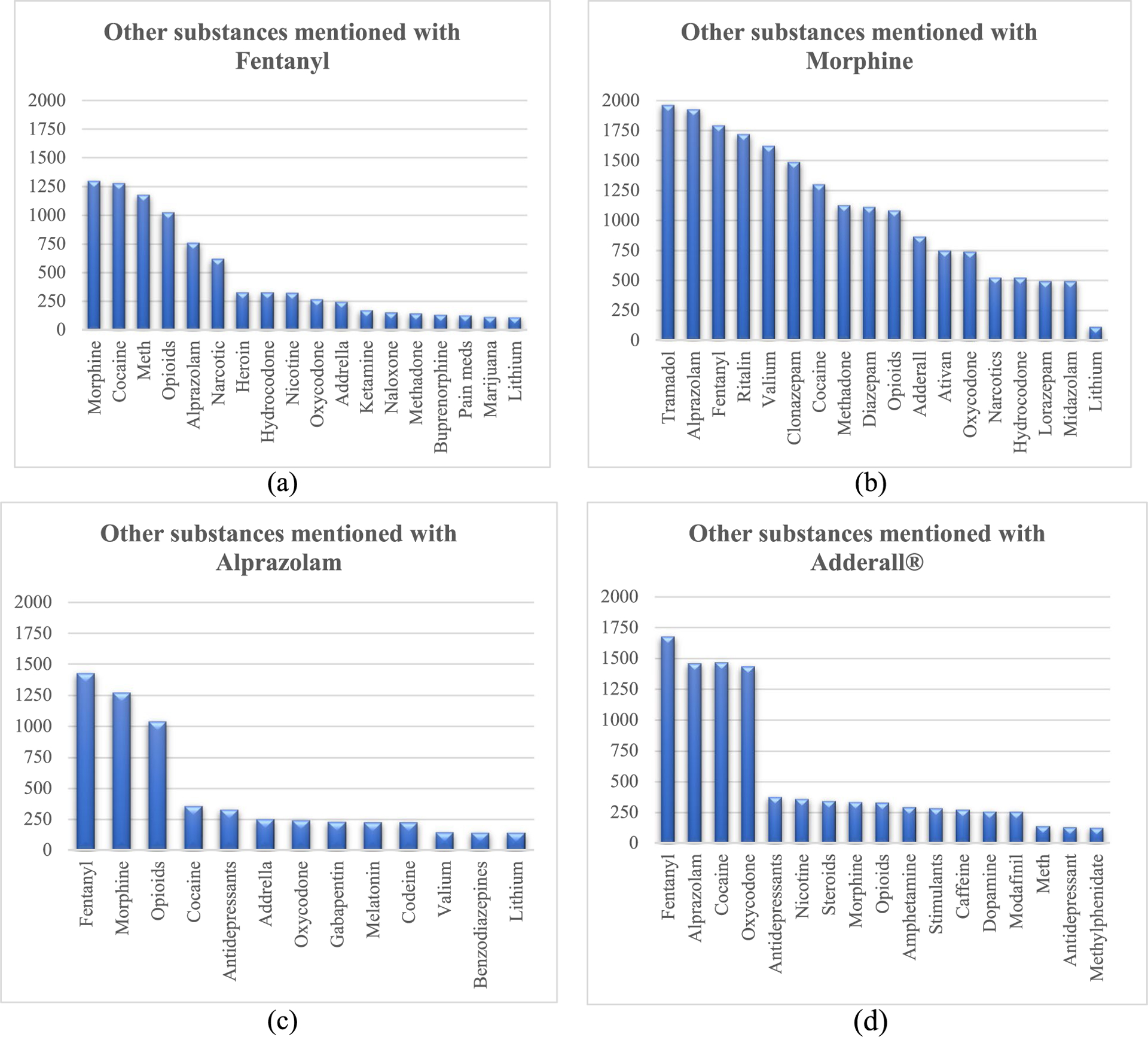
Methods: We collected Twitter data for four medications-fentanyl and morphine (opioids), alprazolam (benzodiazepine), and Adderall® (stimulant), and identified posts that indicated non-medical use using an automatic machine learning classifier. In our NLP framework, we applied supervised named entity recognition (NER) to identify other substances mentioned, symptoms, and adverse events. We applied unsupervised topic modelling to identify latent topics associated with the chatter for each medication.
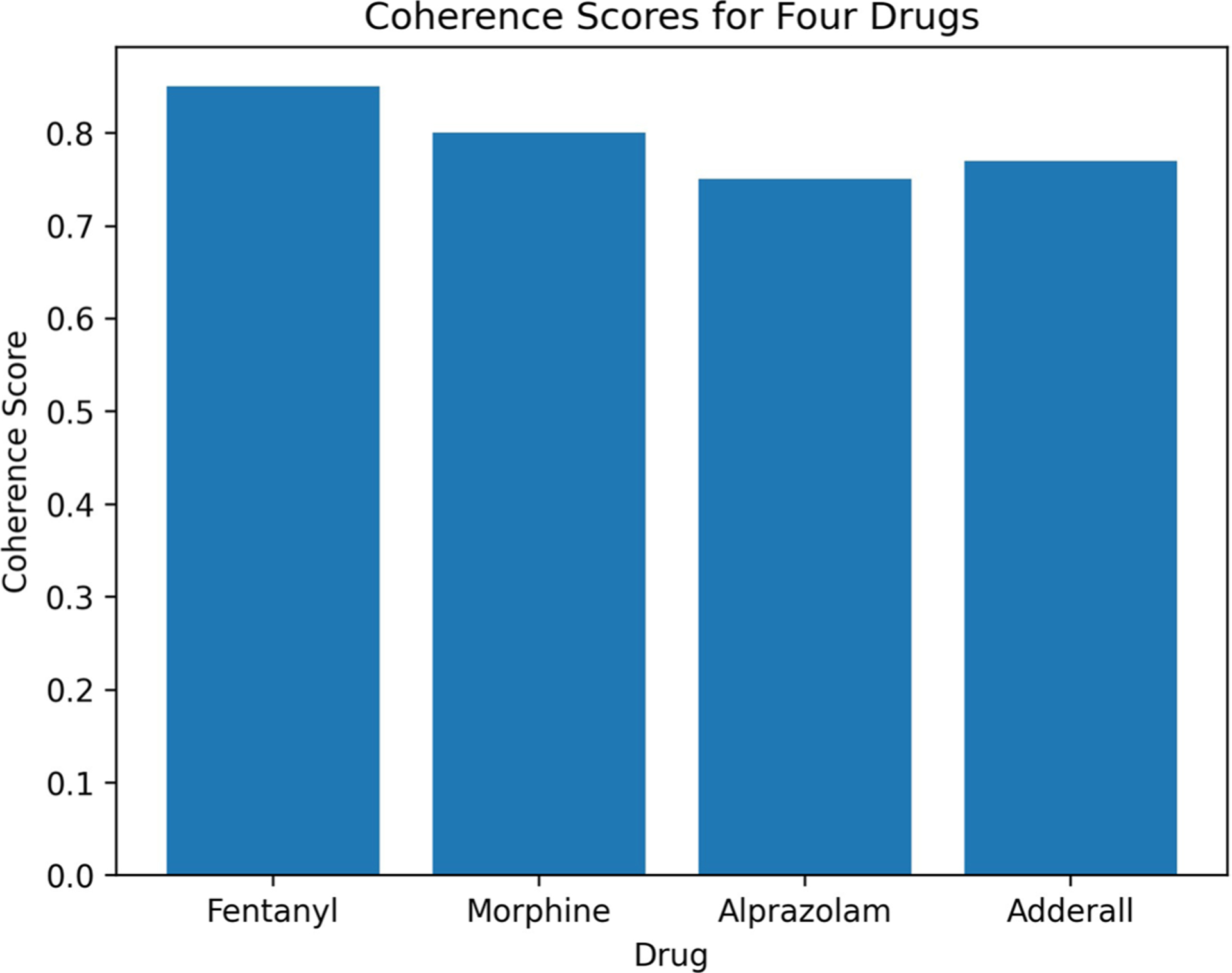
Results: The quantitative analysis demonstrated the performance of the proposed NER approach in identifying substance-related entities from data with a high degree of accuracy compared to the baseline methods. The performance evaluation of the topic modelling was also notable. The qualitative analysis revealed knowledge about the use, non-medical use, and side effects of these medications in individuals and communities.
Conclusions: NLP-based analyses of Twitter chatter associated with prescription medications belonging to different categories provide multi-faceted insights about their use and consequences. Our developed framework can be applied to chatter about other substances. Further research can validate the predictive value of this information on the prevention, assessment, and management of these disorders.
Keywords: Machine learning; Natural language processing; Social media; Substance use.
Conflict of interest statement
Competing interests The authors declare no competing interests.
Figures
References
-
- Ahmad FB, Cisewski JA, Rossen LM, Sutton P. Products - Vital Statistics Rapid Release - Provisional Drug Overdose Data. National Center for Health Statistics. 2022.
-
- Hughes A, Williams MR, Lipari RN, Bose J, Copello EA, Kroutil LA. Prescription drug use and misuse in the United States: results from the 2015 national survey on drug use and health. NSDUH data review, substance abuse and mental health services administration. Natl Survey Drug Use Health. 2016;2016:1–41.
-
- Singh J Centers for disease control and prevention. Indian J Pharmacol. 2004;36:268–9. https://www.cdc.gov/. Accessed 27 Jan 2022.
-
- U.S. Food and Drug Administration. Neurontin. 2017. https://www.accessdata.fda.gov/drugsatfda_docs/label/2017/020235s064_020.... Accessed 22 July 2023.
Grants and funding
LinkOut - more resources
Full Text Sources