


The effect of robot-assisted gait training for patients with spinal cord injury: a systematic review and meta-analysis
- PMID: 37680972
- PMCID: PMC10482434
- DOI: 10.3389/fnins.2023.1252651
The effect of robot-assisted gait training for patients with spinal cord injury: a systematic review and meta-analysis
Abstract
Background: With the aging of the global population, Spinal injuries are often prone to occur and affect human health. The development of technology has put robots on the stage to assist in the treatment of spinal injuries.
Methods: A comprehensive literature search were carried out in multiple databases, including PubMed, Medline (Ovid), Web of Science, Cochrane, Embase, Scopus, CKNI, Wang fang, VIP database, Sino Med, Clinical Trails until 20th, June, 2023 to collect effect of robot-assisted gait training for patients with spinal cord injury patients. Primary outcome includes any changes of gait distance and gait speed. Secondary outcomes include any changes in functions (Such as TUG, Leg strength, 10 MWT) and any advent events. Data were extracted from two independent individuals and Cochrane Risk of Bias tool version 2.0 was assessed for the included studies. Systematic review and meta-analysis were performed by RevMan 5.3 software.
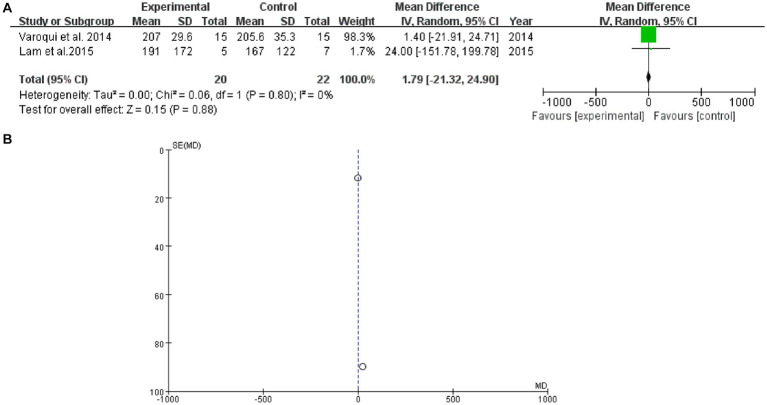
Results: 11 studies were included in meta-analysis. The result showed that gait distance [WMD = 16.05, 95% CI (-15.73, 47.83), I2 = 69%], gait speed (RAGT vs. regular treatment) [WMD = 0.01, 95% CI (-0.04, 0.05), I2 = 43%], gait speed (RAGT vs. no intervention) [WMD = 0.07, 95% CI (0.01, 0.12), I2 = 0%], leg strength [WMD = 0.59, 95% CI (-1.22, 2.40), I2 = 29%], TUG [WMD = 9.25, 95% CI (2.76, 15.73), I2 = 74%], 10 MWT [WMD = 0.01, 95% CI (-0.15, 0.16), I2 = 0%], and 6 MWT [WMD = 1.79, 95% CI (-21.32, 24.90), I2 = 0%].
Conclusion: Robot-assisted gait training seems to be helpful for patients with spinal cord to improve TUG. It may not affect gait distance, gait speed, leg strength, 10 MWT, and 6 MWT.
Keywords: gait distance; gait speed; gait training; robot-assisted; spinal cord injury.
Copyright © 2023 Bin, Wang, Jiatong, Donghua, Qiang, Yingchao, Yiming and Yong.
Conflict of interest statement
The authors declare that the research was conducted in the absence of any commercial or financial relationships that could be construed as a potential conflict of interest.
Figures


References
-
- Aguirre-Güemez A. V., Pérez-Sanpablo A. I., Quinzaños-Fresnedo J., Pérez-Zavala R., Barrera-Ortiz A. (2019). Walking speed is not the best outcome to evaluate the effect of robotic assisted gait training in people with motor incomplete spinal cord injury: a systematic review with meta-analysis. J. Spinal Cord Med. 42, 142–154. doi: 10.1080/10790268.2017.1390644, PMID: - DOI - PMC - PubMed
-
- Alcobendas-Maestro M., Esclarín-Ruz A., Casado-López R. M., Muñoz-González A., Pérez-Mateos G., González-Valdizán E., et al. (2012). Lokomat robotic-assisted versus overground training within 3 to 6 months of incomplete spinal cord lesion: randomized controlled trial. Neurorehabil. Neural Repair 26, 1058–1063. doi: 10.1177/1545968312448232, PMID: - DOI - PubMed
Publication types
LinkOut - more resources
Full Text Sources
