Review
. 2023 Nov;75(6):1167-1199.
doi: 10.1124/pharmrev.122.000801. Epub 2023 Sep 8.

Therapeutic Potential of Targeting Prokineticin Receptors in Diseases

Affiliations
Review

Therapeutic Potential of Targeting Prokineticin Receptors in Diseases

Martina Vincenzi et al. Pharmacol Rev. 2023 Nov.

Abstract

The prokineticins (PKs) were discovered approximately 20 years ago as small peptides inducing gut contractility. Today, they are established as angiogenic, anorectic, and proinflammatory cytokines, chemokines, hormones, and neuropeptides involved in variety of physiologic and pathophysiological pathways. Their altered expression or mutations implicated in several diseases make them a potential biomarker. Their G-protein coupled receptors, PKR1 and PKR2, have divergent roles that can be therapeutic target for treatment of cardiovascular, metabolic, and neural diseases as well as pain and cancer. This article reviews and summarizes our current knowledge of PK family functions from development of heart and brain to regulation of homeostasis in health and diseases. Finally, the review summarizes the established roles of the endogenous peptides, synthetic peptides and the selective ligands of PKR1 and PKR2, and nonpeptide orthostatic and allosteric modulator of the receptors in preclinical disease models. The present review emphasizes the ambiguous aspects and gaps in our knowledge of functions of PKR ligands and elucidates future perspectives for PK research. SIGNIFICANCE STATEMENT: This review provides an in-depth view of the prokineticin family and PK receptors that can be active without their endogenous ligand and exhibits "constitutive" activity in diseases. Their non- peptide ligands display promising effects in several preclinical disease models. PKs can be the diagnostic biomarker of several diseases. A thorough understanding of the role of prokineticin family and their receptor types in health and diseases is critical to develop novel therapeutic strategies with safety concerns.


Figures

None
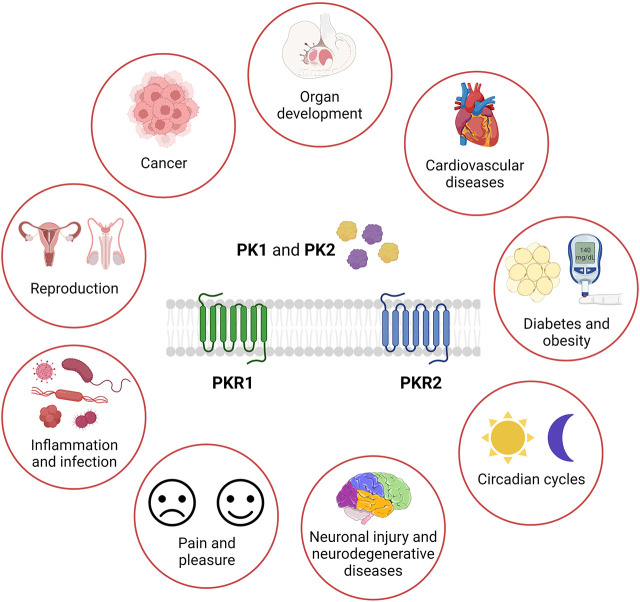
Graphical abstract
Fig. 1
Fig. 1
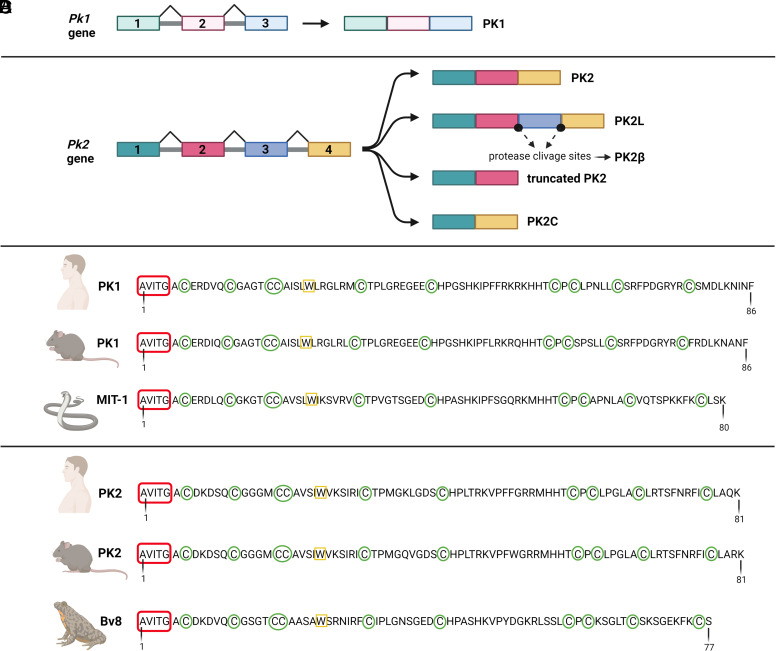
Schematical representation of prokineticin systems. (A, B) Prokineticin genes and their splicing isoforms. (C, D) Amino acid sequence of mammalian prokineticins, mamba intestinal toxin 1 and Bv8. Created with BioRender.com.
Fig. 2
Fig. 2
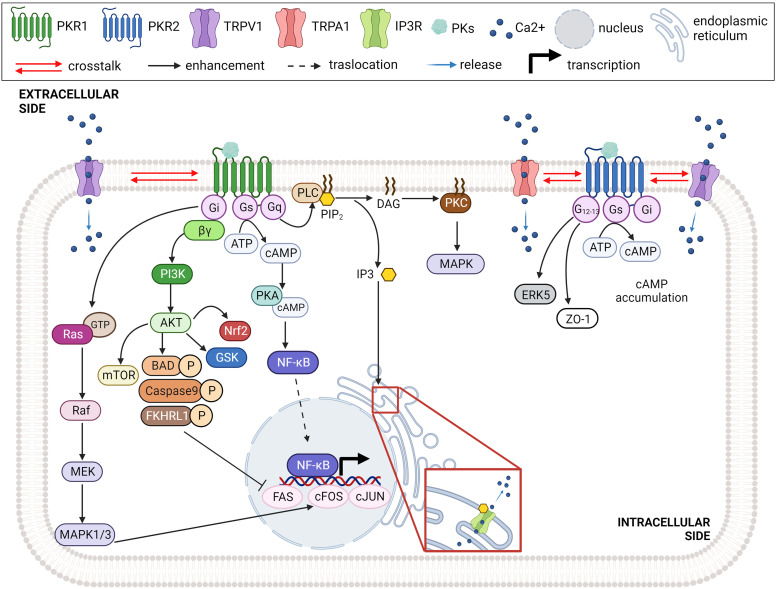
Intracellular signaling pathway triggered by PK/PKR binding. PKR1 exert its biologic activity by activating Gi, Gs, Gq signaling pathway, whereas PKR2 uses G12/13, Gs and Gi pathways dependent on cell type, expression levels, and pathologic condition. Created with BioRender.com.
Fig. 3
Fig. 3
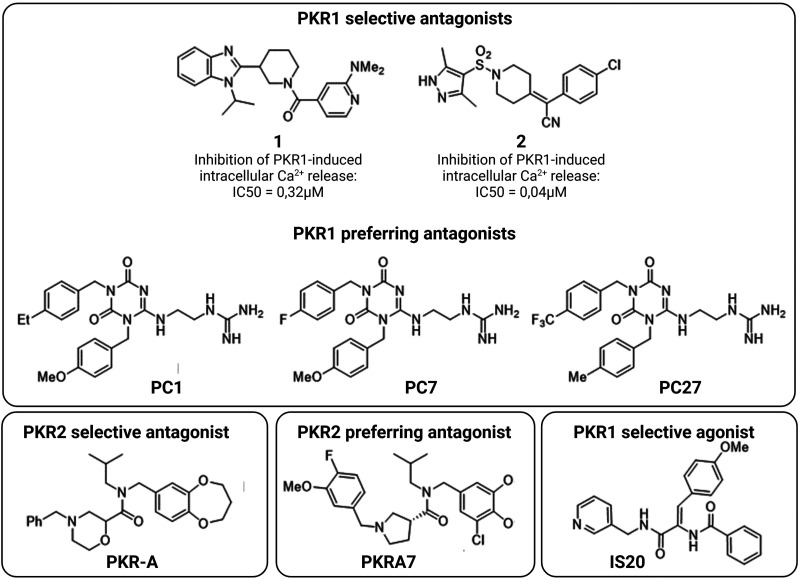
Representative small molecules as PKR1 and PKR2 ligands. PC1, PC7, and PC27 are the PKR1 preferring antagonist. PKR-A and PKRA7 are PKR2 selective and preferring antagonist, respectively. IS20 is a PKR1 selective agonist. Created with BioRender.com.
Fig. 4
Fig. 4
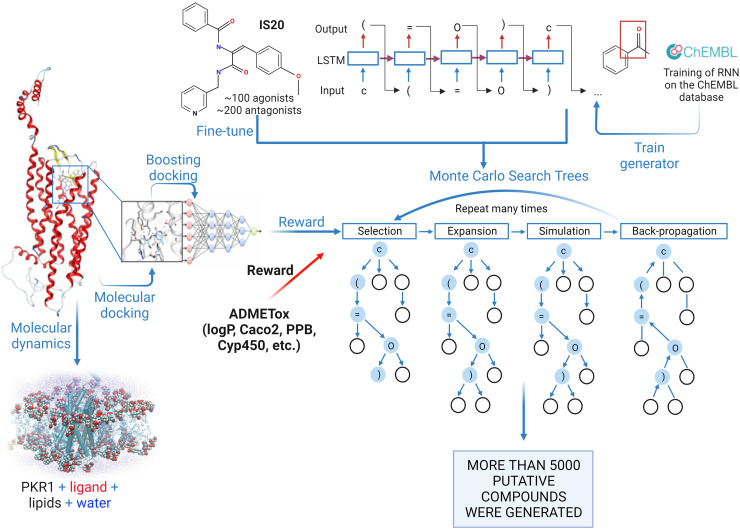
Illustration of the workflow used to generate new PKR1 agonists. These studies were based on recurrent neural networks, which were pre-trained on the ChEMBL database. A powerful machine learning algorithm have been developed which was the first trained on the SMILES canonicalization task using public ChEMBL molecules with the following fine-tuning on PKR1 data. ADMETox filters developed Transformer CNN (https://jcheminf.biomedcentral.com/articles/10.1186/s13321-020-00423-w) as well as molecular docking scores were used as reward to select compounds and fine-tune the generator. Molecular dynamic simulations were used to prioritize the generated compounds for experimental testing. Created with BioRender.com.
Fig. 5
Fig. 5
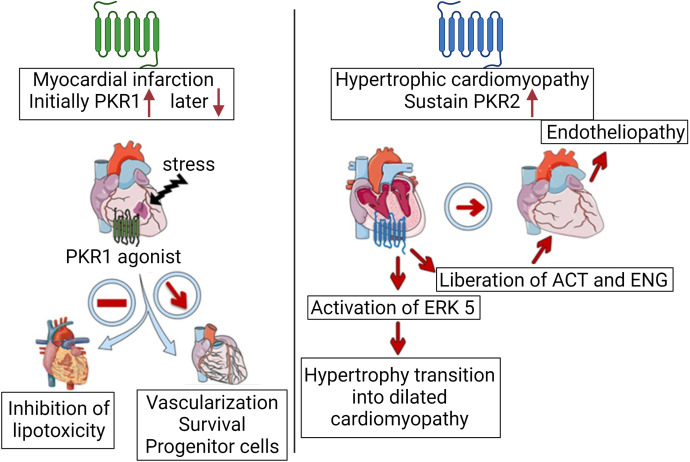
Role of PKRs in cardiac diseases. Increase in PKR1 and PKR2 levels together with PK2 has been observed right after the myocardial infarction in mice as a compensatory mechanism. However, PKR1 levels rapidly declines, and PKR1 gene therapy or PKR1 agonist activates survival pathway, induced capillary network formation for better perfusion, activates epicardial progenitor cells, and inhibits pathologic development of lipotoxicity. In the hypertrophic cardiomyopathy mice model, sustained PKR2 levels are involved in the transition of the hypertrophy to dilated cardiomyopathy via activating extracellular signal-regulated kinase 5 (ERK5) signaling. It also promotes liberation of activin (ACT) and endoglin (ENG) from hypertrophic cardiomyocytes acting as paracrine factors to promote endotheliopathy. Created with BioRender.com.
Fig. 6
Fig. 6
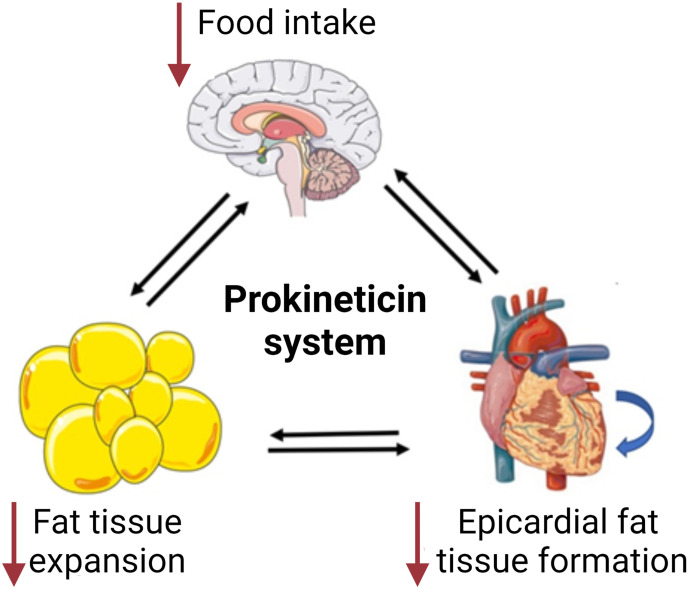
Effect of prokineticin system in food intake and fat tissue development. PK2 reduces food intake via PKR1 signaling and reduces adipose fat tissue expansion in whole body, including EAT formation in the heart through regulation of central, peripheral, or local pathways. Created with BioRender.com.
Fig. 7
Fig. 7
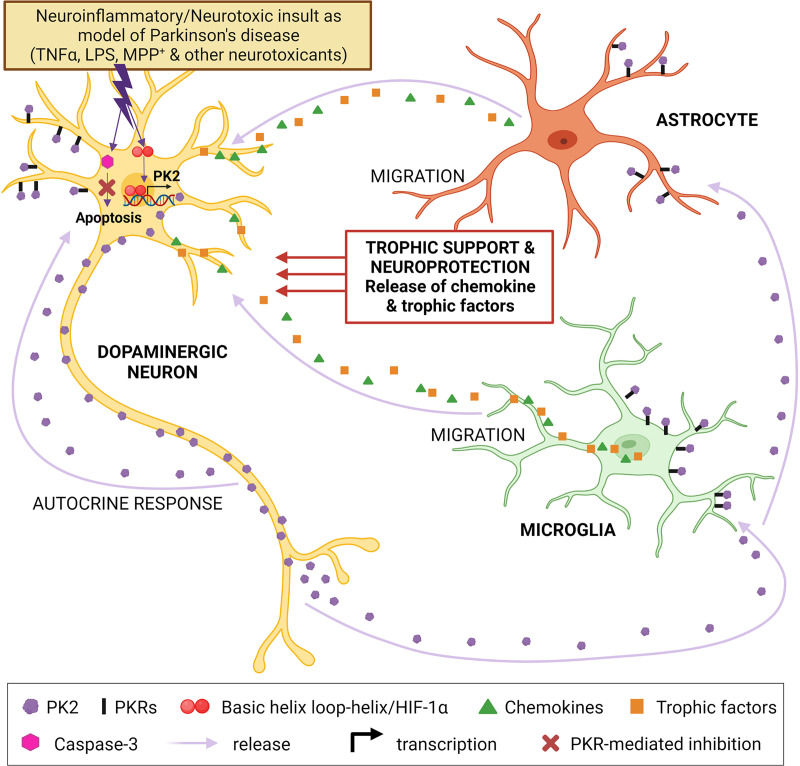
A proposed model for PK2 to attenuate dopaminergic neurotoxicity and promote an alternative A2 protective phenotype in astrocytes in Parkinson disease. Basal PK2 expression is low or undetectable in the nigral region, but its expression is highly induced during the early stages of neurotoxic insult in dopaminergic neurons. This small regulatory peptide is then secreted from dopaminergic neurons and function as a neuroprotective signal to counteract inflammatory injury via binding and activation of PKRs on astrocyte cells. PK2 also mediates dopaminergic neuronal survival via an autocrine fashion acting on PKRs by activating the ERK and AKT signaling pathways and promoting mitochondrial biogenesis. Created with BioRender.com.
Fig. 8
Fig. 8
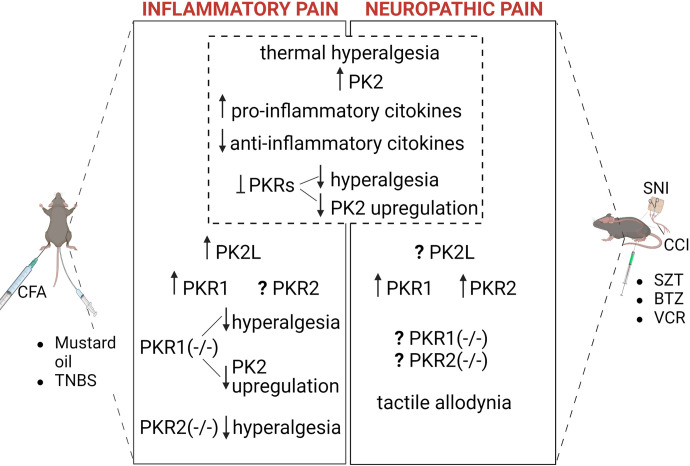
Comparison of prokineticin system alterations in inflammatory and neuropathic pain. In inflammatory and neuropathic pain, the production of circulating factors shifts toward those with a pro- inflammatory phenotype. PK2 is highly upregulated and blocking its receptors inhibits hyperalgesia in both inflammatory and neuropathic pain. Interestingly, the largest gap in our knowledge is the role of PK2 splicing variants in neuropathic pain and the involvement of the PKR2 pathway in inflammatory pain. Created with BioRender.com.
Fig. 9
Fig. 9
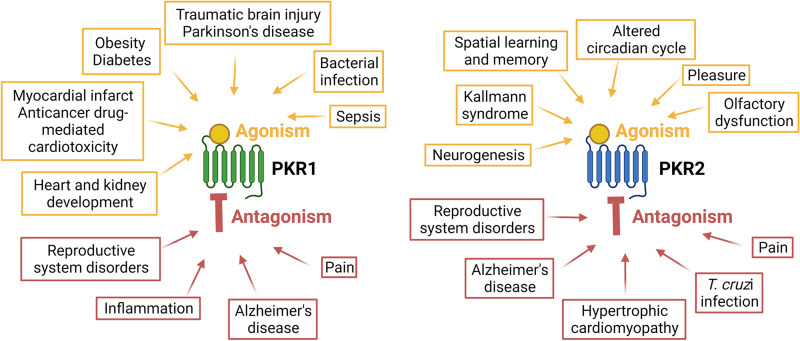
Possible therapeutic use of PKR ligands. The studies on genetically inhibition of PKRs in mice and preclinical studies with PKR agonist or antagonist demonstrated that PKR1 and PKR2 can be targets for treatment of indicated diseases. Created with BioRender.com.

References

    1. Abou-Hamdan M, Costanza M, Fontana E, Di Dario M, Musio S, Congiu C, Onnis V, Lattanzi R, Radaelli M, Martinelli V, Salvadori S, Negri L, Poliani PL, Farina C, Balboni G, Steinman L, Pedotti R (2015) Critical role for prokineticin 2 in CNS autoimmunity. Neurol Neuroimmunol Neuroinflamm 2:e95. - PMC - PubMed
    1. Abreu AP, Kaiser UB, Latronico AC (2010) The role of prokineticins in the pathogenesis of hypogonadotropic hypogonadism. Neuroendocrinology 91:283–290. - PMC - PubMed
    1. Abreu AP, Trarbach EB, de Castro M, Frade Costa EM, Versiani B, Matias Baptista MT, Garmes HM, Mendonca BB, Latronico AC (2008) Loss-of-function mutations in the genes encoding prokineticin-2 or prokineticin receptor-2 cause autosomal recessive Kallmann syndrome. J Clin Endocrinol Metab 93:4113–4118. - PubMed
    1. Acharya A, Baek ST, Huang G, Eskiocak B, Goetsch S, Sung CY, Banfi S, Sauer MF, Olsen GS, Duffield JS, et al. (2012) The bHLH transcription factor Tcf21 is required for lineage-specific EMT of cardiac fibroblast progenitors. Development 139:2139–2149. - PMC - PubMed
    1. Alfaidy N (2016) Prokineticin1 and pregnancy. Ann Endocrinol (Paris) 77:101–104. - PubMed