


Evaluating of neonatal early onset sepsis through lactate and base excess monitoring
- PMID: 37684308
- PMCID: PMC10491792
- DOI: 10.1038/s41598-023-41776-0
Evaluating of neonatal early onset sepsis through lactate and base excess monitoring
Abstract
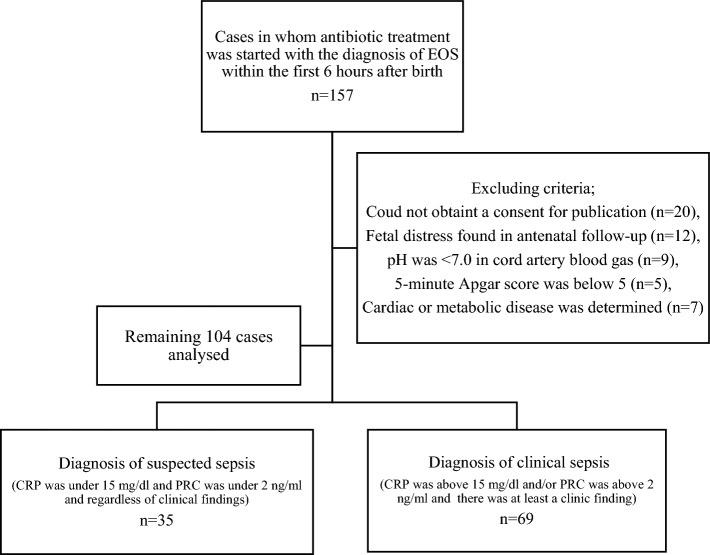
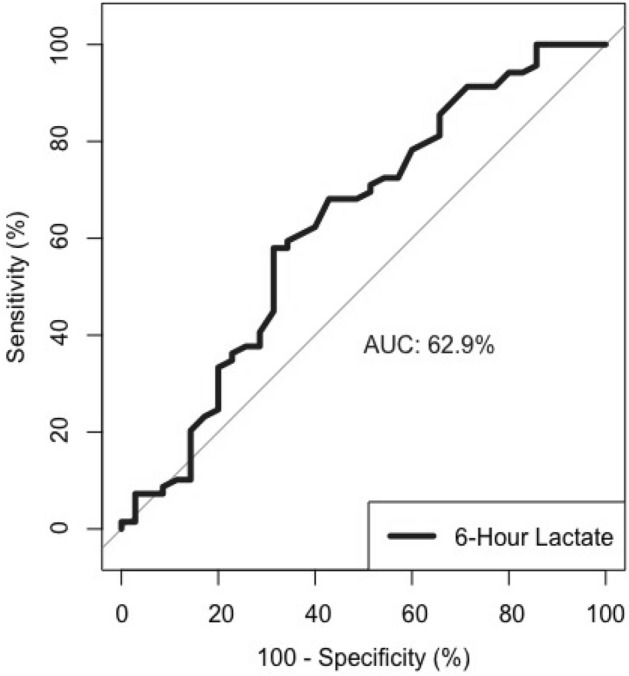
Early-onset sepsis (EOS) is one of the leading causes of neonatal death and morbidity worldwide and timely initiation of antibiotic therapy is, therefore, of paramount importance. This study aimed to evaluate the predictive effect of lactate and base excess (BE) values in the cord arterial blood gas and the 6th hour of life venous blood gas analysis on clinical sepsis in newborns. This is a cohort case-control study. In this study, 104 cases were divided into clinical and suspected sepsis groups according to the evaluation at the 24th hour after delivery. Lactate and BE values were evaluated in the cord arterial blood gas analysis (ABGA) and at the postnatal 6th-hour venous blood gas. The cord ABGA and postnatal 6th-hour results were compared in the clinical and suspected sepsis groups. Clinical sepsis was found to be associated with a lactate value above 2 mMol/L at postnatal 6th-hour venous blood gas (p = 0.041). This association was the highest when the clinical sepsis group's postnatal 6th-hour lactate cut-off value was determined as 3.38 mMol/L (sensitivity 57.9% and specificity 68.5%) (p = 0.032). However, no association was found between clinical sepsis diagnosis and venous BE's value in cord ABGA at the postnatal 6th hour. We found that a venous lactate value above 3.38 mMol/L at the postnatal 6th hour was the cut-off value that could indicate early-onset clinical sepsis. However, none of the biomarkers used in diagnosing EOS can accurately show all cases.
© 2023. Springer Nature Limited.
Conflict of interest statement
The authors declare no competing interests.
Figures
References
-
- GBD 2015 Child Mortality Collaborators Global, regional, national, and selected subnational levels of stillbirths, neonatal, infant, and under-5 mortality, 1980–2015: A systematic analysis for the Global Burden of Disease Study. Lancet. 2016;388(10053):1725–1774. doi: 10.1016/S0140-6736(16)31575-6. - DOI - PMC - PubMed
MeSH terms
Substances
LinkOut - more resources
Full Text Sources
Medical
