


Viral suppression rate at operation triple zero (Otz) and regular art follow-Up programs and associated factors among adolescent clients of Addis Ababa Ethiopia: a comparative cross-sectional study
- PMID: 37684703
- PMCID: PMC10492296
- DOI: 10.1186/s12985-023-02176-y
Viral suppression rate at operation triple zero (Otz) and regular art follow-Up programs and associated factors among adolescent clients of Addis Ababa Ethiopia: a comparative cross-sectional study
Abstract
Background: - Viral suppression is the main goal of currently available treatment and it is used as a primary indicator of successful treatment for human immunodeficiency virus/acquired immune deficiency syndrome (HIV/AIDS). This ensures a reduction in AIDS-associated morbidity and mortality and decreases the risk of both vertical and horizontal viral transmission. This study aimed to investigate the magnitude of viral suppression and its associated factors among adolescents, comparing the operation triple zero (OTZ) program to regular antiretroviral therapy (ART) follow-up programs.
Methods: - The research consisted of a comparative cross-sectional study, which included a total sample size of 446 adolescents on Active Antiretroviral Therapy (ART) - 223 enrolled in OTZ, and 223 in regular ART from public hospitals. Sociodemographic data were obtained using a self-administered semi-structured questionnaire, and clinical data were extracted from medical records. To examine the prevalence of viral suppression (VS) the latest status was used and multivariate logistic regression analysis was performed to identify factors associated with VS.
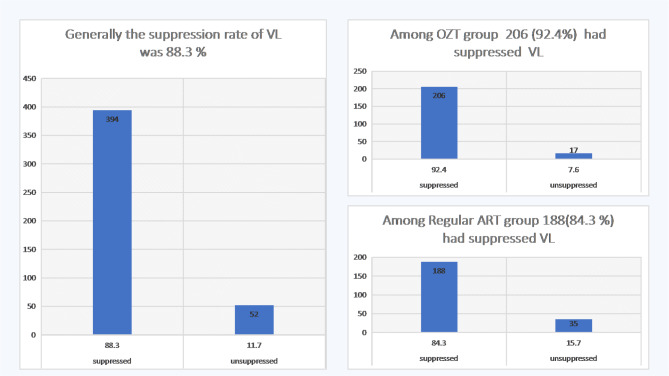
Results: - Overall, the adolescent viral suppression was 88.3%, with 92.4% in the OTZ group and 84.3% in the regular ART group. Among OTZ participants, the factors that significantly reduced the odds of viral suppression were having a history of admission in the last year, alcohol use, biological mother not alive, cigarette smoking, social discrimination, and current medication regimen TDF/3TC/EFZ. Among those in regular ART, factors associated with a lesser chance of viral suppression were alcohol use, social discrimination, unscheduled appointments, and current medication regimen TDF/3TC/EFZ when compared to their counterparts. When we compared the two programs, OTZ had a 26.1 times greater chance of suppressing HIV viral load (AOR = 26.1, 95% CI: 3.499-133.9; P = 0.041).
Conclusion: - The overall VS was 88.3%, while viral suppression is better achieved through the OTZ program than through regular ART services. Alcohol use, biological mother not alive, cigarette smoking, social discrimination, and current medication regimen TDF/3TC/EFZ were identified to be factors associated with viral nonsuppression. Therefore, it is advisable to implement the OTZ program in all HIV care centers and focus on factors reducing viral suppression.
Keywords: Comparative cross-sectional study; HIV in adolescents; Operation triple zero (OTZ); Viral suppression.
© 2023. BioMed Central Ltd., part of Springer Nature.
Conflict of interest statement
The authors declare that they have no competing interests.
Figures
References
-
- HIV. and AIDS (who.int), Available at https://www.who.int/news-room/fact-sheets/detail/hiv-aids. Accessed on July 25 2023.
-
- ,Maina EK, Mureithi H, Adan AA, Muriuki J, Lwembe RM, Bukusi EA. Incidences and factors associated with viral suppression or rebound among HIV patients on combination antiretroviral therapy from three counties in Kenya. Int J Infect Dis. 2020;97:151–8. doi: 10.1016/j.ijid.2020.05.097. - DOI - PubMed
-
- UNFPA Ethiopia | HIV Prevention in Ethiopia: National Road Map. (2018–2021). Available at: https://ethiopia.unfpa.org/en/publications/hiv-prevention-ethiopia-natio.... Accessed on May 20 2021.
MeSH terms
LinkOut - more resources
Full Text Sources
Medical
