


A Citrus and Pomegranate Complex Reduces Methylglyoxal in Healthy Elderly Subjects: Secondary Analysis of a Double-Blind Randomized Cross-Over Clinical Trial
- PMID: 37685975
- PMCID: PMC10488144
- DOI: 10.3390/ijms241713168
A Citrus and Pomegranate Complex Reduces Methylglyoxal in Healthy Elderly Subjects: Secondary Analysis of a Double-Blind Randomized Cross-Over Clinical Trial
Abstract
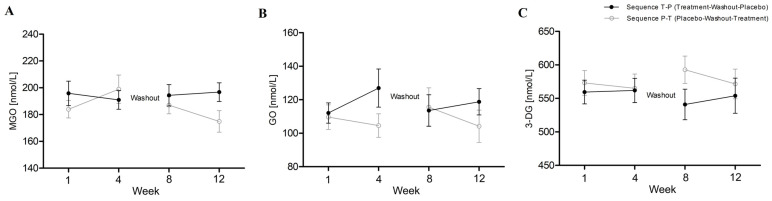
Reactive α-dicarbonyls (α-DCs), such as methylglyoxal (MGO), glyoxal (GO), and 3-deoxyglucosone (3-DG), are potent precursors in the formation of advanced glycation end products (AGEs). In particular, MGO and MGO-derived AGEs are thought to be involved in the development of vascular complications in diabetes. Experimental studies showed that citrus and pomegranate polyphenols can scavenge α-DCs. Therefore, the aim of this study was to evaluate the effect of a citrus and pomegranate complex (CPC) on the α-DCs plasma levels in a double-blind, placebo-controlled cross-over trial, where thirty-six elderly subjects were enrolled. They received either 500 mg of Citrus sinensis peel extract and 200 mg of Punica granatum concentrate in CPC capsules or placebo capsules for 4 weeks, with a 4-week washout period in between. For the determination of α-DCs concentrations, liquid chromatography tandem mass spectrometry was used. Following four weeks of CPC supplementation, plasma levels of MGO decreased by 9.8% (-18.7 nmol/L; 95% CI: -36.7, -0.7 nmol/L; p = 0.042). Our findings suggest that CPC supplementation may represent a promising strategy for mitigating the conditions associated with MGO involvement. This study was registered on clinicaltrials.gov as NCT03781999.
Keywords: 3-deoxyglucosone; Citrus × sinensis; Punica × granatum; glyoxal; hesperidin; methylglyoxal; punicalagin; α-dicarbonyls.
Conflict of interest statement
S.A. receives a salary from BioActor BV. The other authors declare no conflict of interest.
Figures
References
Publication types
MeSH terms
Substances
Associated data
LinkOut - more resources
Full Text Sources
Medical
