


Effector-specific motor simulation supplements core action recognition processes in adverse conditions
- PMID: 37688518
- PMCID: PMC10576201
- DOI: 10.1093/scan/nsad046
Effector-specific motor simulation supplements core action recognition processes in adverse conditions
Abstract
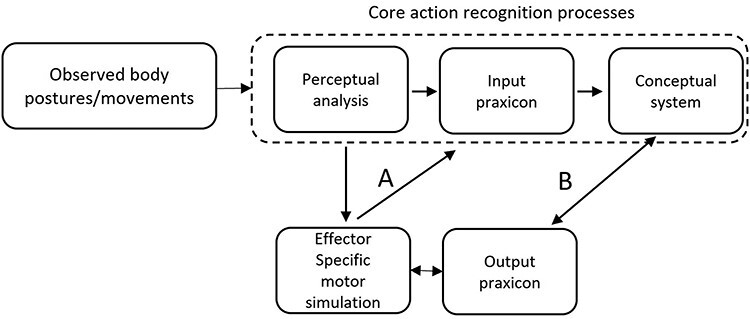
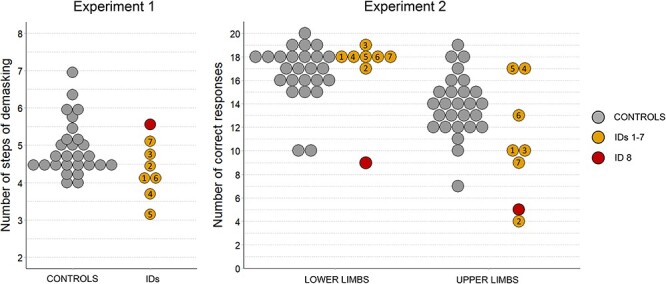
Observing other people acting activates imitative motor plans in the observer. Whether, and if so when and how, such 'effector-specific motor simulation' contributes to action recognition remains unclear. We report that individuals born without upper limbs (IDs)-who cannot covertly imitate upper-limb movements-are significantly less accurate at recognizing degraded (but not intact) upper-limb than lower-limb actions (i.e. point-light animations). This finding emphasizes the need to reframe the current controversy regarding the role of effector-specific motor simulation in action recognition: instead of focusing on the dichotomy between motor and non-motor theories, the field would benefit from new hypotheses specifying when and how effector-specific motor simulation may supplement core action recognition processes to accommodate the full variety of action stimuli that humans can recognize.
Keywords: action recognition; motor simulation; working memory.
© The Author(s) 2023. Published by Oxford University Press.
Conflict of interest statement
The authors declared that they had no conflict of interest with respect to their authorship or the publication of this article.
Figures
References
-
- Akeroyd M.A. (2008). Are individual differences in speech reception related to individual differences in cognitive ability? A survey of twenty experimental studies with normal and hearing-impaired adults. International Journal of Audiology, 47, 53–71. - PubMed
-
- Arrighi R., Cartocci G., Burr D. (2011). Reduced perceptual sensitivity for biological motion in paraplegia patients. Current Biology, 21(22), 910–1. - PubMed
-
- Astafiev S.V., Stanley C.M., Shulman G.L., Corbetta M. (2004). Extrastriate body area in human occipital cortex responds to the performance of motor actions. Nature Neuroscience, 7(5), 542–8. - PubMed
-
- Avenanti A., Annella L., Candidi M., Urgesi C., Aglioti S.M. (2013). Compensatory plasticity in the action observation network: virtual lesions of STS enhance anticipatory simulation of seen actions. Cerebral Cortex, 23(3), 570–80. - PubMed
