


Effect of heat-clearing and dampness-eliminating Chinese medicine for high-risk cervical cancer papillomavirus infection: a systematic review and meta-analysis of randomized controlled trials
- PMID: 37692777
- PMCID: PMC10484520
- DOI: 10.3389/fmed.2023.1022030
Effect of heat-clearing and dampness-eliminating Chinese medicine for high-risk cervical cancer papillomavirus infection: a systematic review and meta-analysis of randomized controlled trials
Abstract
Background: Heat-clearing and dampness-eliminating Chinese medicine (HDCM) has been studied in clinical trials for cervical HPV infection for decades. However, there has been little comprehensive assessment of the strength and quality of the evidence. Therefore, this study conducted a systematic review and meta-analysis to assess the effectiveness and safety of HDCM in high-risk cervical HPV-infected patients.
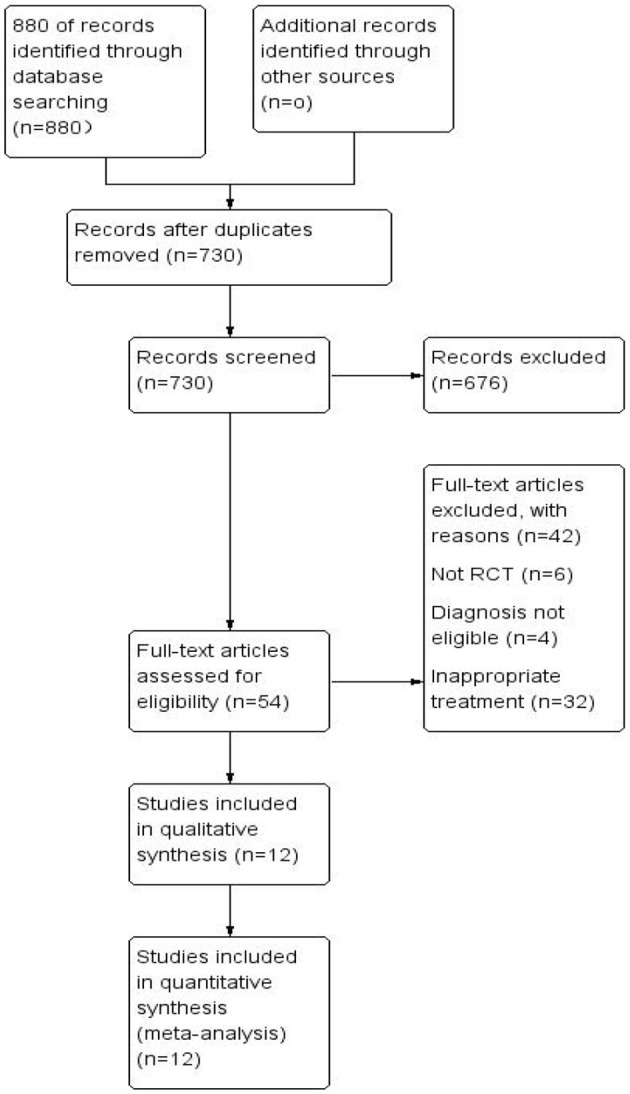
Methods: The research focus questions were constructed in accordance with the criteria of participants, intervention, comparison, and outcomes (PICO), and a protocol was registered in PROSPERO. Comprehensive and systematic searches and inquiries in eight electronic databases were conducted from their inception to 30th June 2022. Further, a systematic review and meta-analysis of all randomized controlled trials (RCTs) were conducted to evaluate the HDCM therapy methods.
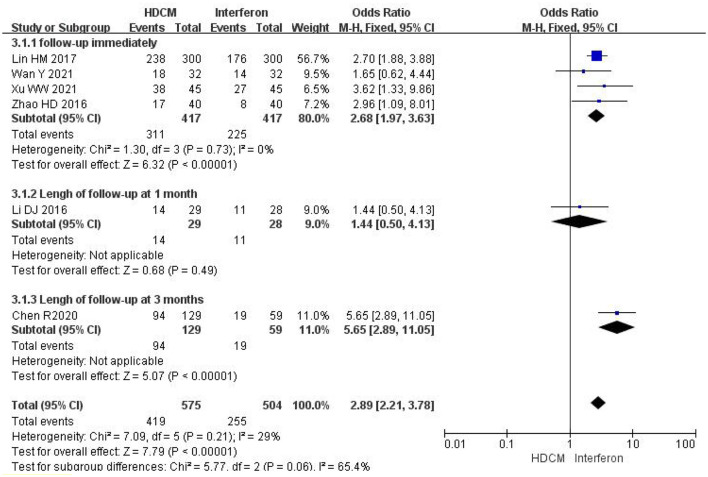
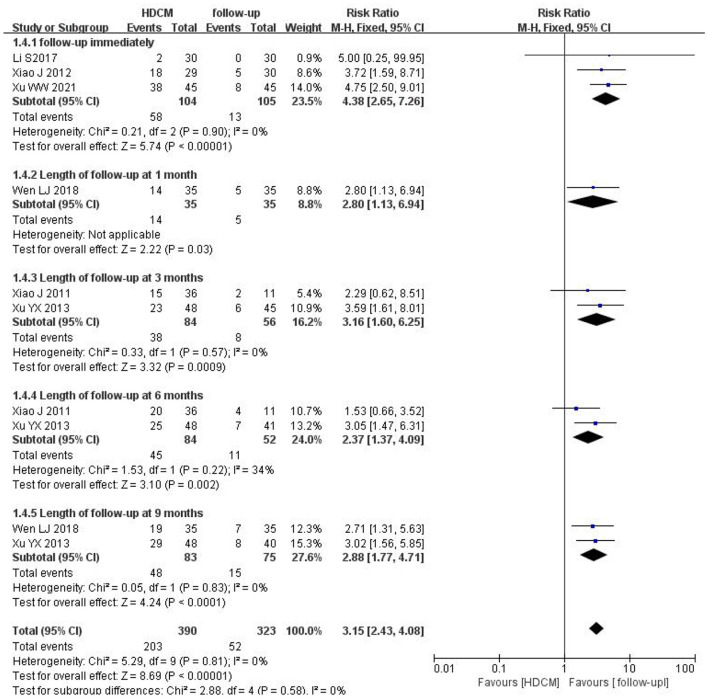
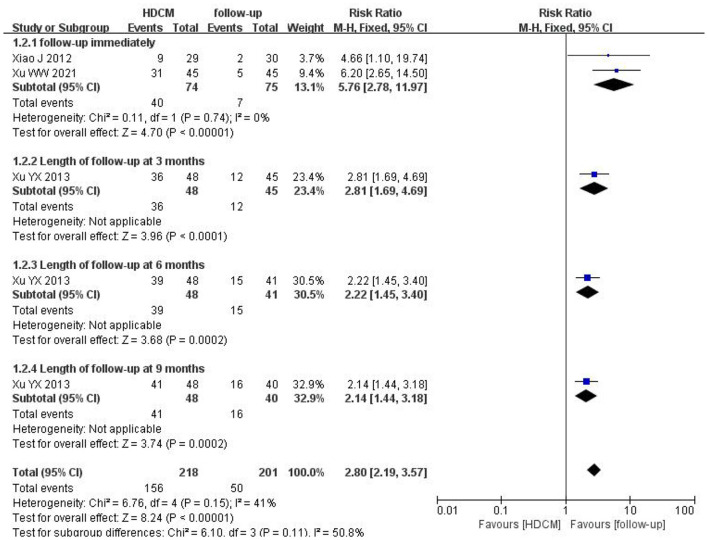
Results: A total of 12 studies were eligible for inclusion, including 1,574 patients. Data synthesis showed that the HPV clearance rate of HDCM groups was superior to both interferon and follow-up groups (RR = 1.40,95% CI:1.15, 1.71, P < 0.01) and (RR = 3.15, 95% CI:2.43,4.08, P < 0.01), respectively. HDCM was proven to exhibit greater potential in reducing HPV-DNA virus load (MD = -5.16, 95% CI: -5.91, -4.41, P < 0.01). The reversal rate of cervical intraepithelial neoplasia (CIN) for HDCM groups was approximately 2.8 times (RR = 2.80, 95% CI: 2.19, 3.57, P < 0.01), as high as the follow-up groups. Additionally, the recurrence rate of HR-HPV at the end of follow-up in this meta-analysis was reported to be lower in HDCM groups compared to follow-up groups [6.81% (16/235) and 14.65% (29/198), respectively]. The most commonly used Chinese herbal remedies were as follows: Huangbai (Phellodendron chinense var.Glabriusculum C.K. Schneid.), Kushen (Sophora flavescens Aiton), Daqingye (Isatis indigotica Fortune), Zicao (Arnebia hi-spidissima DC.), Baihuasheshecao (Hedyotis diffusa Spreng.), Banlangen (Isatis tinctoria subsp.tinctoria L.), Huzhang (Reynoutria japonica Houtt.), and Huangqi (Orobanche astragali Mouterde).
Conclusion: HDCM interventions appeared to generate significant effects on enhancing the rate of HR-HPV clearance, reducing the HPV-DNA virus load, and increasing the CIN regression rate. Some active components were confirmed to be responsible for this efficacy, which deserves further exploration.
Systematic review registration: https://www.crd.york.ac.uk/PROSPERO/, identifier: CRD42022333226.
Keywords: heat-clearing and dampness-eliminating therapy; high-risk human papillomavirus; meta-analysis; randomized controlled trials; traditional Chinese medicine.
Copyright © 2023 Huang, Qi, Chen, He, Chen and Xu.
Conflict of interest statement
The authors declare that the research was conducted in the absence of any commercial or financial relationships that could be construed as a potential conflict of interest.
Figures

References
-
- Brisson M, Kim JJ, Canfell K, Drolet M, Gingras G, Burger EA, et al. Impact of HPV vaccination and cervical screening on cervical cancer elimination: a comparative modelling analysis in 78 low-income and lower-middle- income countries. Articles. (2020) 395:575–90. 10.1016/S0140-6736(20)30068-4 - DOI - PMC - PubMed
-
- Gutnik H, Kastelic P, Oštrbenk Valenčak A, Poljak M, Strojan FleŽar M. Histomorphologic assessment and distribution of high-risk human papillomavirus(HPV) types in cervical high-gradesquamous intraepithelial lesions with unusual histomorphologic features. Virchows Arch. (2020) 476:251–60. 10.1007/s00428-019-02694-7 - DOI - PubMed
Publication types
LinkOut - more resources
Full Text Sources
