[Preprint]. 2023 Aug 28:rs.3.rs-3210911.
doi: 10.21203/rs.3.rs-3210911/v1.

LINC01638 Sustains Human Mesenchymal Stem Cell Self-Renewal and Competency for Osteogenic Cell Fate

Affiliations

LINC01638 Sustains Human Mesenchymal Stem Cell Self-Renewal and Competency for Osteogenic Cell Fate

Jonathan Gordon et al. Res Sq. .

Update in

Abstract

The skeleton forms from multipotent human mesenchymal stem cells (hMSCs) competent to commit to specific lineages. Long noncoding RNAs (lncRNAs) have been identified as key epigenetic regulators of tissue development. However, regulation of osteogenesis by lncRNAs as mediators of commitment to the bone phenotype is largely unexplored. We focused on LINC01638, which is highly expressed in hMSCs and has been studied in cancers, but not in regulating osteogenesis. We demonstrated that LINC01638 promotes initiation of the osteoblast phenotype. Our findings reveal that LINC01638 is present at low levels during the induction of osteoblast differentiation. CRISPRi knockdown of LINC01638 in MSCs prevents osteogenesis and alkaline phosphatase expression, inhibiting osteoblast differentiation. This resulted in decreased MSC cell growth rate, accompanied by double-strand breaks, DNA damage, and cell senescence. Transcriptome profiling of control and LINC01638-depleted hMSCs identified > 2,000 differentially expressed mRNAs related to cell cycle, cell division, spindle formation, DNA repair, and osteogenesis. Using ChIRP-qPCR, molecular mechanisms of chromatin interactions revealed the LINC01638 locus (Chr 22) includes many lncRNAs and bone-related genes. These novel findings identify the obligatory role for LINC01638 to sustain MSC pluripotency regulating osteoblast commitment and growth, as well as for physiological remodeling of bone tissue.

Keywords: LINC01638; RNA-Seq; gene expression; long noncoding RNA; mesenchymal stromal cells; osteoblast; osteogenesis; proliferation; senescence.


Figures
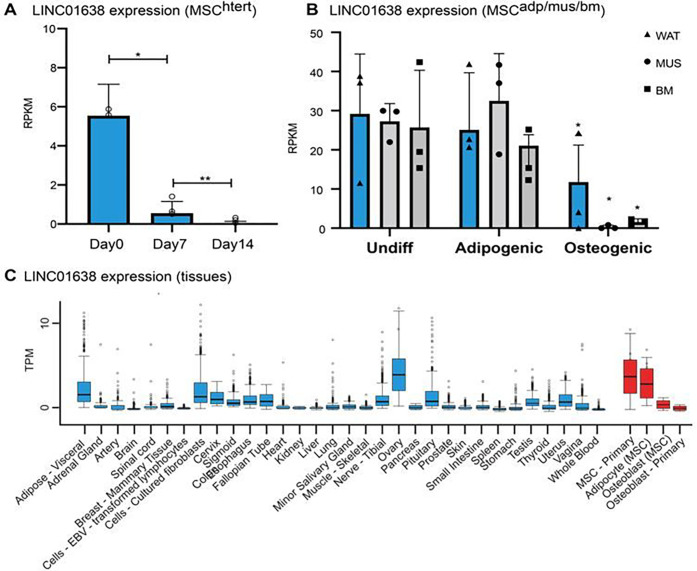
Figure 1
Figure 1. LINC01638 is expressed primarily in undifferentiated MSCs.
A) LINC01638 expression in MSC (hTERT20) undergoing osteogenic differentiation. LINC01638 expression significantly decreased (* p > 0.01) during osteogenic differentiation. B) LINC01638 expression in MSCs derived from white adipose tissue (WAT), muscle (MUS) or normal bone marrow (BM) undergoing adipogenic or osteogenic differentiation. LINC01638 was significantly decreased (* p > 0.01) in all MSC types undergoing osteogenic differentiation. C) LINC01638 expression across human tissues as determined by RNAseq (GTex). The lncRNA is not detected in the majority of examined tissues except in articular chondrocytes and low levels in ovary, testis and 1 breast sample (n=1–2), whereas expression was high in undifferentiated MSCs.
Figure 2
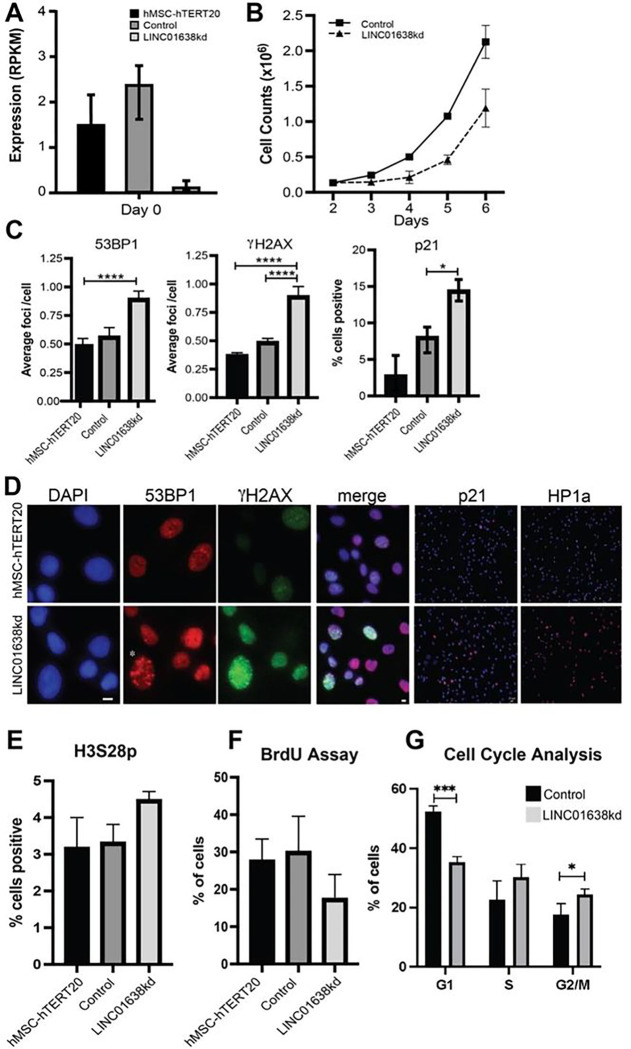
Figure 2. LINC01638KD reduces cell proliferation and increases markers of cellular senescence.
A) Expression of LINC01638 upon CRISPRi knockdown, relative to Control and MSCs. B) Cell growth reduction in response to LINC01638 KD vs Control. C) Increased nuclear foci for 53BP1 and gH2Ax, and increased % of p21 positive cells upon LINC01638 KD. For each cell line, >600 cells were analyzed from 2 independent experiments. **** p<0.0001. Scale bars represent 20 mm. % of cells with positive p21 staining (>900 cells quantified from n=2 experiments) * p < 0.05. Data are presented as mean + SD. D) Images of DAPI, increased 53BP1, γH2AX, p21 and H1Pa staining (compared to control) in LINC01638 KD cells. (Scale bar = 20 μM). E) Senescence associated markers increase with LINC01638 knockdown in proliferating MSCs. LINC01638kd cells express high levels of senescent markers p21 and HP1a compared to controls from panel E. Quantification of HP1a (left) intensity for >1000 cells by HALO from n=2 experiments. **** p < 0.0001. Nuclear area was measured using HALO for >1300 cells from n=2 experiments; **** p<0.0001. Data are presented as mean ± SD. F) BrdU incorporation was measured demonstrating a reduction in BrdU incorporation in LINC01638kd cells. G) Cell cycle analysis quantifying the number (percentage) of cells in each cell cycle phase demonstrates an increase in percentage of cells in G2/M in LINC01638KD cells suggesting an increase in senescent cells.
Figure 3
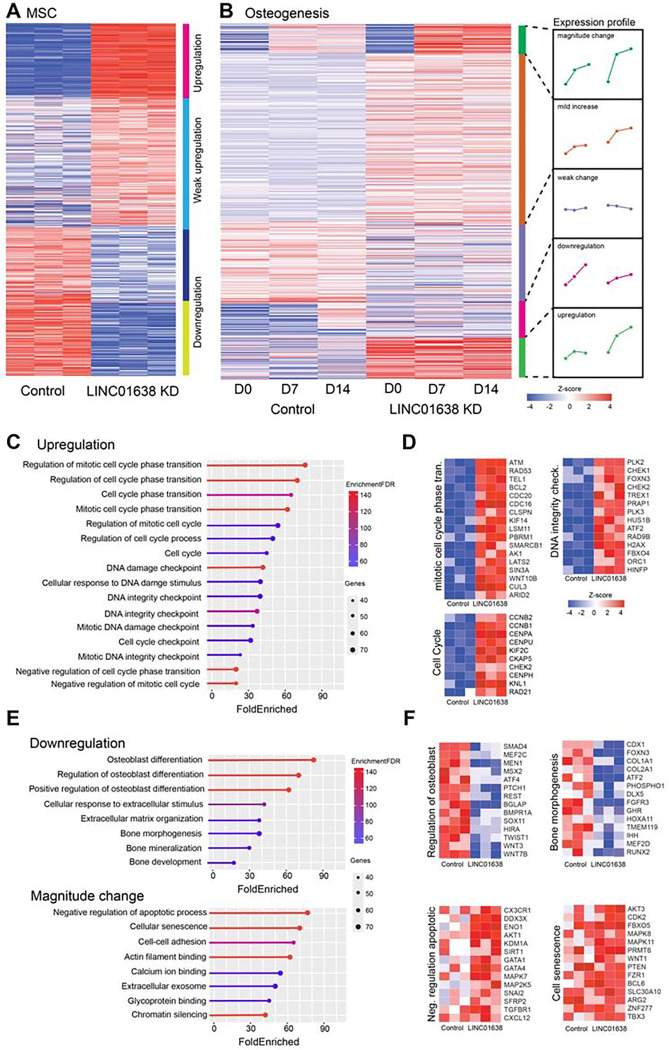
Figure 3. LINC01638KD results in wide-spread changes in transcriptional activity.
A) Heatmap and hierarchical clustering of 1365 DE mRNAs in control (hMSC-hTERT20) versus LINC01638 KD. B) Hierarchical clustering of 2054DE genes in control versus LINC01638 KD that change during temporal stages ( Day 0, Day 7, Day 14) of osteogenic differentiation. Clusters were segmented into expression profiles (magnitude change, mild increase, weak change, downregulated, upregulated. Values displayed are row-normalized z-score. C,E) Gene-set enrichment analysis of genes identified by hierarchical clustering. Plots display ontology category, fold enrichment (x axis scale), number of genes (dot size) and enrichment FDR (line color). D,F) Heatmaps of gene expression of representative genes from selected ontological categories. Gene expression values are plotted as row-normalized z-scores.
Figure 4
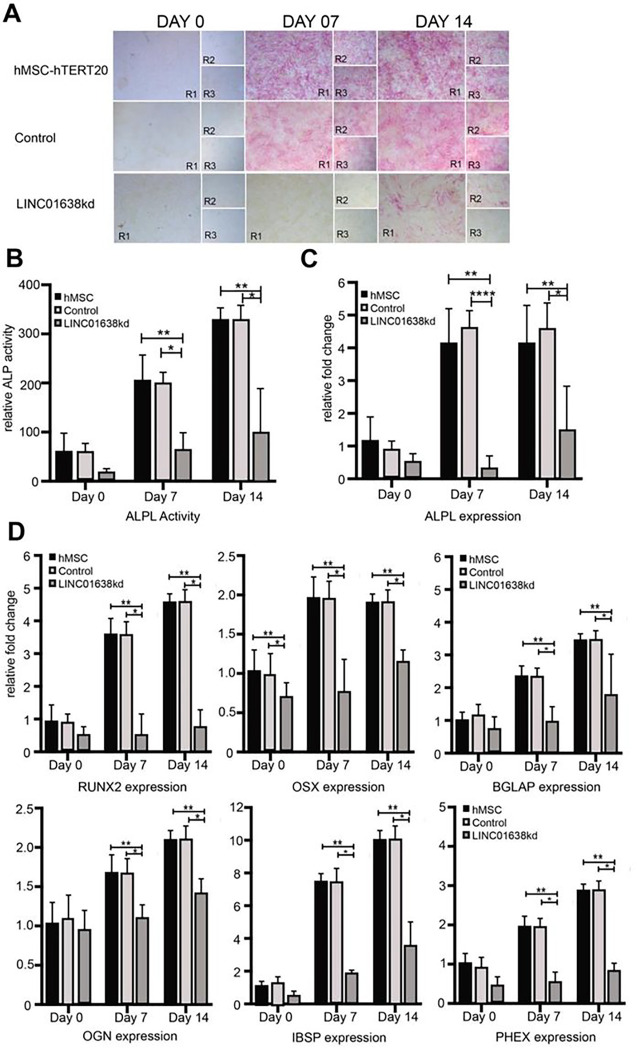
Figure 4. LINC01638 is required to initiate differentiation to the osteogenic lineage.
A) Alkaline phosphatase staining in MSCs (hTERT20, Control (CRISPR) or LINC01638KD) undergoing osteogenic differentiation at 0, 7 or 14 days. Experiments were performed in triplicate and each represented replicate is indicated (R1–3). B) ALP activity was measured and displayed as relative fluorescent activity units. C) ALPL expression measured by qPCR analysis. Measurements are displayed as relative fold expression (normalized to hMSC Day 0 values). Values are measured from multiple replicates (n=3) and values displayed as mean +/− SD. Statistical significance was determined by one way ANOVA (** p >0.01 (compared to hTERT20), * p>0.01 (compared to Control (CRISPR)). D) Osteoblast related gene expression (RUNX2, OSX, OCN, OGN, IBSP and PHEX) measured by qPCR analysis. Measurements are displayed as relative fold expression (normalized to hMSC Day 0 values). Values are measured from multiple replicates (n=3) and values displayed as mean ± SD. Statistical significance was determined by one way ANOVA (** p >0.01 (compared to hTERT20), * p>0.01 (compared to Control (CRISPR)).
Figure 5
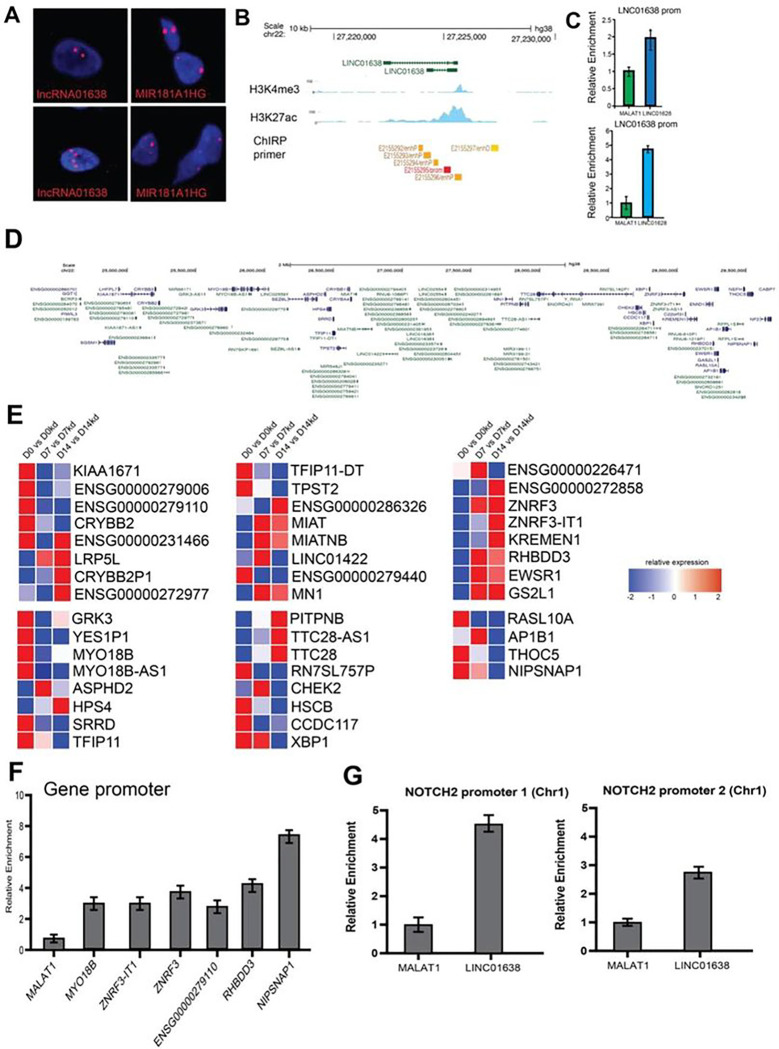
Figure 5. LINC01638 is located in the nucleus and interacts directly with chromatin at specific genomic regions.
A) RNA-FISH demonstrating discrete focal association of LINC01638 in the nucleus of hMSCs. B) UCSC genome browser ideogram depicting LINC01638 locus on chromosome 22 with associated regulatory regions and specific histone modifications (H3K4me3 and H3K27ac); ChIPseq tracks from MSCs are depicted demonstrating active regulatory regions around assigned gene promoters (blue); C) Quantitative PCR of ChIRP DNA from LINC01638-associated probes. Relative enrichment compared to control (MALAT1) demonstrates that LINC01638 is specifically associated with the LINC01638 gene locus and regulatory regions. D) UCSC Genome Browser view of gene cluster on Chr22 proximal to the LINC01638 locus. E) Gene expression changes in genes proximal to the LINC01638 gene locus on Chr22. Expression is displayed as fold difference relative to control. F) ChIRP analysis of LINC01638 binding to chromatin sites (gene promoters) proximal to LINC01638 locus on Chr22. Relative enrichment was determined by qPCR and plotted as mean ± SD. G) ChIRP analysis of LINC01638 binding to the NOTCH2 promoter (on Chr1).

References

    1. Zhu XX, Yan YW, Chen D, Ai CZ, Lu X, Xu SS, Jiang S, Zhong GS, Chen DB, Jiang YZ: Long non-coding RNA HoxA-AS3 interacts with EZH2 to regulate lineage commitment of mesenchymal stem cells. Oncotarget 2016, 7:63561–63570. - PMC - PubMed
    1. Hemming S, Cakouros D, Isenmann S, Cooper L, Menicanin D, Zannettino A, Gronthos S: EZH2 and KDM6A act as an epigenetic switch to regulate mesenchymal stem cell lineage specification. Stem Cells 2014, 32:802–815. - PubMed
    1. Guo Q, Guo Q, Xiao Y, Li C, Huang Y, Luo X: Regulation of bone marrow mesenchymal stem cell fate by long non-coding RNA. Bone 2020, 141:115617. - PubMed
    1. Hassan MQ, Tye CE, Stein GS, Lian JB: Non-coding RNAs: Epigenetic regulators of bone development and homeostasis. Bone 2015, 81:746–756. - PMC - PubMed
    1. Xu A, Huang MF, Zhu D, Gingold JA, Bazer DA, Chang B, Wang D, Lai CC, Lemischka IR, Zhao R, Lee DF: LncRNA H19 Suppresses Osteosarcomagenesis by Regulating snoRNAs and DNA Repair Protein Complexes. Front Genet 2020, 11:611823. - PMC - PubMed

Publication types

LinkOut - more resources