


Aging Rate Indicators: Speedometers for Aging Research in Mice
- PMID: 37694163
- PMCID: PMC10486275
- DOI: 10.59368/agingbio.20230003
Aging Rate Indicators: Speedometers for Aging Research in Mice
Abstract
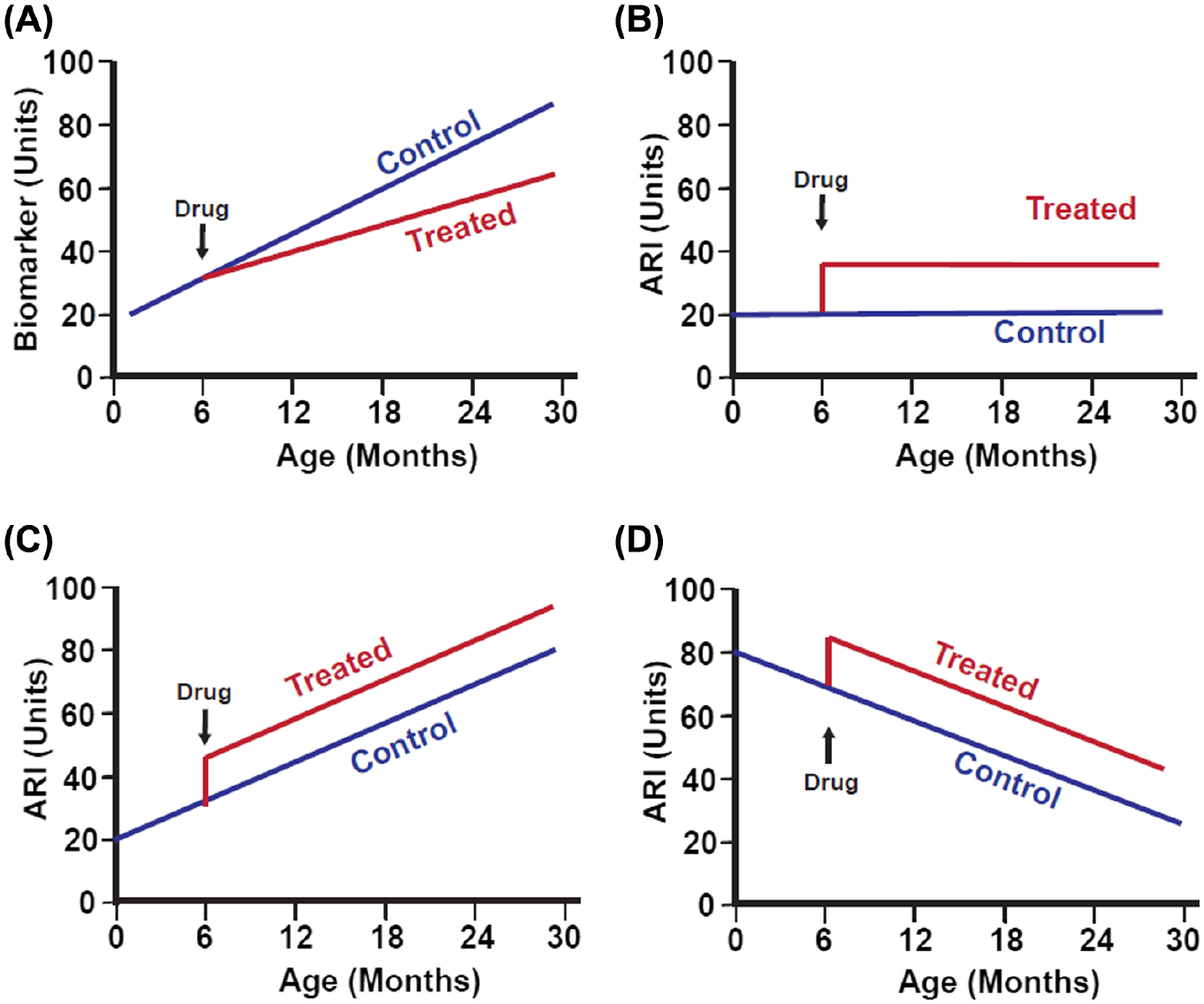
A "biomarker of aging" is conceptualized as an index of how far an individual has moved along the path from youth to old age. In contrast, an aging rate indicator (ARI) represents a measure of speed, rather than distance, that is, a measure of how rapidly the individual is moving toward the phenotypic changes typical of old age. This essay presents and reviews recent data suggesting common characteristics of slow-aging mice, whether the slowed aging is caused by a mutant allele, the calorie restriction diet, or drugs that slow aging and extend mean and maximal lifespan. Some of the candidate ARIs, shared by nine varieties of slow-aging mice, are physiological changes seen in fat, fat-associated macrophages, muscle, liver, brain, and plasma. Others are molecular measurements, reflecting activity of mTORC1, selective mRNA translation, or each of six MAP kinases in two distinct MAPK cascades in liver, muscle, or kidney. Changes in ARIs are notable in young adult mice after 8 months of drug or diet exposure, are detectable in mutant mice at least as early as 4-6 months of age, and persist until at least 18-22 months. Many of the candidate ARIs are thought to play an influential role in cognition, inflammation, exercise responses, and control of metabolic rate, and are thus plausible as modulators of age-related physiological and neurological illnesses. In principle, screening for drugs that induce alterations in ARIs in normal young adult mice might facilitate the search for preventive medicines that can retard aging and late-life illnesses in mice or in human populations.
Figures
References
Grants and funding
LinkOut - more resources
Full Text Sources