


Adapting shift work schedules for sleep quality, sleep duration, and sleepiness in shift workers
- PMID: 37694838
- PMCID: PMC10494487
- DOI: 10.1002/14651858.CD010639.pub2
Adapting shift work schedules for sleep quality, sleep duration, and sleepiness in shift workers
Abstract
Background: Shift work is associated with insufficient sleep, which can compromise worker alertness with ultimate effects on occupational health and safety. Adapting shift work schedules may reduce adverse occupational outcomes.
Objectives: To assess the effects of shift schedule adaptation on sleep quality, sleep duration, and sleepiness among shift workers.
Search methods: We searched CENTRAL, PubMed, Embase, and eight other databases on 13 December 2020, and again on 20 April 2022, applying no language restrictions.
Selection criteria: We included randomised controlled trials (RCTs) and non-RCTs, including controlled before-after (CBA) trials, interrupted time series, and cross-over trials. Eligible trials evaluated any of the following shift schedule components. • Permanency of shifts • Regularity of shift changes • Direction of shift rotation • Speed of rotation • Shift duration • Timing of start of shifts • Distribution of shift schedule • Time off between shifts • Split shifts • Protected sleep • Worker participation We included studies that assessed sleep quality off-shift, sleep duration off-shift, or sleepiness during shifts.
Data collection and analysis: Two review authors independently screened the titles and abstracts of the records recovered by the search, read through the full-text articles of potentially eligible studies, and extracted data. We assessed the risk of bias of included studies using the Cochrane risk of bias tool, with specific additional domains for non-randomised and cluster-randomised studies. For all stages, we resolved any disagreements by consulting a third review author. We presented the results by study design and combined clinically homogeneous studies in meta-analyses using random-effects models. We assessed the certainty of the evidence with GRADE.
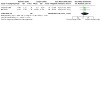
Main results: We included 11 studies with a total of 2125 participants. One study was conducted in a laboratory setting and was not considered for drawing conclusions on intervention effects. The included studies investigated different and often multiple changes to shift schedule, and were heterogeneous with respect to outcome measurement. Forward versus backward rotation Three CBA trials (561 participants) investigated the effects of forward rotation versus backward rotation. Only one CBA trial provided sufficient data for the quantitative analysis; it provided very low-certainty evidence that forward rotation compared with backward rotation did not affect sleep quality measured with the Basic Nordic Sleep Questionnaire (BNSQ; mean difference (MD) -0.20 points, 95% confidence interval (CI) -2.28 to 1.89; 62 participants) or sleep duration off-shift (MD -0.21 hours, 95% CI -3.29 to 2.88; 62 participants). However, there was also very low-certainty evidence that forward rotation reduced sleepiness during shifts measured with the BNSQ (MD -1.24 points, 95% CI -2.24 to -0.24; 62 participants). Faster versus slower rotation Two CBA trials and one non-randomised cross-over trial (341 participants) evaluated faster versus slower shift rotation. We were able to meta-analyse data from two studies. There was low-certainty evidence of no difference in sleep quality off-shift (standardised mean difference (SMD) -0.01, 95% CI -0.26 to 0.23) and very low-certainty evidence that faster shift rotation reduced sleep duration off-shift (SMD -0.26, 95% CI -0.51 to -0.01; 2 studies, 282 participants). The SMD for sleep duration translated to an MD of 0.38 hours' less sleep per day (95% CI -0.74 to -0.01). One study provided very low-certainty evidence that faster rotations decreased sleepiness during shifts measured with the BNSQ (MD -1.24 points, 95% CI -2.24 to -0.24; 62 participants). Limited shift duration (16 hours) versus unlimited shift duration Two RCTs (760 participants) evaluated 80-hour workweeks with maximum daily shift duration of 16 hours versus workweeks without any daily shift duration limits. There was low-certainty evidence that the 16-hour limit increased sleep duration off-shift (SMD 0.50, 95% CI 0.21 to 0.78; which translated to an MD of 0.73 hours' more sleep per day, 95% CI 0.30 to 1.13; 2 RCTs, 760 participants) and moderate-certainty evidence that the 16-hour limit reduced sleepiness during shifts, measured with the Karolinska Sleepiness Scale (SMD -0.29, 95% CI -0.44 to -0.14; which translated to an MD of 0.37 fewer points, 95% CI -0.55 to -0.17; 2 RCTs, 716 participants). Shorter versus longer shifts One RCT, one CBA trial, and one non-randomised cross-over trial (692 participants) evaluated shorter shift duration (eight to 10 hours) versus longer shift duration (two to three hours longer). There was very low-certainty evidence of no difference in sleep quality (SMD -0.23, 95% CI -0.61 to 0.15; which translated to an MD of 0.13 points lower on a scale of 1 to 5; 2 studies, 111 participants) or sleep duration off-shift (SMD 0.18, 95% CI -0.17 to 0.54; which translated to an MD of 0.26 hours' less sleep per day; 2 studies, 121 participants). The RCT and the non-randomised cross-over study found that shorter shifts reduced sleepiness during shifts, while the CBA study found no effect on sleepiness. More compressed versus more spread out shift schedules One RCT and one CBA trial (346 participants) evaluated more compressed versus more spread out shift schedules. The CBA trial provided very low-certainty evidence of no difference between the groups in sleep quality off-shift (MD 0.31 points, 95% CI -0.53 to 1.15) and sleep duration off-shift (MD 0.52 hours, 95% CI -0.52 to 1.56).
Authors' conclusions: Forward and faster rotation may reduce sleepiness during shifts, and may make no difference to sleep quality, but the evidence is very uncertain. Very low-certainty evidence indicated that sleep duration off-shift decreases with faster rotation. Low-certainty evidence indicated that on-duty workweeks with shift duration limited to 16 hours increases sleep duration, with moderate-certainty evidence for minimal reductions in sleepiness. Changes in shift duration and compression of workweeks had no effect on sleep or sleepiness, but the evidence was of very low-certainty. No evidence is available for other shift schedule changes. There is a need for more high-quality studies (preferably RCTs) for all shift schedule interventions to draw conclusions on the effects of shift schedule adaptations on sleep and sleepiness in shift workers.
Copyright © 2023 The Cochrane Collaboration. Published by John Wiley & Sons, Ltd.
Conflict of interest statement
GH: none known PC: none known GG: none known MP: none known BG: none known CB: is an occupational health physician at Medmark; otherwise no known conflicts of interest IW: none known JL: none known RR: none known DP: none known
The findings and conclusions in this report are those of the authors and do not necessarily represent the official position of the National Institute for Occupational Safety and Health, Centers for Disease Control and Prevention.
Figures




Update of
References
References to studies included in this review
Amendola 2011 {published data only}
-
- Amendola KL, Weisburd D, Hamilton EE, Jones G, Slipka M. An experimental study of compressed work schedules in policing: advantages and disadvantages of various shift lengths. Journal of Experimental Criminology 2011;7(4, SI):407-42.
Axelsson 1998 {published data only}
-
- Axelsson J, Kecklund G, Akerstedt T, Lowden A. Effects of alternating 8- and 12-hour shifts on sleep, sleepiness, physical effort and performance. Scandinavian Journal of Work, Environment & Health 1998;24:62-8. - PubMed
Barger 2019a {published data only}
Barton 1994 {published data only}
Basner 2019 {published data only}
Bell 2015 {published data only}
-
- Bell LB, Virden TB, Lewis DJ, Cassidy BA. Effects of 13-hour 20-minute work shifts on law enforcement officers' sleep, cognitive abilities, health, quality of life, and work performance: the Phoenix study. Police Quarterly 2015;18(3):293-337.
Cruz 2003 {published data only}
-
- Cruz C, Detwiler C, Nesthus T, Boquet A. Clockwise and counterclockwise rotating shifts: effects on sleep duration, riming, and quality. Aviation, Space, and Environmental Medicine 2003;74(6):597-605. - PubMed
Garde 2020 {published data only}
Knauth 1998 {published data only}
-
- Knauth P, Hornberger S. Changes from weekly backward to quicker forward rotating shift systems in the steel industry. International Journal of Industrial Ergonomics 1998;21(3):267-73.
Totterdell 1992 {published data only}
-
- Totterdell P, Smith L. Ten-hour days and eight-hour nights: can the Ottawa shift system reduce the problems of shiftwork? Work & Stress 1992;6(2):139-52.
Viitasalo 2008 {published data only}
-
- Viitasalo K, Kuosma E, Laitinen J, Härmä M. Effects of shift rotation and the flexibility of a shift system on daytime alertness and cardiovascular risk factors. Scandinavian Journal of Work, Environment and Health, Supplement 2008;34(3):198-205. - PubMed
References to studies excluded from this review
Akersted 1978 {published data only}
-
- Akerstedt T, Torsvall L. Experimental changes in shift schedules: their effects on well-being. Ergonomics 1978;21(10):849-56. - PubMed
Barger 2019b {published data only}
-
- Barger LK, Sullivan JP, Blackwell T, O'Brien CS, St Hilaire MA, Rahman S. Resident physician work hours decreased and sleep duration increased following elimination of scheduled extended duration shifts. In: Sleep. Vol. 42. 2019:A390.
Blackwell 2019 {published data only}
Cappuccio 2009 {published data only}
Chang 2021 {published data only}
-
- Chang WP, Wang CH. Influence of sleep fragmentation and fatigue on turnover of female nurses working rotating shifts. Journal of Clinical Nursing 2022;31:23-4. - PubMed
Cheng 2021 {published data only}
-
- Cheng WJ, Puttonen S, Vanttola P, Koskinen A, Kivimäki M, Härmä M. Association of shift work with mood disorders and sleep problems according to chronotype: a 17-year cohort study. Chronobiology International 2021;38(4):518-25. - PubMed
Chiles 1968 {published data only}
-
- Chiles WD, Alluisi EA, Adams OS. Work schedules and performance during confinement. Human factors 1968. - PubMed
Costa 2014 {published data only}
D'Amico 1985 {published data only}
-
- D'Amico A. A simulation study of the effects of sleep deprivation, time of watch and length of time on watch on watchstanding effectiveness. National Maritime Research Center 1985;(7-B):2338.
Duchon 1994 {published data only}
-
- Duchon JC, Keran CM, Smith TJ. Extended workdays in an underground mine: a work performance analysis. Human Factors 1994;36(2):258-68. - PubMed
Duplessis 2007 {published data only}
-
- Duplessis CA, Miller JC, Crepeau LJ, Osborn CM, Dyche J. Submarine watch schedules: underway evaluation of rotating (contemporary) and compressed (alternative) schedules. Undersea & Hyperbaric Medicine 2007;34(1):21-33. - PubMed
Dutheil 2012 {published data only}
-
- Dutheil F, Boudet G, Perrier C, Lac G, Ouchchane L, Chamoux A, et al. JOBSTRESS study: comparison of heart rate variability in emergency physicians working a 24-hour shift or a 14-hour night shift - a randomized trial. International Journal of Cardiology 2012;158(2):322-5. - PubMed
Eriksen 2006 {published data only}
-
- Eriksen CA, Gillberg M, Vestergren P. Sleepiness and sleep in a simulated "six hours on/six hours off" sea watch system. Chronobiology International 2006;23(6):1193-202. - PubMed
Fischer 2021 {published data only}
Garde 2011 {published data only}
-
- Garde AH, Nabe-Nielsen K, Aust B. Influence on working hours among shift workers and effects on sleep quality: an intervention study. Applied Ergonomics 2011;42(2):238-43. - PubMed
Grewal 2022 {published data only}
-
- Grewal A, Holt KE. Comparison of 12-hour biweekly versus 6-hour weekly shifts on fatigue in student nurses. Worldviews on Evidence-Based Nursing 2022;19(2):160-5. - PubMed
Harris 2010 {published data only}
-
- Harris A, Waage S, Ursin H, Hansen AM, Bjorvatn B, Eriksen HR. Cortisol, reaction time test and health among offshore shift workers. Psychoneuroendocrinology 2010;35(9):1339-47. - PubMed
Hong 2021 {published data only}
Hossain 2004 {published data only}
-
- Hossain JL, Reinish LW, Heslegrave RJ, Hall GW, Kayumov L, Chung SA. Subjective and objective evaluation of sleep and performance in daytime versus nighttime sleep in extended-hours shift-workers at an underground mine. Journal of Occupational and Environmental Medicine 2004;46:212-26. - PubMed
ISRCTN17016944 {published data only}
-
- ISRCTN17016944. How can you sleep well and enjoy your lifestyle when you are a night worker? trialsearch.who.int/Trial2.aspx?TrialID=ISRCTN17016944 (first received 12 June 2019).
Jackson 2014 {published data only}
-
- Jackson ML, Banks S, Belenky G. Investigation of the effectiveness of a split sleep schedule in sustaining sleep and maintaining performance. Chronobiology International 2014;31(10):1218-30. - PubMed
Knauth 1987 {published data only}
-
- Knauth P, Kiesswetter E. A change from weekly to quicker shift rotations: a field study of discontinuous three-shift workers. Ergonomics 1987;30(9):1311-21. [DOI: 10.1080/00140138708966025] - DOI
Kosmadopoulos 2014 {published data only}
-
- Kosmadopoulos A, Sargent C, Darwent D, Zhou X, Dawson D, Roach GD. The effects of a split sleep-wake schedule on neurobehavioural performance and predictions of performance under conditions of forced desynchrony. Chronobiology International 2014;31(10):1209-17. - PubMed
Kudielka 2007 {published data only}
-
- Kudielka BM, Buchtal J, Uhde A, Wüst S. Circadian cortisol profiles and psychological self-reports in shift workers with and without recent change in the shift rotation system. Biological Psychology 2007;74(1):92-103. - PubMed
Landrigan 2020 {published data only}
-
- Stone KL, Landrigan CP, Blackwell T, Rahman SA, Kriesel DR, Vittinghoff E, et al. In: Sleep. Vol. 42. 2019:A391.
Levin 2014 {published data only}
-
- Levin H, Lynch TP, Seabrook J, Poonai N, Sangha G. Improving shiftwork: are casino shifts the answer? Canadian Journal of Emergency Medicine 2014;16:S19-S114.
McPherson 1993 {published data only}
-
- McPherson G. Shiftwork and the offshore worker. Occupational Health 1993;45(7):237-9. - PubMed
NCT03813654 {published data only}
-
- NCT03813654. Sleep and Circadian Treatments for Shift Workers. clinicaltrials.gov/ct2/show/NCT03813654 (first received 23 January 2019). [CLINICALTRIALS.GOV: https://clinicaltrials.gov/ct2/show/NCT03813654]
Ng‐A‐Tham 1993 {published data only}
-
- Ng-A-Tham JE, Thierry H. An experimental change of the speed of rotation of the morning and evening shift. Ergonomics 1993;36(1):51-7.
Pavageau 2006 {published data only}
-
- Pavageau Pierre. The effects of work content and working hours on the health of prison guards. [Les effets conjoints du travail et des horaires alternants sur la santé des agents de surveillance des établissements pénitentiaires]. Pistes: Perspectives Interdisciplinaires sur le Travail et la Santé 2006;8(2):no pagination.
Rosa 1989 {published data only}
-
- Rosa RR, Colligan MJ, Lewis P. Extended workdays: effects of 8-hour and 12-hour rotating shift schedules on performance, subjective alertness, sleep patterns, and psychosocial variables. Work & Stress 1989;3(1):21-32.
Rosa 1993 {published data only}
-
- Rosa RR, Bonnet MH. Performance and alertness on 8 h and 12 h rotating shifts at a natural gas utility. Ergonomics 1993;36(10):1177-93. - PubMed
Rosa 1996 {published data only}
Seibt 1990 {published data only}
-
- Seibt A, Geist HW, Tannenhauer J, Friedrichsen G. Assessment of continuous shifts including 12-hr shifts in terms of occupational medicine [Évaluation d'horaires postés continus avec postes de douzes heures en fin de semaine du point de vue de la médecine du travail]. Le Travail Humain: A Bilingual and Multi-Disciplinary Journal in Human Factors 1990;53(3):253-64.
Shattuck 2015a {published data only}
-
- Shattuck NL, Matsangas P. A comparison of sleep and performance of US navy sailors on four different shiftwork schedules. Sleep 2015;38:A130.
Shattuck 2015b {published data only}
-
- Shattuck NL, Matsangas P, Eriksen E, Kulubis S. Comparison of two watch schedules for personnel at the White House Military Office president's Emergency Operations Center. Human Factors 2015;57(5):864-78. - PubMed
Shea 2018 {published data only}
-
- Shea JA, Silber JH, Desai SV, Dinges DF, Bellini LM, Tonascia J, et al. Development of the individualised Comparative Effectiveness of Models Optimizing Patient Safety and Resident Education (iCOMPARE) trial: a protocol summary of a national cluster-randomised trial of resident duty hour policies in internal medicine. BMJ OPEN 2018;8(9):e021711. [DOI: 10.1136/bmjopen-2018-021711] - DOI - PMC - PubMed
Skornyakov 2017 {published data only}
-
- Skornyakov E, Shattuck NL, Winser MA, Matsangas P, Sparrow AR, Layton ME, et al. Sleep and performance in simulated Navy watch schedules. Accident Analysis and Prevention 2017;99:422-7. - PubMed
Smith 1998 {published data only}
-
- Smith L, Hammond T, Macdonald I, Folkard S. 12-h shifts are popular but are they a solution? International Journal of Industrial Ergonomics 1998;21(3-4):323-31.
-
- Smith PA, Wright BM, Mackey RW, Milsop HW, Yates SC. Change from slowly rotating 8-hour shifts to rapidly rotating 8-hour and 12-hour shifts using participative shift roster design. Scandinavian Journal of Work, Environment & Health 1998;24(Suppl 3):55-61. - PubMed
Tucker 2021 {published data only}
-
- Tucker P, Härmä M, Ojajärvi A, Kivimäki M, Leineweber C, Oksanen T, et al. Association of rotating shift work schedules and the use of prescribed sleep medication: a prospective cohort study. Journal of Sleep Research 2021;30(6):e13349. - PubMed
van de Ven 2021 {published data only}
Waage 2012 {published data only}
-
- Waage S, Harris A, Pallesen S, Saksvik IB, Moen BE, Bjorvatn B. Subjective and objective sleepiness among oil rig workers during three different shift schedules. Sleep Medicine 2012;13(1):64-72. - PubMed
Williamson 1986 {published data only}
-
- Williamson AM, Sanderson JW. Changing the speed of shift rotation: a field study. Ergonomics 1986;29(9):1085-95. - PubMed
Williamson 1994 {published data only}
-
- Williamson AM, Gower CGI, Clarke BC. Changing the hours of shiftwork: a comparison of 8- and 12-hour shift rosters in a group of computer operators. Ergonomics 1994;37(2):287-98. - PubMed
References to studies awaiting assessment
Chevreau 2012 {published data only}
-
- Chevreau A. Follow up of an experimentation on twelve hours shiftwork in three departments at the University Hospital of Bordeaux. Thesis 2012.
Cori 2021 {published data only}
-
- Cori JM, Downey LA, Sletten TL, Beatty CJ, Shiferaw BA, Soleimanloo SS, et al. The impact of 7-hour and 11-hour rest breaks between shifts on heavy vehicle truck drivers' sleep, alertness and naturalistic driving performance. Accident Analysis and Prevention 2021;159:106224. - PubMed
Hakola 2021 {published data only}
Puttonen 2022 {published data only}
Rahman 2021 {published data only}
Toussaint 2003 {published data only}
-
- Touissant de Quievrecourt AA. Alertness and quality of life in shiftworkers and permanent night workers (effects of work schedule on the sleep quality and the alertness). Thesis 2003.
Additional references
Akerstedt 1998
-
- Akerstedt T. Is there an optimal sleep-wake pattern in shift work? Scandinavian Journal of Work, Environment & Health 1998;24(Suppl 3):18-27. - PubMed
Andrew 2008
-
- Andrew K, Edinger JD. Measuring sleep quality. Sleep Medicine 2008;9:S10-7. - PubMed
Ball 2015
-
- Ball J, Maben JE, Murrells TJ, Day TL, Griffiths P. 12 hour shifts: prevalence, views and impact. King's College London, 2015.
Baltes 1999
-
- Baltes BB, Briggs TE, Huff JW, Wright JA, Neuman GA. Flexible and compressed workweek schedules: a meta-analysis of their effects on work-related criteria. Journal of Applied Psychology 1999;84:496-513.
Bambra 2008a
-
- Bambra CL, Whitehead MM, Sowden AJ, Akers J, Petticrew MP. Shifting schedules. The health effects of reorganising shift work. American Journal of Preventive Medicine 2008;34(5):427-34. - PubMed
Bambra 2008b
-
- Bambra C, Whitehead M, Sowden A, Akers J, Petticrew M. "A hard day's night?" The effects of Compressed Working Week interventions on the health and work-life balance of shift workers: a systematic review. Journal of Epidemiology & Community Health 2008;62(9):764-77. - PubMed
Barton 1995
-
- Barton J, Spelten E, Totterdell P, Smith L, Folkard S, Costa G. The Standard Shiftwork Index - a battery of questionnaires for assessing shiftwork-related problems. Work and Stress 1995;9(1):4-30.
Basner 2011
Buysse 1989
-
- Buysse DJ, Reynolds III CF, Monk TH, Berman SR, Kupfer DJ. The Pittsburgh Sleep Quality Index: a new instrument for psychiatric practice and research. Psychiatry Research 1989;28(2):193-213. - PubMed
Campbell 2012
Carskadon 1986
-
- Carskadon MA, Dement WC, Mitler MM, Roth T, Westbrook PR, Keenan S. Guidelines for the multiple sleep latency test (MSLT): a standard measure of sleepiness. Sleep 1986;9(4):519-24. - PubMed
Cepeda 2016
Cho 2000
-
- Cho BK, Rosenfeldt F, Turina MI, Karp RB, Ferguson TB, Bodnar E, et al. Joint statement on redundant (duplicate) publication by the editors of the undersigned cardiothoracic journals. Annals of Thoracic Surgery 2000;69(2):663. - PubMed
Choi 2014
Consensus Conference Panel 2015
-
- Consensus Conference Panel, Watson NF, Badr MS, Belenky G, Bliwise DL, Buxton OM, et al. Joint consensus statement of the American Academy of Sleep Medicine and Sleep Research Society on the recommended amount of sleep for a healthy adult: methodology and discussion. Journal of Clinical Sleep Medicine 2015;11(8):931-52. [DOI: 10.5664/jcsm.4950] - DOI - PMC - PubMed
Costa 2003
-
- Costa G. Shift work and occupational medicine: an overview. Occupational Medicine 2003;53(2):83-8. - PubMed
Cotter 2011
-
- Cotter S. Seeking shift work solutions. Shift work can harm sleep, and sleep loss can lead to fatigue and errors – how is that impacting you and your patients? EMS World 2011;40(4):39-44. - PubMed
Crook 2019
-
- Crook S, Sievi NA, Bloch KE, Stradling JR, Frei A, Puhan MA, et al. Minimum important difference of the Epworth Sleepiness Scale in obstructive sleep apnoea: estimation from three randomised controlled trials. Thorax 2019;74:390-6. - PubMed
Dinges 1998
-
- Dinges DF, Mallis M, Maislin G, Powell JW. Evaluation of techniques for ocular measurement as an index of fatigue and as the basis for alertness management. National Highway Traffic Safety Administration 1998.
Driscoll 2007
-
- Driscoll TR, Grunstein RR, Rogers NL. A systematic review of the neurobehavioural and physiological effects of shiftwork systems. Sleep Medicine Reviews 2007;11:179-94. - PubMed
Egger 1997
Erren 2010
Gao 2020
GRADEpro 2008 [Computer program]
-
- GRADEpro. Brozek J, Oxman A, Schünemann H, Version 3.2 for Windows. GRADE working group, 2008.
Gurubhagavatula 2021
-
- Gurubhagavatula I, Barger LK, Barnes CM, Basner M, Boivin DB, Dawson D, et al. Guiding principles for determining work shift duration and addressing the effects of work shift duration on performance, safety, and health: guidance from the American Academy of Sleep Medicine and the Sleep Research Society. Journal of Clinical Sleep Medicine 2021;17(11):2283-306. - PMC - PubMed
Hanifah 2021
-
- Hanifah AMS, Ismail N. Fatigue and its associated risk factors among shift workers: a systematic review. Human Factors and Ergonomics in Manufacturing & Service Industries 2021;31(2):208-22.
Harris 2015
-
- Harris R, Sims S, Parr J, Davies N. Impact of 12 h shift patterns in nursing: a scoping review. International Journal of Nursing Studies 2015;52(2):605-34. - PubMed
Herscovitch 1981
-
- Herscovitch J, Broughton R. Sensitivity of the Stanford Sleepiness Scale to the effects of cumulative partial sleep-deprivation and recovery over-sleeping. Sleep 1981;4(1):83-92. - PubMed
Higgins 2011
-
- Higgins JP, Green S, editor(s). Cochrane Handbook for Systematic Reviews of Interventions Version 5.1.0 (updated March 2011). The Cochrane Collaboration, 2011. Available from training.cochrane.org/handbook/archive/v5.1/.
Hoddes 1972
-
- Hoddes E, Zarcone V, Dement W. Development and use of Stanford Sleepiness Scale (SSS). Psychophysiology 1972;9(1):150.
IARC 2010
IARC 2020
-
- IARC Working Group on the Identification of Carcinogenic Hazards to Humans. Night shift work. Lyon: IRAC monographs on the identification of Carcinogenic Hazards to Humans 2020;124:1–371.
ILO 1990
-
- International Labour Organization. C171 - Night Work Convention. www.ilo.org/dyn/normlex/en/f?p=NORMLEXPUB:12100:0::NO::P12100_INSTRUMENT... 1990.
ILO 2004
-
- International Labour Office Geneva. Information Sheet No. WT-8: Shift work. ILO, 2004. www.ilo.org/wcmsp5/groups/public/---ed_protect/---protrav/---travail/doc... (accessed 2 July 2013).
Johns 1992
-
- Johns MW. Reliability and factor analysis of the Epworth Sleepiness Scale. Sleep 1992;15(4):376-81. - PubMed
Kaida 2006
-
- Kaida K, Takahashi M, Akerstedt T, Nakata A, Otsuka Y, Haratani T, et al. Validation of the Karolinska sleepiness scale against performance and EEG variables. Clinical Neurophysiology 2006;117(7):1574-81. - PubMed
Kecklund 1992
-
- Kecklund G, Åkerstedt T. The psychometric properties of the Karolinska Sleep Questionnaire. Journal of Sleep Research 1992;1:113.
Kecklund and Axelsson 2016
Knauth 1995
-
- Knauth P. Speed and direction of shift rotation. Journal of Sleep Research 1995;4:41-6. - PubMed
Knauth 2003
-
- Knauth P, Hornberger S. Preventive and compensatory measures for shift workers. Occupational Medicine 2003;53(2):109-16. - PubMed
Lallukka 2011
Landrigan 2004
-
- Landrigan CP, Rothschild JM, Cronin JW, Kaushal R, Burdick E, Katz JT, et al. Effect of reducing interns' work hours on serious medical errors in intensive care units. New England Journal of Medicine 2004;351(18):1838-48. - PubMed
Lerman 2012
Li 2011
-
- Li Y, Sato Y, Yamaguchi N. Shift work and the risk of metabolic syndrome: a nested case-control study. International Journal of Occupational & Environmental Health 2011;17(2):154-60. - PubMed
Mackworth 1950
-
- Mackworth NH. Researches on the measurement of human performance. Medical Research Council Special Report Series 1950;268:156.
Mitler 1982
Moreno 2019
Nasca 2010
-
- Nasca TJ, Day SH, Amis ES. The new recommendations on duty hours from the ACGME Task Force. New England Journal of Medicine 2010;363(2):e3(1-6). - PubMed
Page 2021
Pallesen 2008
-
- Pallesen S, Bjorvatn B. A new scale for measuring insomnia: the Bergen insomnia scale. Perceptual and Motor Skills 2008;107:691-701. - PubMed
Parkes 2007
-
- Parkes, KR. Working hours in the offshore petroleum industry Current knowledge and research needs regarding extended work periods and shift work offshore. In: Petroleum Safety Authority, Stavanger, Norway. 2007.
Partinen 1995
-
- Partinen M, Gislason T. Basic Nordic Sleep Questionnaire (BNSQ) - a quantitated measure of subjective sleep complaints. Journal of Sleep Research 1995;4:150-5. - PubMed
Patel 2017
Puffer 2003
Rajaratnam 2011
-
- Rajaratnam SM, Barger LK, Lockley SW, Shea SA, Wang W, Landrigan CP, et al. Sleep disorders, health, and safety in police officers. Journal of the American Medical Association 2011;306(23):2567-78. - PubMed
Ramsay 2003
-
- Ramsay CR, Matowe L, Grilli R, Grimshaw JM, Thomas RE. Interrupted time series designs in health technology assessment: lessons from two systematic reviews of behavior change strategies. International Journal of Technology Assessment in Health Care 2003;19:613-23. - PubMed
RevMan 2012 [Computer program]
-
- Review Manager (RevMan). Version 5.2. Copenhagen: The Nordic Cochrane Centre. The Cochrane Collaboration, 2012.
Sallinen 2010
-
- Sallinen M, Kecklund G. Shift work, sleep, and sleepiness – differences between shift schedules and systems. Scandinavian Journal of Work, Environment & Health 2010;36(2):121-33. - PubMed
Shen 2006
-
- Shen J, Barbera J, Shapiro CM. Distinguishing sleepiness and fatigue: focus on definition and measurement. Sleep Medicine Reviews 2006;10(1):63-76. - PubMed
Sommer 2010
-
- Sommer D, Golz M. Evaluation of PERCLOS based current fatigue monitoring technologies. In: Conference Procedings IEEE English Medical and Biological Society. 2010:4456-9. - PubMed
Stevens 2011
Thorne 2005
-
- Thorne DR, Johnson DE, Redmond DP, Sing HC, Belenky G, Shapiro JM. The Walter Reed palm-held psychomotor vigilance test. Behavior Research Methods 2005;37:111-8. - PubMed
Torquati 2018
-
- Torquati L, Mielke GI, Brown WJ, Kolbe-Alexander T. Shift work and the risk of cardiovascular disease. A systematic review and meta-analysis including dose–response relationship. Scandinavian Journal of Work, Environment & Health 2018;44(3):229-38. - PubMed
Torquati 2019
Von Ruesten 2012
Wagstaff 2011
-
- Wagstaff AS, Sigstad Lie J-A. Shift and night work and long working hours – a systematic review of safety implications. Scandinavian Journal of Work, Environment & Health 2011;37(3):173-85. - PubMed
Wang 2016
-
- Wang D, Li W, Cui X, Meng Y, Zhou M, Xiao L, et al. Sleep duration and risk of coronary heart disease: a systematic review and meta-analysis of prospective cohort studies. International Journal of Cardiology 2016;219:231-9. - PubMed
Wierwille 1994
-
- Wierwille WW, Ellsworth LA, Wreggit SS, Fairbanks RJ, Kirn CL. Research on vehicle based driver status performance monitoring: development, validation, and refinement of algorithms for detection of driver drowsiness. National Highway Traffic Safety Administration, Tech Report DOT HS808 247 1994.
Wong 2011
-
- Wong IS, McLeod CB, Demers PA. Shift work trends and risk of work injury among Canadian workers. Scandinavian Journal of Work, Environment & Health 2011;37(1):54-61. - PubMed
Wong 2019
Wu 2021
Âkerstedt 1994
-
- Âkerstedt T, Hume K, Minors D, Waterhouse J. The meaning of good sleep: a longitudinal study of polysomnography and subjective sleep quality. Journal of Sleep Research 1994;3:152-158. - PubMed
Åkerstedt 2003
-
- Åkerstedt, T. Shift work and disturbed sleep/wakefulness. Occupational Medicine 2003;53(2):89-94. - PubMed
References to other published versions of this review
Erren 2013
-
- Erren TC, Herbst C, Koch MS, Fritschi L, Foster RG, Driscoll TR, et al. Adaptation of shift work schedules for preventing and treating sleepiness and sleep disturbances caused by shift work. Cochrane Database of Systematic Reviews 2013, Issue 7. Art. No: CD010639. [DOI: 10.1002/14651858.CD010639] - DOI
Publication types
MeSH terms
LinkOut - more resources
Full Text Sources
Miscellaneous
