


Cardiac rehabilitation engagement and associated factors among heart failure patients: a cross-sectional study
- PMID: 37697249
- PMCID: PMC10496326
- DOI: 10.1186/s12872-023-03470-x
Cardiac rehabilitation engagement and associated factors among heart failure patients: a cross-sectional study
Abstract
Background: Chronic Heart Failure (CHF) still affects millions of people worldwide despite great advances in therapeutic approaches in the cardiovascular field. Cardiac rehabilitation (CR) is known to improve disease-related symptoms, quality of life and clinical outcomes, yet implementation is suboptimal, a frequently low engagement in rehabilitation programs has been found globally.
Objective: To quantify diverse CR-engaged processes and elucidate associated factors of the various levels of CR engagement in CHF patients.
Methods: Discharged patients admitted from cardiology departments between May 2022 to July 2022 were enrolled by mobile phone text messaging, CHF patients from same department between August 2022 to December 2022 were enrolled by face-to-face. Individuals who met the inclusion criteria filled the questionnaires, including the generalized anxiety disorders scale, patient health questionnaire, cardiac rehabilitation inventory, patient activation measure, Tampa scale for kinesiophobia heart, social frailty, Patient Health Engagement Scale (PHE-s®). We obtained sociodemographic characteristics and clinical data from medical records. Chi-square tests and multivariable logistic regression analyses were performed to examine the factors associated with CR engagement phases.
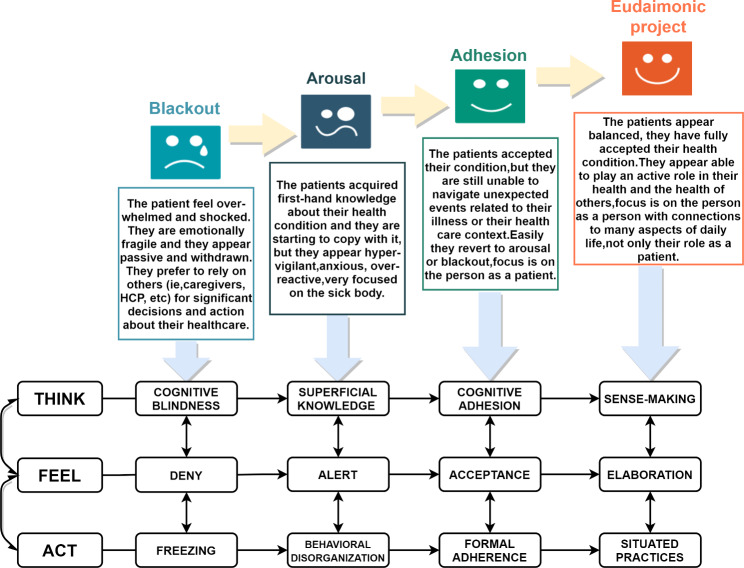
Results: A total of 684 patients were included in the study. 52.49% patients were in the Adhesion phase. At the multivariate level, compared with the blackout phase process anxiety, monthly income (RMB yuan) equal to or more than 5,000 were the most important factor impacting CHF patients CR engagement. Compared with the Blackout phase, regular exercise or not, severe depression, previous cardiac-related hospitalizations 1 or 2 times, Age influenced patient CR engagement in the Arousal phase. Besides, compared with the Blackout phase, outcome anxiety and activation level were independent factors in the Eudaimonic Project phase.
Conclusion: This study characterized CR engagement, and explored demographic, medical, and psychological factors-with the most important being process anxiety, monthly income, patient activation, severe depression, and previous cardiac-related hospitalizations. The associated factors of CR engagement were not identical among different phases. Our findings suggested that factors could potentially be targeted in clinical practice to identify low CR engagement patients, and strategies implemented to strengthen or overcome these associations to address low CR engagement in CHF patients.
Keywords: Cardiac rehabilitation; Chronic heart failure; Patient Engagement; Predictive factors.
© 2023. BioMed Central Ltd., part of Springer Nature.
Conflict of interest statement
The authors declare no competing interests.
Figures
References
-
- Mascolo A, di Mauro G, Cappetta D, et al. Current and future therapeutic perspective in chronic heart failure. Pharmacol Res. 2022;175:106035. - PubMed
-
- Dellafiore F, Chung ML, Alvaro R, et al. Influence of mutuality on quality of life in heart failure patient with inadequate self-care and caregiver dyads: an actor-partner interdependence model analysis. Eur J Cardiovasc Nurs. 2022;21(4):366–73. - PubMed
Publication types
MeSH terms
LinkOut - more resources
Full Text Sources
Medical
Miscellaneous
