


Predictive Factors and Clinical Events Associated with Edoxaban Interruption and Heparin Bridging Strategy: EMIT-AF/VTE
- PMID: 37697813
- PMCID: PMC10498703
- DOI: 10.1177/10760296231200223
Predictive Factors and Clinical Events Associated with Edoxaban Interruption and Heparin Bridging Strategy: EMIT-AF/VTE
Abstract
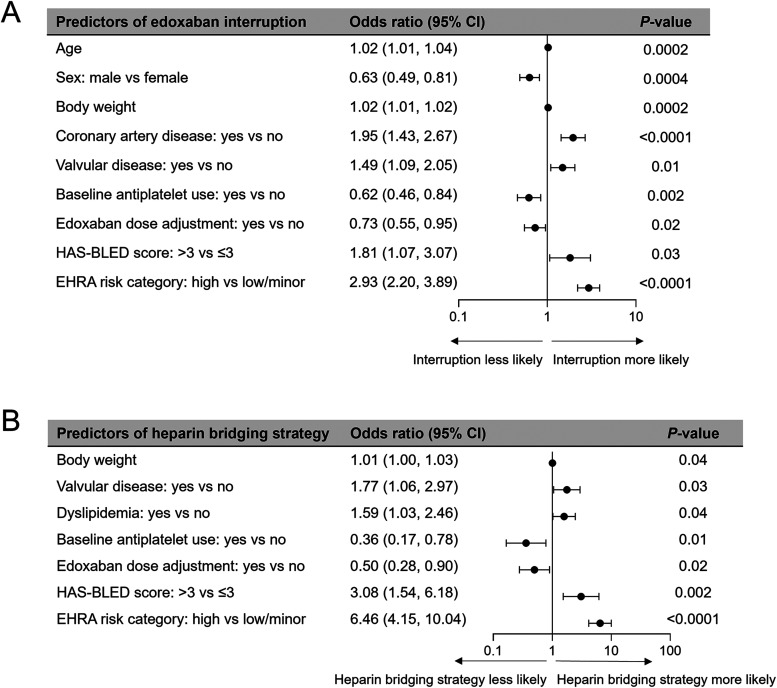
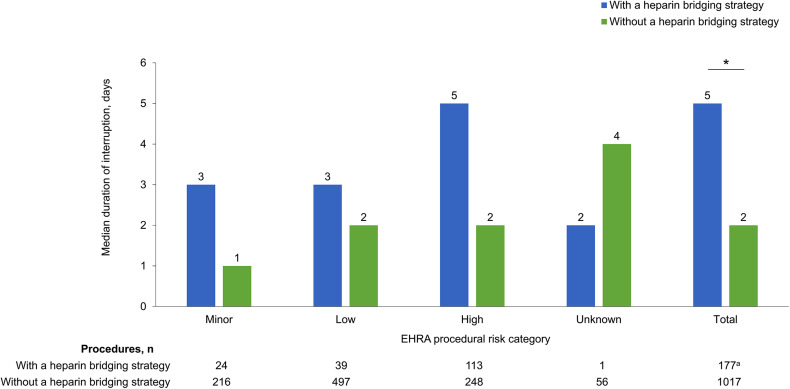
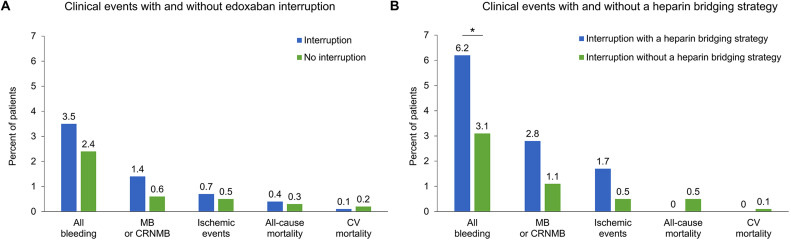
Patients treated with edoxaban may require diagnostic and therapeutic procedures that involve edoxaban interruption. Although heparin bridging strategies are not recommended, heparin is frequently used in clinical practice. However, whether heparin use decreases thromboembolic risk remains unclear, and the potential for increased periprocedural bleeding remains a concern. Here, we report factors predicting edoxaban interruption and the use of heparin bridging strategies and associated clinical events from Global EMIT-AF/VTE, a multicenter, prospective, noninterventional study (Clinicaltrials.gov NCT02950168). Eligible patients are adults with atrial fibrillation or venous thromboembolism treated with edoxaban who underwent a diagnostic or therapeutic procedure. Edoxaban interruption, heparin bridging strategies, and clinical event data were collected from 5 days before procedure through 29 days afterwards. Edoxaban was interrupted in 1222/2089 procedures (58.5%); a heparin bridging strategy was used during 178 (14.6%) of these interruptions. Patients who received periprocedural heparin had higher baseline HAS-BLED (2.4±1.0 vs 1.9±1.1, P <0.0001) scores and similar CHA2DS2-VASc (3.6±1.6 vs 3.4±1.6, P = 0.09) scores versus patients who did not. HAS-BLED score >3 and high EHRA procedural risk predicted both edoxaban interruption and the use of a heparin bridging strategy, whereas CHA2DS2-VASc scores did not predict either. Bleeding and ischemic event rates were low; the all-bleeding rate was higher with the use of a heparin bridging strategy versus without (6.2% vs 3.1%, P = 0.04). Periprocedural heparin use was associated with higher bleeding rates, but not with lower thromboembolic risk. Individual patient and procedural bleeding risks appear to contribute more than stroke risk to clinicians' consideration of a heparin bridging strategy.
Keywords: atrial fibrillation; bleeding; edoxaban; heparin bridging strategy; treatment interruption.
Figures
References
-
- Investigators BS. Bridging anticoagulation: is it needed when warfarin is interrupted around the time of a surgery or procedure? Circulation. Mar 27 2012;125(12):e496-e498. - PubMed
-
- January CT, Wann LS, Calkins H, et al. 2019 AHA/ACC/HRS focused update of the 2014 AHA/ACC/HRS guideline for the management of patients with atrial fibrillation: a report of the American college of cardiology/American heart association task force on clinical practice guidelines and the heart rhythm society. J Am Coll Cardiol. Jul 9 2019;74(1):104-132. - PubMed
Publication types
MeSH terms
Substances
Associated data
LinkOut - more resources
Full Text Sources
Medical
