


Measuring flexibility in autistic adults: Exploring the factor structure of the flexibility scale self report
- PMID: 37698531
- PMCID: PMC12207838
- DOI: 10.1002/aur.3025
Measuring flexibility in autistic adults: Exploring the factor structure of the flexibility scale self report
Abstract
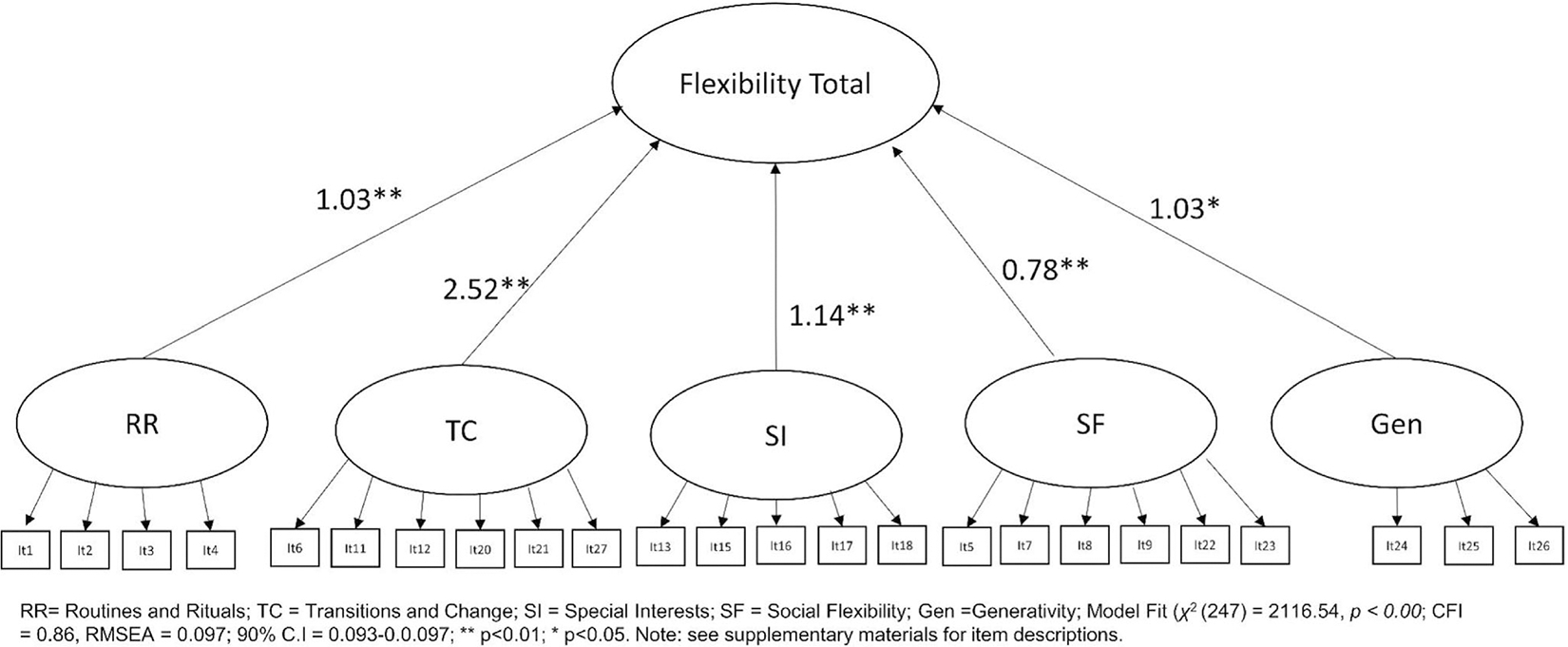
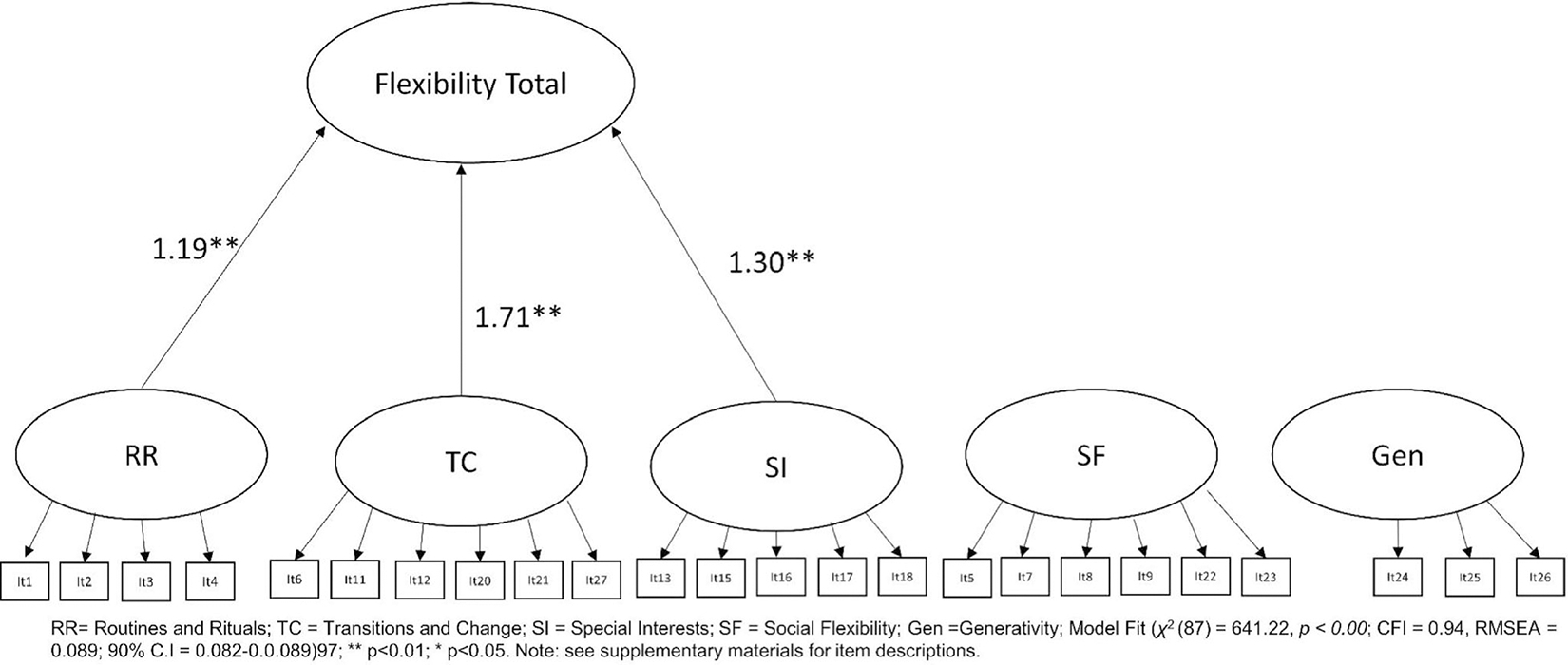
Cognitive flexibility differences are common for autistic individuals and have an impact on a range of clinical outcomes. However, there is currently a lack of well validated measurement tools to assess flexibility in adulthood. The Flexibility Scale was originally designed as a parent-report measure of real-world flexibility challenges in youth. The original Flexibility Scale provides a total score and five subscales: Routines and Rituals, Transitions and Change, Special Interests, Social Flexibility, and Generativity. In this study, we evaluate the factorial validity of the Flexibility Scale as a self-report (Flexibility Scale Self Report) measure of cognitive flexibility, adapted from the original Flexibility Scale, for use by autistic adults. This study includes both a primary sample (n = 813; mean age = 40.3; 59% female) and an independently recruited replication sample (n = 120; mean age = 32.8; 74% female) of individuals who completed the Flexibility Scale Self Report. The analysis consisted of an initial confirmatory factor analysis (CFA) of the original Flexibility Scale structure, followed by exploratory factor analysis (EFA) and factor optimization within a structural equation modeling framework to identify the optimal structure for the questionnaire in adults. The identified structure was then replicated through CFA in the replication sample. Our results indicate an alternative optimal scale structure from the original Flexibility Scale, which includes fewer items, and only three (Routines/Rituals, Transitions and Change, Special Interests) of the five subscales contributing to the flexibility total score. Comparisons revealed no structural differences within the scale based on sex assigned at birth. Here the Generativity and Social Flexibility scales are treated as independent but related scales. The implications for measurement of cognitive flexibility in clinical and research settings, as well as theoretical underpinnings are discussed.
Keywords: adults; autism; executive functions; factor analysis; measurement; neuropsychology; questionnaire.
© 2023 The Authors. Autism Research published by International Society for Autism Research and Wiley Periodicals LLC.
Conflict of interest statement
CONFLICT OF INTEREST STATEMENT
No conflicts of interest are report.
Figures
References
-
- Carter Leno V, Wright N, Pickles A, Bedford R, Zaidman-Zait A, Kerns C, Mirenda P, Zwaigenbaum L, Duku E, Bennett T, Georgiades S, Smith I, Vaillancourt T, Szatmari P, & Elsabbagh M (2022). Exposure to family stressful life events in autistic children: Longitudinal associations with mental health and the moderating role of cognitive flexibility. Autism, 26(7), 1656–1667. 10.1177/13623613211061932 - DOI - PMC - PubMed
-
- Davids RC, Groen Y, Berg IJ, Tucha OM, & van Balkom ID (2016). Executive functions in older adults with autism spectrum disorder: Objective performance and subjective complaints. Journal of Autism and Developmental Disorders, 46, 2859–2873. - PubMed
Publication types
MeSH terms
Grants and funding
LinkOut - more resources
Full Text Sources
Medical
