


Sulcus-Deepening Trochleoplasty for High-Grade Trochlear Dysplasia: Demystifying the Procedure-a Review of the Current Literature
- PMID: 37698757
- PMCID: PMC10587046
- DOI: 10.1007/s12178-023-09868-6
Sulcus-Deepening Trochleoplasty for High-Grade Trochlear Dysplasia: Demystifying the Procedure-a Review of the Current Literature
Abstract
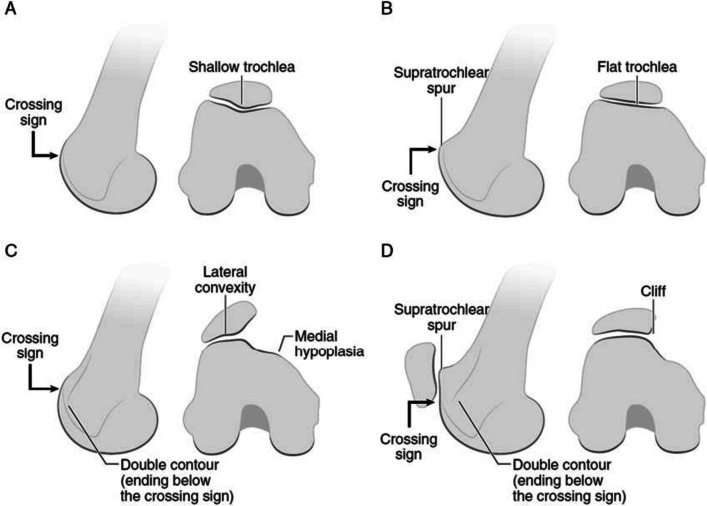
Purpose of review: The most common and biomechanically influential pathoanatomic risk factor for recurrent patellofemoral instability is trochlear dysplasia. Sulcus-deepening trochleoplasty is a procedure developed to address high-grade trochlear dysplasia in the setting of patellofemoral instability. The purpose of this paper is to outline the current classification and surgical management of trochlear dysplasia as well as to review the current literature on the clinical outcomes and complications of sulcus-deepening trochleoplasty.
Recent findings: This review outlines the most recent literature reporting evidence behind the decision-making to perform a trochleoplasty in the setting of patellofemoral instability and high-grade trochlear dysplasia. Critical parameters include grade of trochlear dysplasia, severity of symptoms, pertinent physical examination findings, surgical techniques, modifications for skeletally immature patients, and considerations for the revision setting. Historic studies have elicited concerns regarding high reported complication rates for trochleoplasty; however, recent studies consistently report good clinical outcomes and acceptable complication rates, similar to those of other patellar stabilizing procedures. The addition of a trochleoplasty in patients with high-grade dysplasia results in a lower re-dislocation rate, significant improvements in patient-reported outcome measures (PROMs) as well as high levels of patient satisfaction and return to sport. The use of sulcus-deepening trochleoplasty for the treatment of high-grade dysplasia and recurrent patellofemoral instability is a well-established technique with good outcomes and an acceptable complication profile. In patients with high-grade dysplasia, trochleoplasty results in lower re-dislocation rates, high patient satisfaction scores, and good clinical and functional outcomes. An understanding of trochleoplasty and its indications should be in the armamentarium of surgeons treating patellofemoral instability.
Keywords: MPFL; Medial patellofemoral ligament; Patellar instability; Patellofemoral instability; Trochlear dysplasia; Trochleoplasty.
© 2023. The Author(s), under exclusive licence to Springer Science+Business Media, LLC, part of Springer Nature.
Conflict of interest statement
Magdalena Tarchala, Sarah Kerslake, and Laurie Hiemstra declare that they have no conflict of interest relevant to this manuscript.
Figures
References
-
- •• Hiemstra LA, Kerslake S, Lafave MR. Quality-of-life outcomes of patients following patellofemoral stabilization surgery: the influence of trochlear dysplasia. J Knee Surg. 2017;30(9):887–93. This paper is the first to follow patients with trochlear dysplasia after MPFL reconstruction, using a disease-specific quality of life measure, to determine the threshold at which patients have poorer outcomes with trochlear dysplasia. - PubMed
Publication types
LinkOut - more resources
Full Text Sources
Research Materials
