


Long-term effects of premenopausal bilateral oophorectomy with or without hysterectomy on physical aging and chronic medical conditions
- PMID: 37699239
- PMCID: PMC10615715
- DOI: 10.1097/GME.0000000000002254
Long-term effects of premenopausal bilateral oophorectomy with or without hysterectomy on physical aging and chronic medical conditions
Abstract
Objective: We examined the long-term effects of premenopausal bilateral oophorectomy (PBO) with or without concurrent or preceding hysterectomy on physical and cognitive function and on odds of chronic conditions.
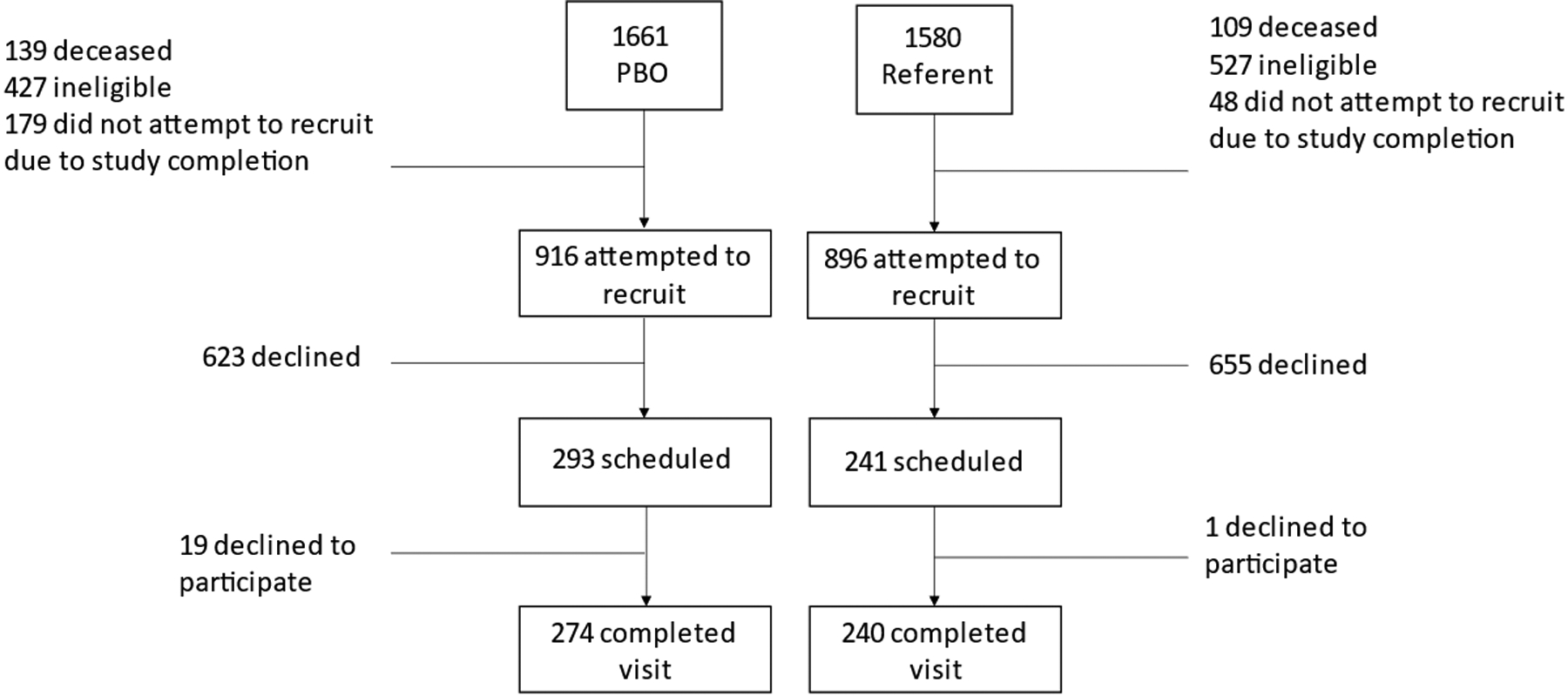
Methods: We enrolled 274 women with PBO with or without concurrent or preceding hysterectomy and 240 referents aged 55 years and older who were residents of Olmsted County, MN as of the PBO or index date. Chronic conditions were assessed via medical record abstraction. Cognitive diagnoses were based on neurocognitive testing. A physical function assessment included measures of strength and mobility. Multivariable regression models compared characteristics for women with PBO <46 years, PBO 46-49 years, and referent women with adjustments for age and other confounders.
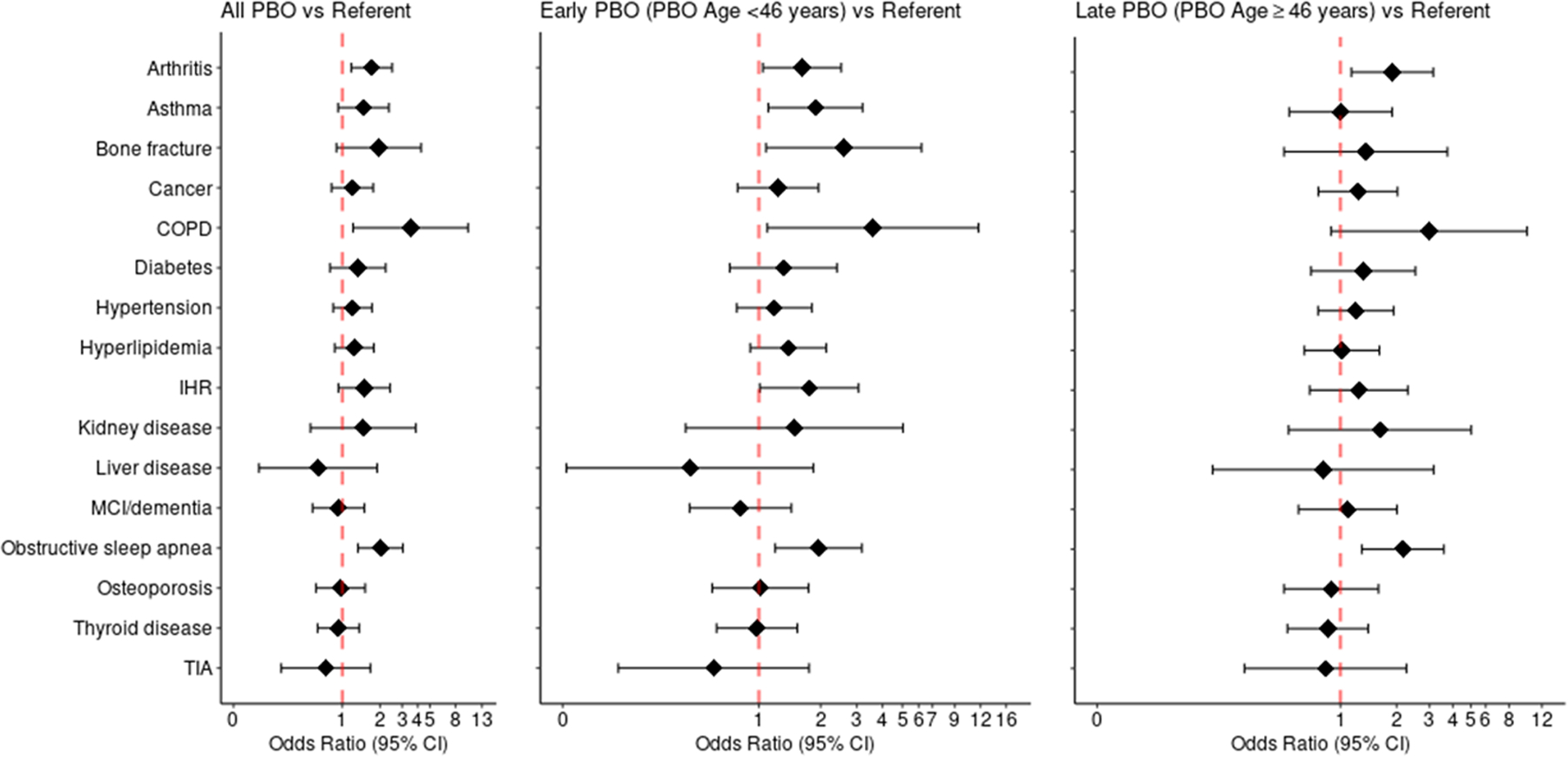
Results: The clinical visits (median age, 67 years) were a median of 22 years after the PBO or index date. Of 274 women with PBO, 161 (59%) were <46 years at PBO and 113 (41%) were 46-49 years. Compared with referents, women with a history of PBO <46 years had increased odds of arthritis (odds ratio [OR], 1.64; 95% confidence interval [CI], 1.06-2.55), asthma (OR, 1.74; 95% CI, 1.03-2.93), obstructive sleep apnea (OR, 2.00; 95% CI, 1.23-3.26), and bone fractures (OR, 2.86; 95% CI, 1.17-6.98), and walked a shorter mean distance on a 6-minute walk test ( b = -18.43; P = 0.034). Compared with referents, women with a history of PBO at age 46-49 years had increased odds of arthritis (OR, 1.92; 95% CI, 1.16-3.18) and obstructive sleep apnea (OR, 2.21; 95% CI, 1.33-3.66). There were no significant differences in cognitive status in women with PBO compared with referents.
Conclusions: Women with a history of PBO with or without concurrent or preceding hysterectomy, especially at age <46 years, have more chronic conditions in late mid-life compared with referents.
Copyright © 2023 by The Menopause Society.
Conflict of interest statement
Financial disclosure/conflicts of interest: Dr. Mielke has served on scientific advisory boards and/or has consulted for Biogen, LabCorp, Lilly, Merck, PeerView Institute, Roche, Siemens Healthineers, and Sunbird Bio unrelated to the current manuscript. Dr. Kapoor has no conflicts of interest directly related to the subject of this manuscript. However, over the past 36 months, she has been a consultant for Astellas and Mithra Pharmaceuticals, Scynexis, and Womaness; received grant support form Mithra Pharmaceuticals; received payment for development of educational content from Med Learning Group and Academy of Continued Healthcare Learning; and received honoraria for CME activity from PriMed and OBG Management. Dr. Fields serves on the SWAN-Aging Study Observational Study Monitoring Board. Dr. Morrow was on the board for American Society of Biomechanics, which is unrelated to this work. Dr. Kantarci has served on data safety monitoring boards and/or was a consultant for Pfizer, Takeda, and Biogen. She received research support from Eli Lilly. The other authors declare no competing interests.
Figures
References
Publication types
MeSH terms
Grants and funding
LinkOut - more resources
Full Text Sources
Medical
