


Position dependent dyspnea and hypoxemia
- PMID: 37701457
- PMCID: PMC10494457
- DOI: 10.1016/j.rmcr.2023.101912
Position dependent dyspnea and hypoxemia
Abstract
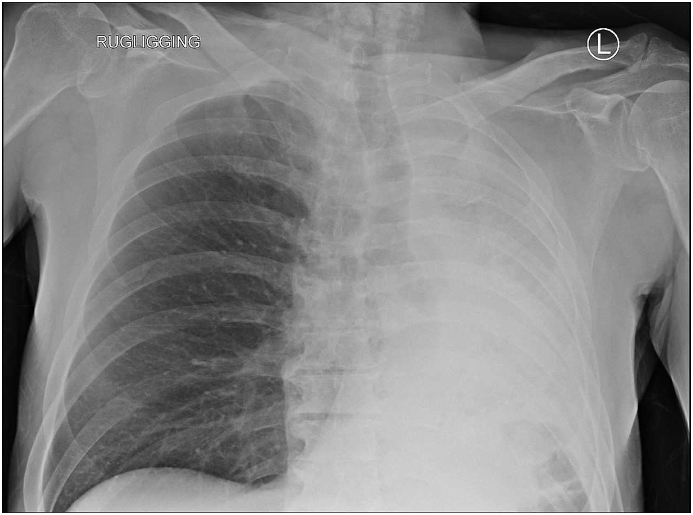
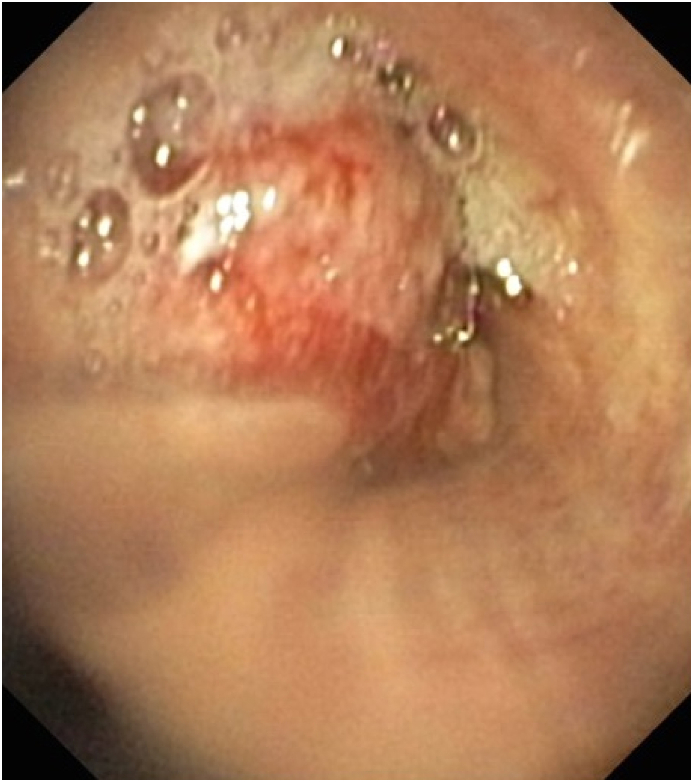
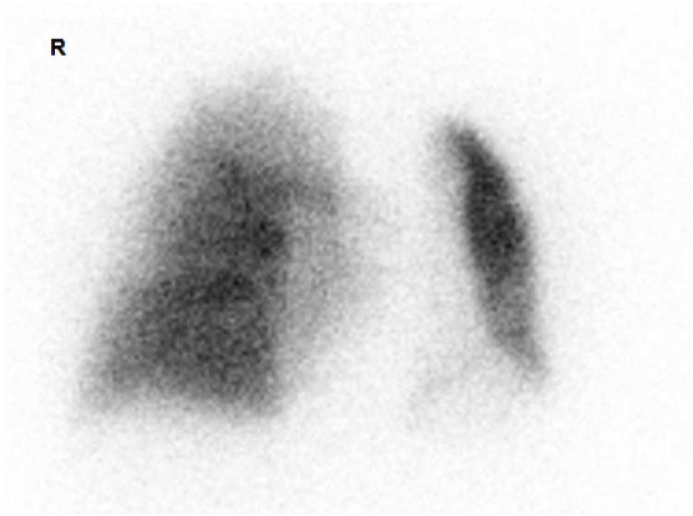
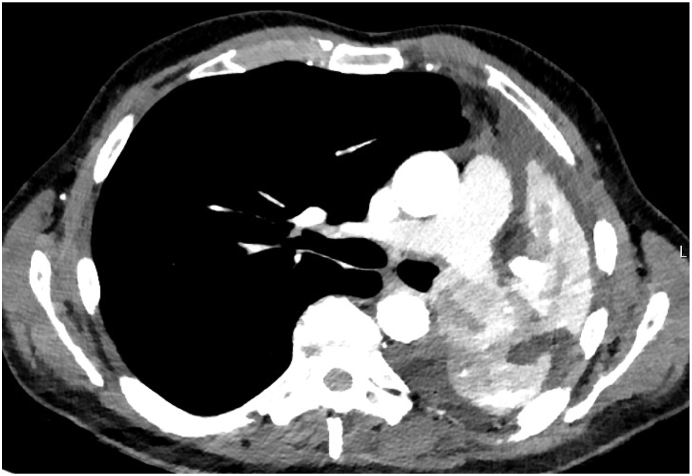
A 63-year-old man was analyzed for platypnea-orthodeoxia syndrome (POS). A complete obstruction due to bronchial carcinoma was found in the left main bronchus with bronchoscopy. After left sided pneumonectomy POS resolved completely. Historical reports suggest increased shunting through the left lung could occur in the upright position caused by decreased compression of the left pulmonary artery due to the central bronchial carcinoma. Partially absent hypoxic vasoconstriction was confirmed in this case and suggests (without a relevant shunt through a patent foramen ovale) this 'historical' hypothesis could explain the POS due to increased shunting in the upright position in this patient.
Keywords: Left main bronchus carcinoma; Lung carcinoma; Platypnea-orthodeoxia syndrome.
© 2023 The Authors.
Conflict of interest statement
There is no conflict of interest.
Figures
References
-
- Agrawal A., Arunabh Talwar A.P. The multiple dimensions of Platypnea-Orthodeoxia syndrome: a review. Respir. Med. 2017;129:31–38. - PubMed
-
- Nassif M., Lu H., Konings T.C., Bouma B.J., Vonk Noordegraaf A., Straver B., Blom N.A., Clur S.A., Backx A.P.C.M., Groenink M., Boekholdt S.M., Koolbergen D.R., Hazekamp M.G., Mulder B.J.M., de Winter R.J. Neth. Heart J. 2015;23(11):539–545. Platypnoea-orthodeoxia syndrome, an underdiagnosed cause of hypoxaemia: four cases and the possible underlying mechanisms. - PMC - PubMed
-
- Gacad G., Akhtar N., Cohn J.N. Orthostatic Hypoxemia in a patient with bronchogenic carcinoma. Arch. Intern. Med. 1974;184:1113–1115. - PubMed
Publication types
LinkOut - more resources
Full Text Sources
