


Restructuring lung cancer care to accelerate diagnosis and treatment in patients vulnerable to healthcare disparities using an innovative care model
- PMID: 37701734
- PMCID: PMC10494257
- DOI: 10.1016/j.mex.2023.102338
Restructuring lung cancer care to accelerate diagnosis and treatment in patients vulnerable to healthcare disparities using an innovative care model
Abstract
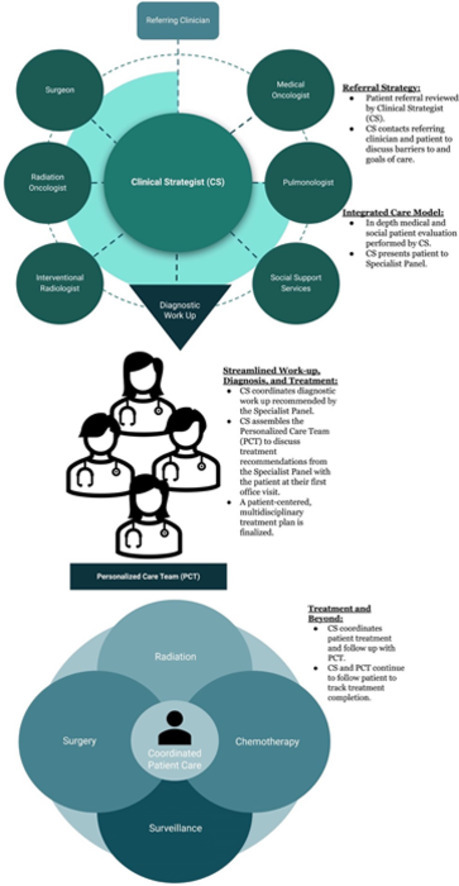
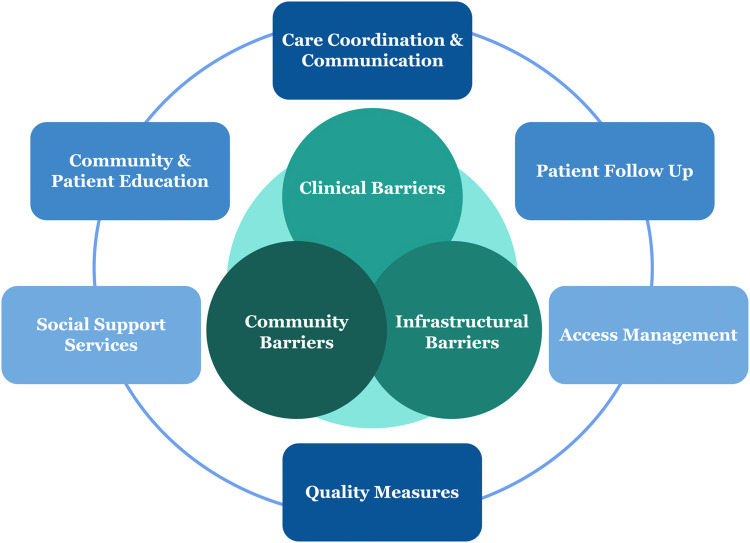
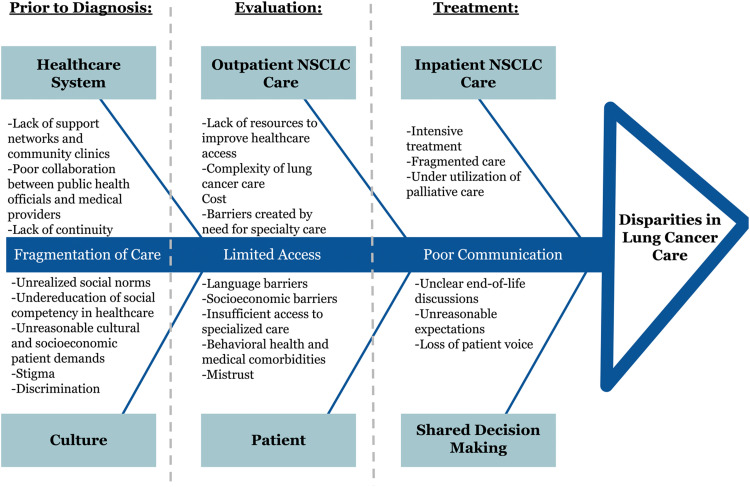
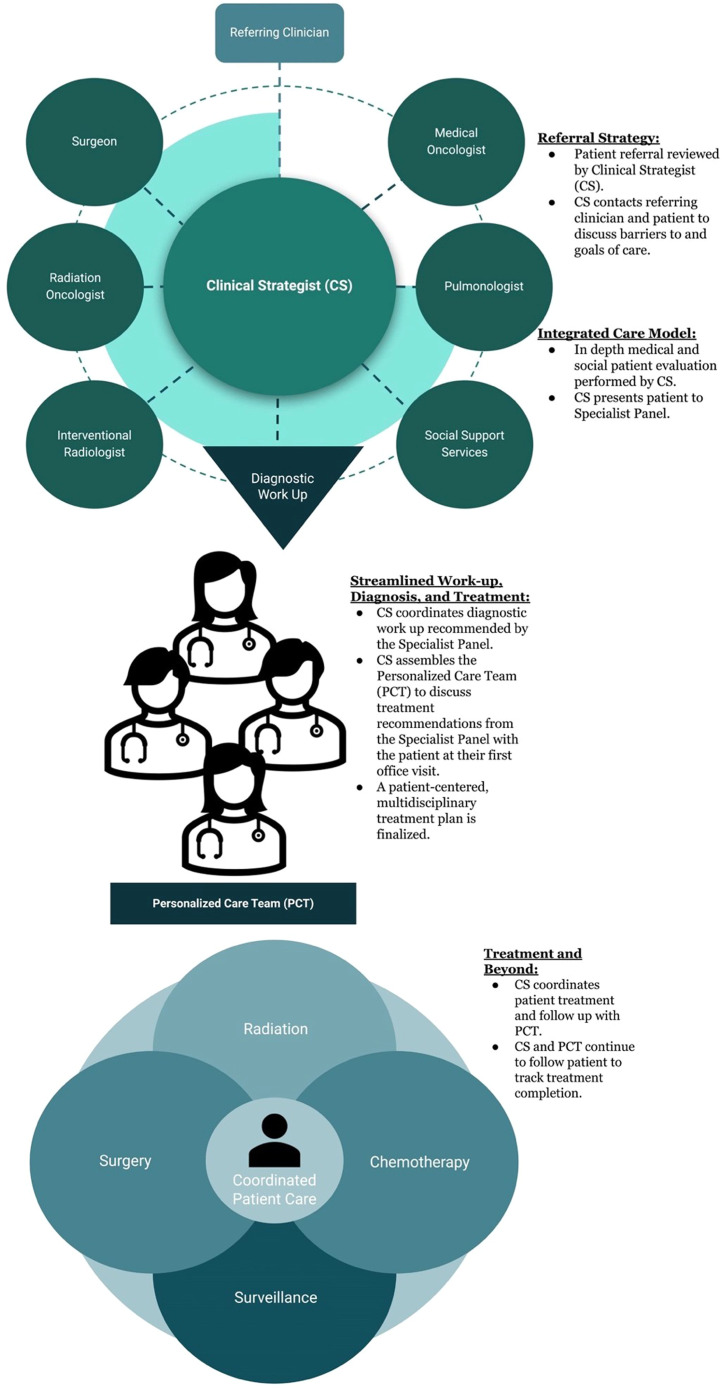
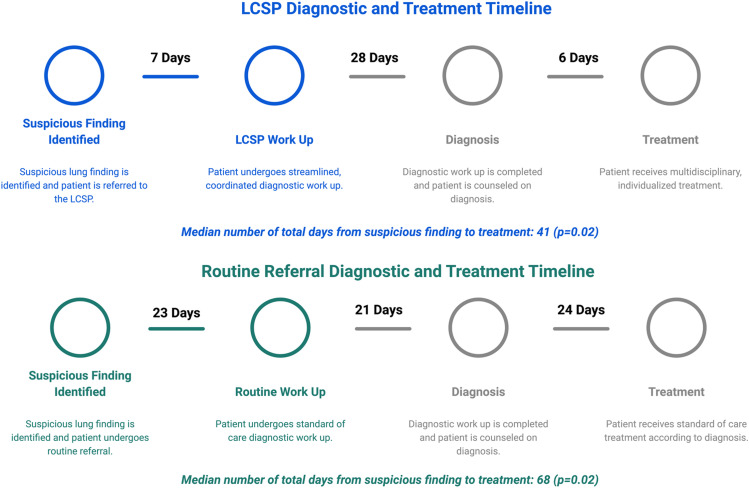
The diagnosis and treatment of lung cancer is challenged by complex diagnostic pathways and fragmented care that can lead to disparities for vulnerable patients. Our model involved a multi-institutional, multidisciplinary conference to address the complexity of lung cancer care in vulnerable patient populations. The conference was conducted using a process adapted from the problem-solving method entitled FastTrack, pioneered by General Electric. Conference attendees established critical social determinants of health specific to lung cancer and designed a practical care model to accelerate diagnosis and treatment in this population. The resulting care delivery model, the Lung Cancer Strategist Program (LCSP), was led by a lung cancer trained advanced practice provider (APP) to expedite diagnosis, surgical and oncologic consultation, and treatment of a suspicious lung nodule. We compared the timeliness of care, care efficiency, and oncologic outcomes in 100 LCSP patients and 100 routine referral patients at the same thoracic surgery clinic. Patient triage through our integrated care model transitioned initial referral evaluation to a lung cancer trained APP to coordinate multidisciplinary patient-centered care that was highly individualized and significantly reduced the time to diagnosis and treatment among vulnerable patients at high-risk for treatment delay due to healthcare disparities.•To develop the Lung Cancer Strategist Program care model, we used a three-step (Design, Meeting, and Culmination), team-based, problem-solving process entitled FastTrack.•An advantage of FastTrack is its ability to overcome barriers embedded within hierarchal and institutional social systems, empowering those closest to the relevant issue to propose and enact meaningful change.•Under this framework, we engaged a diverse field of experts to assess systemic barriers in lung cancer care and design an innovative care pathway to improve the timeliness and efficiency of lung cancer care in patients at risk for healthcare disparities.
Keywords: Healthcare disparities; Integrative multidisciplinary care; Lung Cancer Strategist Program (care model developed) based off of FastTrack (method used to develop the care model); Non-small cell lung cancer; Novel healthcare delivery model; Social determinants of health.
© 2023 The Author(s).
Conflict of interest statement
The authors declare that they have no known competing financial interests or personal relationships that could have appeared to influence the work reported in this paper.
Figures
References
-
- Siegel R.L., Miller K.D., Jemal A. Cancer statistics, 2020. CA Cancer J. Clin. 2020;70 - PubMed
-
- Miller K.D., et al. Cancer treatment and survivorship statistics, 2019. CA Cancer J. Clin. 2019;69 - PubMed
-
- Goldstraw P., et al. The IASLC lung cancer staging project: proposals for revision of the TNM stage groupings in the forthcoming (eighth) edition of the TNM Classification for lung cancer. J. Thorac. Oncol. 2016;11 - PubMed
-
- Darling G.E., et al. Randomized trial of mediastinal lymph node sampling versus complete lymphadenectomy during pulmonary resection in the patient with N0 or N1 (less than hilar) non-small cell carcinoma: results of the American College of Surgery Oncology Group Z0030 Trial. J. Thorac. Cardiovasc. Surg. 2011;141:662–670. - PMC - PubMed
LinkOut - more resources
Full Text Sources
