


Obesity-Related Biomarkers Are Associated With Exercise Intolerance and HFpEF
- PMID: 37703087
- PMCID: PMC10698557
- DOI: 10.1161/CIRCHEARTFAILURE.123.010618
Obesity-Related Biomarkers Are Associated With Exercise Intolerance and HFpEF
Abstract
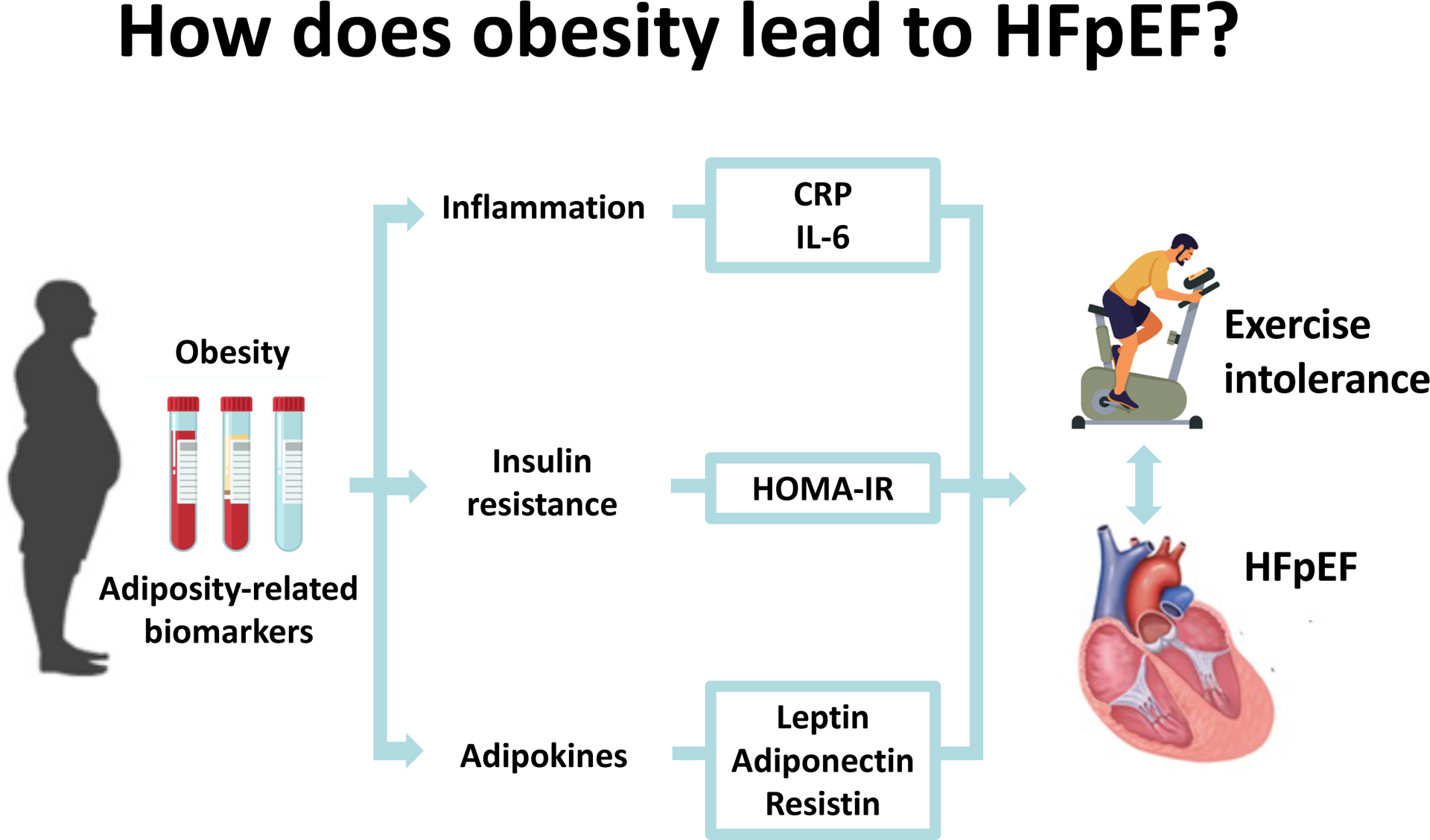
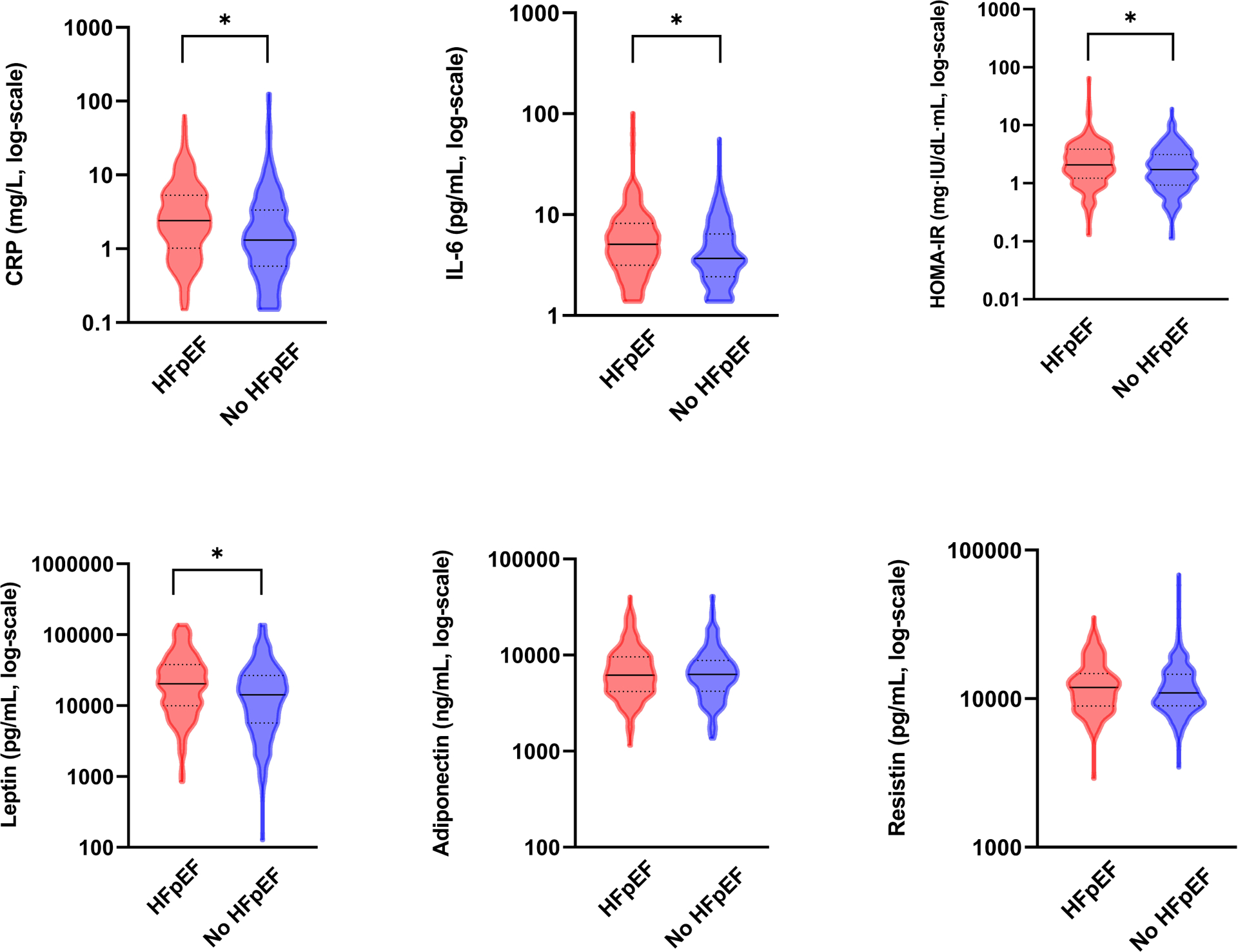
Background: Obesity and adiposity are associated with an increased risk of heart failure with preserved ejection fraction (HFpEF); yet, specific underlying mechanisms remain unclear. We sought to examine the association of obesity-related biomarkers including adipokines (leptin, resistin, adiponectin), inflammatory markers (CRP [C-reactive protein], IL-6 [interleukin-6]), and insulin resistance (HOMA-IR) with HFpEF status, exercise capacity, and cardiovascular outcomes.
Methods: We studied 509 consecutive patients with left ventricular ejection fraction ≥50% and chronic dyspnea, who underwent clinically indicated cardiopulmonary exercise test with invasive hemodynamic monitoring between 2006 and 2017. We defined HFpEF based on the presence of elevated left ventricular filling pressures at rest or during exercise. Fasting blood samples collected at the time of the cardiopulmonary exercise test were used to assay obesity-related biomarkers. We examined the association of log-transformed biomarkers with HFpEF status and exercise traits using multivariable-adjusted logistic regression models.
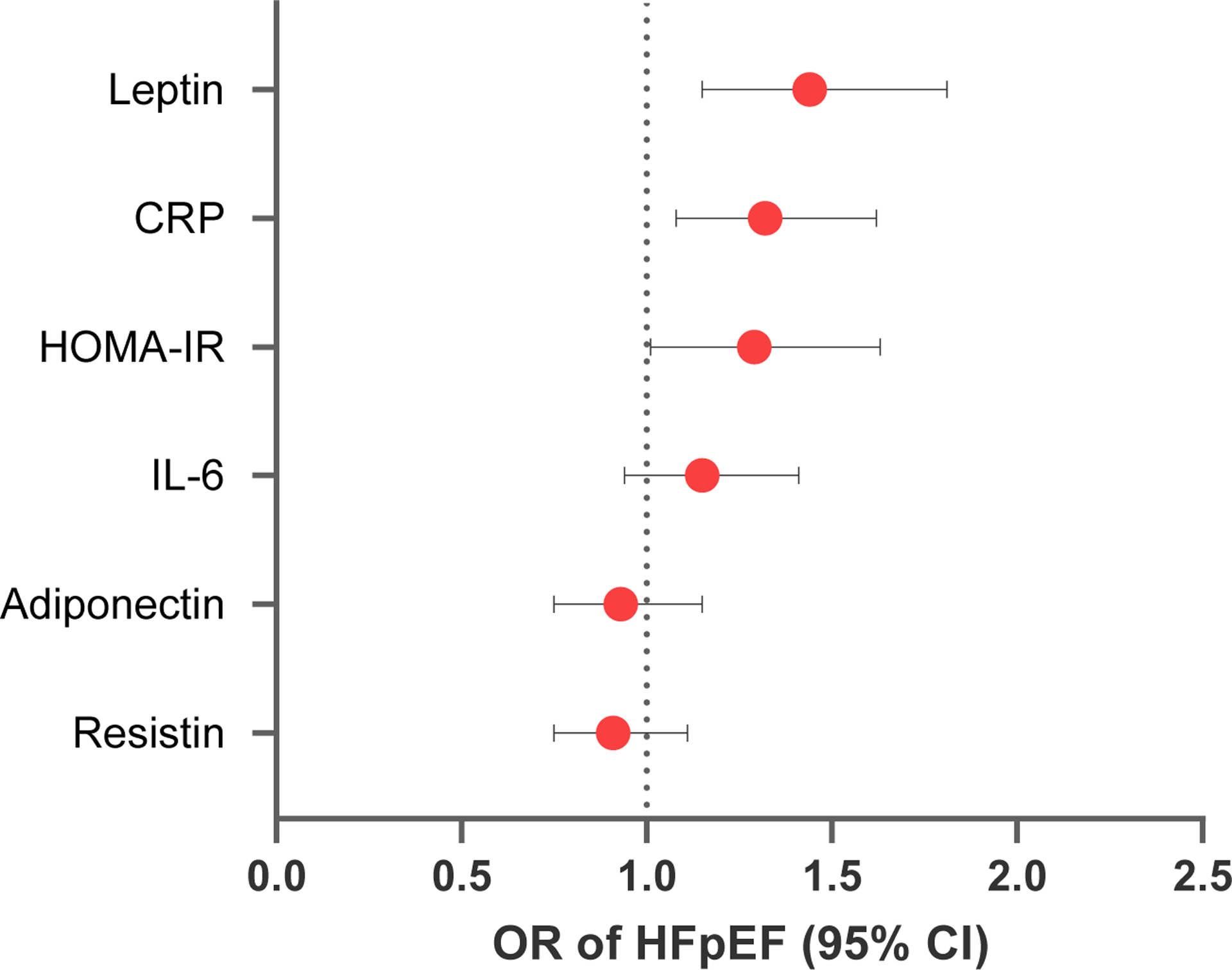
Results: We observed associations of obesity-related biomarkers with measures of impaired exercise capacity including peak VO2 (P≤0.002 for all biomarkers). The largest effect size was seen with leptin, where a 1-SD higher leptin was associated with a 2.35 mL/kg per min lower peak VO2 (β, -2.35±0.19; P<0.001). In addition, specific biomarkers were associated with distinct measures of exercise reserve including blood pressure (homeostatic model assessment of insulin resistance, leptin, adiponectin; P≤0.002 for all), and chronotropic response (CRP, IL-6, homeostatic model assessment of insulin resistance, leptin, and resistin; P<0.05 for all). Our findings suggest that among the obesity-related biomarkers studied, higher levels of leptin and CRP are independently associated with increased odds of HFpEF, with odds ratios of 1.36 (95% CI, 1.09-1.70) and 1.25 (95% CI, 1.03-1.52), respectively.
Conclusions: Specific obesity-related pathways including inflammation, adipokine signaling, and insulin resistance may underlie the association of obesity with HFpEF and exercise intolerance.
Keywords: adiposity; biomarker; heart failure; inflammation; obesity.
Conflict of interest statement
Figures
References
-
- Heidenreich PA, Bozkurt B, Aguilar D, Allen LA, Byun JJ, Colvin MM, Deswal A, Drazner MH, Dunlay SM, Evers LR, Fang JC, Fedson SE, Fonarow GC, Hayek SS, Hernandez AF, Khazanie P, Kittleson MM, Lee CS, Link MS, Milano CA, Nnacheta LC, Sandhu AT, Stevenson LW, Vardeny O, Vest AR, Yancy CW. 2022 AHA/ACC/HFSA Guideline for the Management of Heart Failure: A Report of the American College of Cardiology/American Heart Association Joint Committee on Clinical Practice Guidelines.; 2022: 1-e895–e1032. - PubMed
-
- Ho JE, Zern EK, Wooster L, Bailey CS, Cunningham T, Eisman AS, Hardin KM, Zampierollo GA, Jarolim P, Pappagianopoulos PP, Malhotra R, Nayor M, Lewis GD. Differential Clinical Profiles, Exercise Responses, and Outcomes Associated with Existing HFpEF Definitions. Circulation. 2019;140:353–365. - PMC - PubMed
-
- Savji N, Meijers WC, Bartz TM, Bhambhani V, Cushman M, Nayor M, Kizer JR, Sarma A, Blaha MJ, Gansevoort RT, Gardin JM, Hillege HL, Ji F, Kop WJ, Lau ES, Lee DS, Sadreyev R, van Gilst WH, Wang TJ, Zanni MV, Vasan RS, Allen NB, Psaty BM, van der Harst P, Levy D, Larson M, Shah SJ, de Boer RA, Gottdiener JS, Ho JE. The Association of Obesity and Cardiometabolic Traits With Incident HFpEF and HFrEF. JACC Hear Fail. 2018;6:701–709. - PMC - PubMed
-
- Pandey A, Patel KV, Vaduganathan M, Sarma S, Haykowsky MJ, Berry JD, Lavie CJ. Physical Activity, Fitness, and Obesity in Heart Failure With Preserved Ejection Fraction. JACC Hear Fail. 2018;6:975–982. - PubMed
-
- Kitzman DW, Lam CSP, Kitzman W, Glenn K. Obese Heart Failure With Preserved Ejection Fraction Phenotype From Pariah to Central Player. Circulation. 2017;136:20–23. - PubMed
Publication types
MeSH terms
Substances
Grants and funding
LinkOut - more resources
Full Text Sources
Medical
Research Materials
Miscellaneous
