


Larvicidal and anti-termite activities of microbial biosurfactant produced by Enterobacter cloacae SJ2 isolated from marine sponge Clathria sp
- PMID: 37704703
- PMCID: PMC10499797
- DOI: 10.1038/s41598-023-42475-6
Larvicidal and anti-termite activities of microbial biosurfactant produced by Enterobacter cloacae SJ2 isolated from marine sponge Clathria sp
Abstract
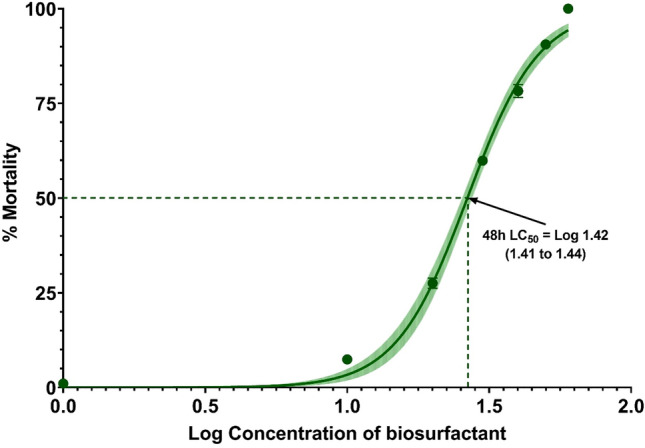
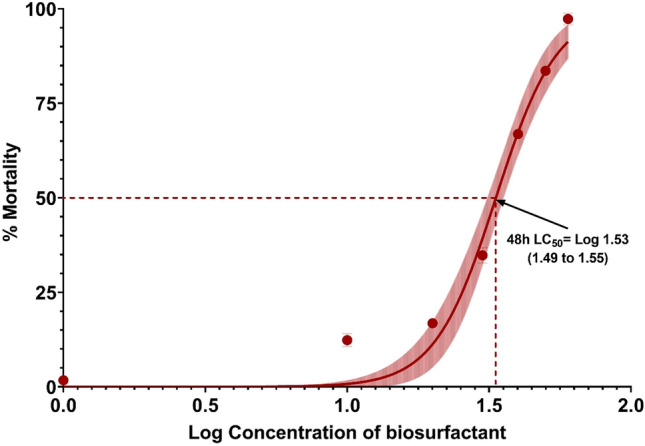
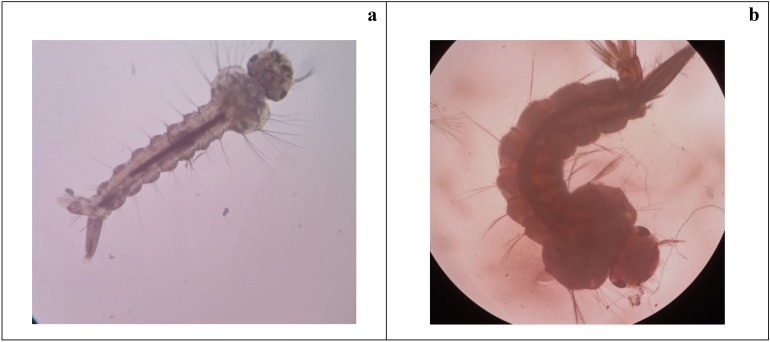
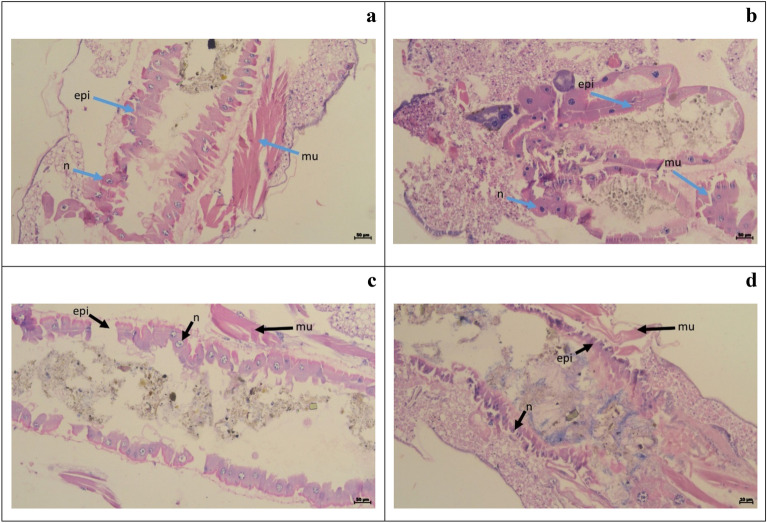
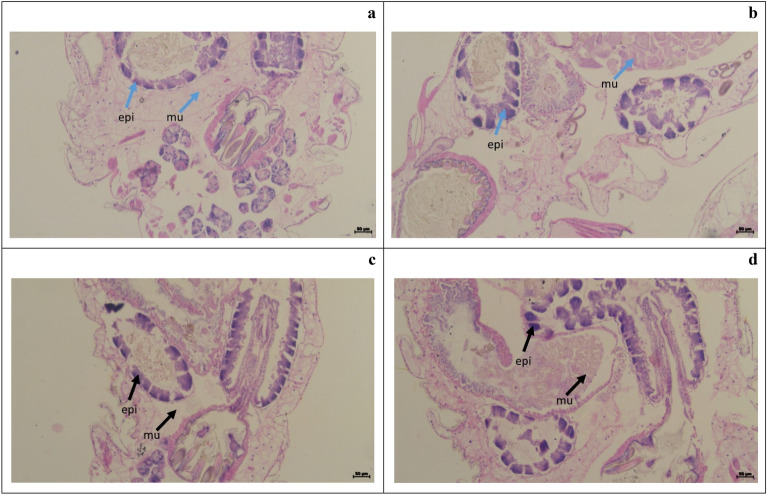
The widespread use of synthetic pesticides has resulted in a number of issues, including a rise in insecticide-resistant organisms, environmental degradation, and a hazard to human health. As a result, new microbial derived insecticides that are safe for human health and the environment are urgently needed. In this study, rhamnolipid biosurfactants produced from Enterobacter cloacae SJ2 was used to evaluate the toxicity towards mosquito larvae (Culex quinquefasciatus) and termites (Odontotermes obesus). Results showed dose dependent mortality rate was observed between the treatments. The 48 h LC50 (median lethal concentration) values of the biosurfactant were determined for termite and mosquito larvae following the non-linear regression curve fit method. Results showed larvicidal activity and anti-termite activity of biosurfactants with 48 h LC50 value (95% confidence interval) of 26.49 mg/L (25.40 to 27.57) and 33.43 mg/L (31.09 to 35.68), respectively. According to a histopathological investigation, the biosurfactant treatment caused substantial tissue damage in cellular organelles of larvae and termites. The findings of this study suggest that the microbial biosurfactant produced by E. cloacae SJ2 is an excellent and potentially effective agent for controlling Cx. quinquefasciatus and O. obesus.
© 2023. Springer Nature Limited.
Conflict of interest statement
The authors declare no competing interests.
Figures
References
-
- Kumar KK, et al. Microbial biopesticides for insect pest management in India: Current status and future prospects. J. Invertebr. Pathol. 2019;165:74–81. - PubMed
-
- Thanigaivel A, et al. Impact of Terminalia chebula Retz. against Aedes aegypti L. and non-target aquatic predatory insects. Ecotoxicol. Environ. Saf. 2017;137:210–217. - PubMed
-
- Allan R, Budge S, Sauskojus H. What sounds like Aedes, acts like Aedes, but is not Aedes? Lessons from dengue virus control for the management of invasive Anopheles. Lancet Glob. Health. 2023;11:e165–e169. - PubMed
Publication types
MeSH terms
Substances
LinkOut - more resources
Full Text Sources
Medical
Research Materials
