Review
. 2024 Jan;45(1):1-22.
doi: 10.1038/s41401-023-01149-9. Epub 2023 Sep 13.

Neuronal K+-Cl- cotransporter KCC2 as a promising drug target for epilepsy treatment

Affiliations
Review

Neuronal K+-Cl- cotransporter KCC2 as a promising drug target for epilepsy treatment

Erin McMoneagle et al. Acta Pharmacol Sin. 2024 Jan.

Abstract

Epilepsy is a prevalent neurological disorder characterized by unprovoked seizures. γ-Aminobutyric acid (GABA) serves as the primary fast inhibitory neurotransmitter in the brain, and GABA binding to the GABAA receptor (GABAAR) regulates Cl- and bicarbonate (HCO3-) influx or efflux through the channel pore, leading to GABAergic inhibition or excitation, respectively. The neuron-specific K+-Cl- cotransporter 2 (KCC2) is essential for maintaining a low intracellular Cl- concentration, ensuring GABAAR-mediated inhibition. Impaired KCC2 function results in GABAergic excitation associated with epileptic activity. Loss-of-function mutations and altered expression of KCC2 lead to elevated [Cl-]i and compromised synaptic inhibition, contributing to epilepsy pathogenesis in human patients. KCC2 antagonism studies demonstrate the necessity of limiting neuronal hyperexcitability within the brain, as reduced KCC2 functioning leads to seizure activity. Strategies focusing on direct (enhancing KCC2 activation) and indirect KCC2 modulation (altering KCC2 phosphorylation and transcription) have proven effective in attenuating seizure severity and exhibiting anti-convulsant properties. These findings highlight KCC2 as a promising therapeutic target for treating epilepsy. Recent advances in understanding KCC2 regulatory mechanisms, particularly via signaling pathways such as WNK, PKC, BDNF, and its receptor TrkB, have led to the discovery of novel small molecules that modulate KCC2. Inhibiting WNK kinase or utilizing newly discovered KCC2 agonists has demonstrated KCC2 activation and seizure attenuation in animal models. This review discusses the role of KCC2 in epilepsy and evaluates its potential as a drug target for epilepsy treatment by exploring various strategies to regulate KCC2 activity.

Keywords: GABAergic inhibition; K+-Cl- cotransporter KCC2; chloride homeostasis; epilepsy; signaling regulatory pathways; small molecular compounds.


Conflict of interest statement

The authors declare no competing interests.

Figures
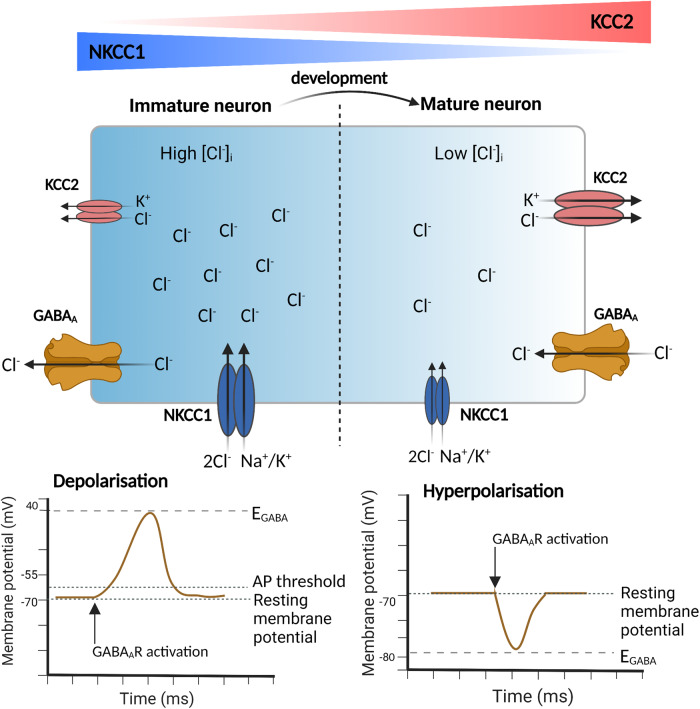
Fig. 1
Fig. 1. Developmental shifts in KCC2 and NKCC1 expression levels modulate GABAergic signaling from depolarizing to hyperpolarizing.
NKCC1 imports Cl- into neurons, while KCC2 exports Cl-. High NKCC1 expression in immature neurons leads to elevated intracellular Cl- levels, resulting in a depolarized EGABA relative to the resting membrane potential. This triggers Cl- efflux through GABAARs, causing membrane depolarization. However, as neurons mature, KCC2 expression increases, and NKCC1 expression decreases. Increased KCC2 activity lowers intracellular Cl- levels, establishing a hyperpolarized EGABA compared to the resting membrane potential. This induces inward GABAergic Cl- currents, hyperpolarizing mature neurons. Diagram created using BioRender.com. [Cl-]i intracellular chloride concentration, NKCC1 Na+-K+-Cl- cotransporter 1, KCC2 K+-Cl- cotransporter 2, [Cl-]i Intracellular chloride concentration, GABAAR γ-aminobutyric acid receptor type A, Na+ sodium, K+ Potassium; and AP action potential.
Fig. 2
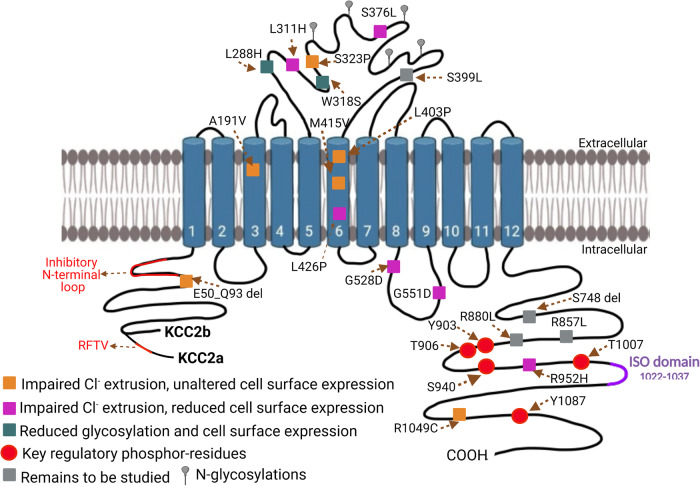
Fig. 2. Schematic representation of SLC12A5 mutations associated with human epilepsy and key regulatory phosphorylation sites.
KCC2 consists of two N-terminal splice isoforms, KCC2a and KCC2b, which comprise 12 transmembrane (TM) domains, 11 loops, N-terminus, and C-terminus. KCC2a contains an additional 23-amino-acid sequence with a conserved SPAK/OSR1-binding domain (RFTV). The N-terminal domains of KCC2a (V81-N107) and KCC2b (A66-N83) exhibit an autoinhibitory function, preventing intracellular solvent access to the ion-binding sites within TM1, 3, 6, and 8. The purple region represents the ISO domain, essential for hyperpolarizing GABAergic signaling. Within the intracellular carboxy-terminal domain (CTD), crucial regulatory phosphorylation sites of KCC2, including WNK-SPAK/OSR1 kinase sites (Threonine T906, T1007), PKC phosphorylation sites (Serine S940), and Src family kinase phosphorylation sites (Tyrosine Y903, Y1087), are located. The figure key outlines the mutation phenotypes and implications of the phosphorylation sites. The diagram was created using BioRender.com. SLC12 solute carrier family 12, KCC2 K+-Cl- cotransporter 2, TM transmembrane, GABA γ-aminobutyric acid, CTD carboxy-terminal domain, WNK With-No-Lysine (K) kinases, SPAK SPS/Ste20-related proline-alanine-rich kinase, OSR1 oxidative stress-responsive kinase 1, PKC protein kinase C, and ISO isotonic.
Fig. 3
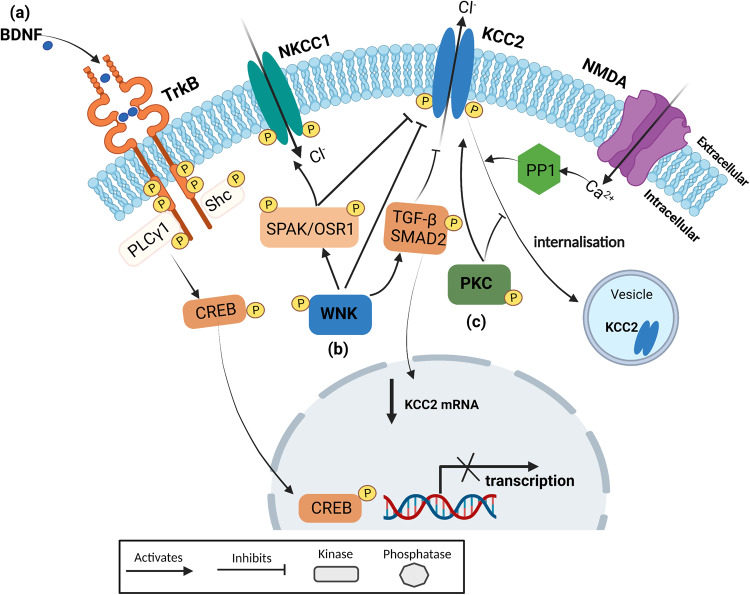
Fig. 3. Regulation mechanisms of KCC2 in mature neurons.
a BDNF-TrkB Signaling: Binding of BDNF to its TrkB receptor leads to autophosphorylation of tyrosine residues within the receptor. This creates docking sites for the adaptor protein Shc and phospholipase Cγ (PLCγ), activating second messengers that stimulate a downstream cascade, resulting in the phosphorylation and activation of CREB. CREB binds to the transcriptional machinery within the nucleus to control gene expression, leading to reduced KCC2 gene transcription in mature neurons. b WNK-SPAK/OSR1 Signaling: WNK-SPAK/OSR1 signaling regulates the activity of NKCC1 and KCC2 through phosphorylation. WNK phosphorylates and activates SPAK/OSR1. The activated WNK-SPAK/OSR1 signaling pathway phosphorylates NKCC1 at Thr203, Thr207, and Thr212 and KCC2 at Thr906 and Thr1007 residues, resulting in their activation and inhibition, respectively. WNK1 collaborates with TGF-β and Smad2 in KCC2 expression and phosphorylation at Thr1007. c PKC and PP1 Regulation: PKC and PP1 have reciprocal roles in regulating KCC2 activity. PKC phosphorylates KCC2 at the Ser940 residue, stabilizing it at the neuronal cell surface membrane. Conversely, PP1, which is activated by high NMDA receptor activity, stimulates the internalization of KCC2, consequently reducing neuronal KCC2 activity. The diagram was created using BioRender.com. BDNF brain-derived neurotrophic factor, TrkB tropomyosin-related kinase receptor type B, PLCγ phospholipase C gamma 1, CREB cAMP response element-binding protein, NKCC1 Na+-K+-Cl- cotransporter 1, KCC2 K+-Cl- cotransporter 2, WNK With-No-Lysine (K) kinases, SPAK SPS1-related proline/alanine-rich kinase, OSR1 oxidative stress-responsive kinase 1, TGF-β2 transforming growth factor beta 2, PKC protein kinase C, PP1 protein phosphatase 1, and NMDA N-Nitrosodimethylamine.
Fig. 4
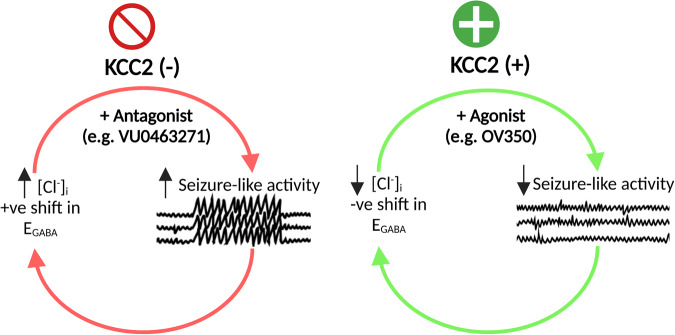
Fig. 4. The reciprocal effect of KCC2 antagonist VU0463271 and KCC2 agonist OV350 on epileptiform activity.
The KCC2 antagonist VU0463271 increases intracellular Cl- concentration by reducing KCC2-dependent Cl- extrusion. This elevated intracellular chloride leads to a positive, depolarizing shift in EGABA in vitro. In vitro and in vivo studies have demonstrated that VU0463271 enhances seizure-like activity, including interictal and ictal events. In contrast, the KCC2 agonist OV350 reduces intracellular Cl- concentration, restoring Cl- to homeostatic levels and resulting in a negative shift in EGABA. OV350’s promotion of KCC2 activity and subsequent reduction in intracellular Cl- concentration have been shown to decrease seizure-like activity, including ictal events and duration. The diagram was created using BioRender.com. KCC2 K+-Cl-−cotransporter 2, GABA γ-aminobutyric acid, EGABA GABAAR-medicated currents, and [Cl-]i, intracellular chloride concentration.

References

    1. Javdani F, Hegedus K, Miranda CO, Hegyi Z, Hollo K, Antal M. Differential expression of Na(+)/K(+)/Cl(-) cotransporter 1 in neurons and glial cells within the superficial spinal dorsal horn of rodents. Sci Rep. 2020;10:11715. doi: 10.1038/s41598-020-68638-3. - DOI - PMC - PubMed
    1. Pieraut S, Laurent-Matha V, Sar C, Hubert T, Mechaly I, Hilaire C, et al. NKCC1 phosphorylation stimulates neurite growth of injured adult sensory neurons. J Neurosci. 2007;27:6751–9. doi: 10.1523/JNEUROSCI.1337-07.2007. - DOI - PMC - PubMed
    1. Tillman L, Zhang J. Crossing the chloride channel: the current and potential therapeutic value of the neuronal K+-Cl- cotransporter KCC2. Biomed Res Int. 2019;2019:8941046. doi: 10.1155/2019/8941046. - DOI - PMC - PubMed
    1. Zhang LL, Fina ME, Vardi N. Regulation of KCC2 and NKCC during development: membrane insertion and differences between cell types. J Comp Neurol. 2006;499:132–43. doi: 10.1002/cne.21100. - DOI - PubMed
    1. Vu TQ, Payne JA, Copenhagen DR. Localization and developmental expression patterns of the neuronal K+-Cl- cotransporter (KCC2) in the rat retina. J Neurosci. 2000;20:1414–23. doi: 10.1523/JNEUROSCI.20-04-01414.2000. - DOI - PMC - PubMed