


Addressing Stigma by Increasing Empathy Toward Vulnerable Populations in Preprofessional Trainees: Impacts of the Generation Tomorrow Summer Health Disparities Scholars Program
- PMID: 37707848
- PMCID: PMC10513746
- DOI: 10.1097/QAI.0000000000003262
Addressing Stigma by Increasing Empathy Toward Vulnerable Populations in Preprofessional Trainees: Impacts of the Generation Tomorrow Summer Health Disparities Scholars Program
Abstract
Background: Creating empathetic health care professionals is critical to addressing the health equity challenges of today, particularly because it relates to vulnerable populations.
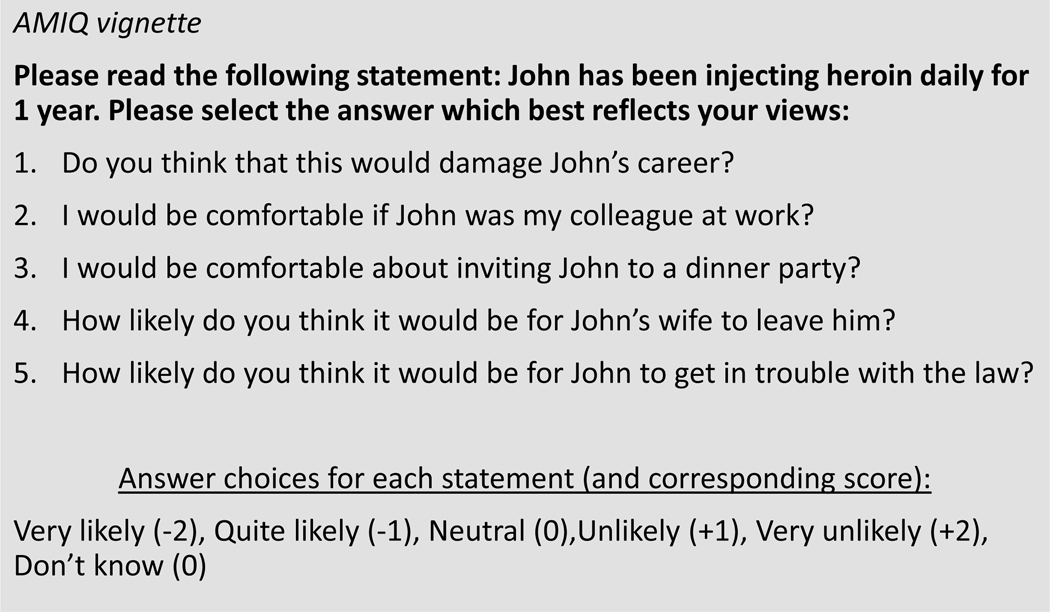
Methods: To assess the impact of the Johns Hopkins Center for AIDS Research Generation Tomorrow Summer Health Disparities Scholars (GTSHDS) program on students' empathy toward individuals living with substance use disorder and differential impact on empathy related to the COVID-19 pandemic, the Attitudes towards Mental Illness Questionnaire (AMIQ), an assessment of stigmatizing attitudes, was administered. Preprogram and postprogram participation AMIQ survey data were compared using paired t tests to explore changes within the program year. Unpaired t tests were used to characterize differences between the mean scores across the 2 student cohorts.
Results: Both GTSHDS cohorts displayed postprogram increase in empathy. Mean 2019 cohort AMIQ scores shifting from -1.4 (SD 2.01) to -0.8 (SD 2.35) (P = 0.54), and the 2022 cohort shifting from -3.67 (SD 2.01) to -3 (SD 1.61) (P = 0.79). On average, individual scores improved by 2.2 (SD 1.65) points in the 2019 cohort and 2.4 (SD 1.86) points in the 2022 cohort (P = 0.83). Although these were not statistically significant, they suggested a trend toward more empathy.
Conclusions: Preliminary data suggest that programs such as GTSHDS that expose students to various aspects of health care principles can prepare future health care professionals in a manner that may reduce health care disparities. Future research with larger population sizes is needed to understand the impacts of the curriculum on empathy and related concepts to achieving health equity.
Copyright © 2023 Wolters Kluwer Health, Inc. All rights reserved.
Conflict of interest statement
The authors have no conflicts of interest to disclose.
Figures
References
-
- Agency for Healthcare Research and Quality. 2019 National Healthcare Quality and Disparities Report. Published June 2021. Accessed February 18, 2023. https://www.ahrq.gov/research/findings/nhqrdr/nhqdr19/index.html - PubMed
Publication types
MeSH terms
Grants and funding
LinkOut - more resources
Full Text Sources
Medical
