


Understanding Physical Activity Determinants in an HIV Self-Management Intervention: Qualitative Analysis Guided by the Theory of Planned Behavior
- PMID: 37707942
- PMCID: PMC10540011
- DOI: 10.2196/47666
Understanding Physical Activity Determinants in an HIV Self-Management Intervention: Qualitative Analysis Guided by the Theory of Planned Behavior
Abstract
Background: People living with HIV have long life expectancy and are experiencing more comorbid conditions, being at an increased risk for developing cardiovascular disease (CVD) and diabetes, further exacerbated due to the HIV or inflammatory process. One effective intervention shown to decrease mortality and improve health outcomes related to CVD and diabetes in people living with HIV is increased regular physical activity. However, people living with HIV often fall short of the daily recommended physical activity levels. While studies show that mobile health (mHealth) can potentially help improve people's daily activity levels and reduce mortality rates due to comorbid conditions, these studies do not specifically focus on people living with HIV. As such, it is essential to understand how mHealth interventions, such as wearables, can improve the physical activity of people living with HIV.
Objective: This study aimed to understand participants' experiences wearing a fitness tracker and an app to improve their physical activity.
Methods: In total, 6 focus groups were conducted with participants who completed the control arm of a 6-month randomized controlled trial (ClinicalTrials.gov NCT03205982). The control arm received daily walk step reminders to walk at least 5000 steps per day and focused on the overall wellness of the individual. The analysis of the qualitative focus groups used inductive content analysis using the theory of planned behavior as a framework to guide and organize the analysis.
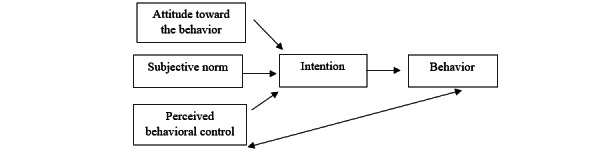
Results: In total, 41 people living with HIV participated in the focus groups. The majority (n=26, 63%) of participants reported their race as Black or African American, and 32% (n=13) of them identified their ethnicity as Hispanic or Latino. In total, 9 major themes were identified and organized following the theory of planned behavior constructs. Overall, 2 major themes (positive attitude toward tracking steps and tracking steps is motivating) related to attitudes toward the behavior, 2 major themes (social support or motivation from the fitness tracker and app and encouragement from family and friends) related to participant's subjective norms, 1 theme (you can adjust your daily habits with time) related to perceived behavioral control, 2 themes (reach their step goal and have a healthier lifestyle) related to participant's intention, and 2 themes (continuing to walk actively and regularly wearing the fitness tracker) related to participant's changed behavior. Participants highlighted how the mHealth interface with the avatar and daily step tracking motivated them to both begin and continue to engage in physical activity by adjusting their daily routines.
Conclusions: Findings from this study illustrate how features of mHealth apps may motivate people living with HIV to start and continue sustained engagement in physical activities. This sustained increase in physical activity is crucial for reducing the risk of comorbid conditions such as diabetes or CVD.
Trial registration: ClinicalTrials.gov NCT03205982; https://classic.clinicaltrials.gov/ct2/show/NCT03205982.
Keywords: AIDS; HIV; HIV/AIDS; activity; app; behavior; fitness; fitness tracker; mHealth; mobile Health; mobile phone; mortality; physical activity; qualitative; self-management; tracking.
©Gabriella Sanabria, Brady Bushover, Sarah Ashrafnia, Evette Cordoba, Rebecca Schnall. Originally published in JMIR Formative Research (https://formative.jmir.org), 14.09.2023.
Conflict of interest statement
Conflicts of Interest: None declared.
References
-
- Bosh KA, Johnson AS, Hernandez AL, Prejean J, Taylor J, Wingard R, Valleroy LA, Hall HI. Vital signs: deaths among persons with diagnosed HIV infection, United States, 2010-2018. MMWR Morb Mortal Wkly Rep. 2020;69(46):1717–1724. doi: 10.15585/mmwr.mm6946a1. https://www.cdc.gov/mmwr/volumes/69/wr/mm6946a1.htm?s_cid=mm6946a1_w - DOI - PMC - PubMed
-
- Deeks SG, Lewin SR, Havlir DV. The end of AIDS: HIV infection as a chronic disease. Lancet. 2013;382(9903):1525–1533. doi: 10.1016/S0140-6736(13)61809-7. https://europepmc.org/abstract/MED/24152939 S0140-6736(13)61809-7 - DOI - PMC - PubMed
-
- Feinstein MJ, Bahiru E, Achenbach C, Longenecker CT, Hsue P, So-Armah K, Freiberg MS, Lloyd-Jones DM. Patterns of cardiovascular mortality for HIV-infected adults in the United States: 1999 to 2013. Am J Cardiol. 2016;117(2):214–220. doi: 10.1016/j.amjcard.2015.10.030. https://europepmc.org/abstract/MED/26639041 S0002-9149(15)02194-3 - DOI - PMC - PubMed
-
- Shah ASV, Stelzle D, Lee KK, Beck EJ, Alam S, Clifford S, Longenecker CT, Strachan F, Bagchi S, Whiteley W, Rajagopalan S, Kottilil S, Nair H, Newby DE, McAllister DA, Mills NL. Global burden of atherosclerotic cardiovascular disease in people living with HIV: systematic review and meta-analysis. Circulation. 2018;138(11):1100–1112. doi: 10.1161/CIRCULATIONAHA.117.033369. https://www.ahajournals.org/doi/10.1161/CIRCULATIONAHA.117.033369 CIRCULATIONAHA.117.033369 - DOI - PMC - PubMed
Associated data
Grants and funding
LinkOut - more resources
Full Text Sources
Medical
