. 2023 Nov:77:101797.
doi: 10.1016/j.molmet.2023.101797. Epub 2023 Sep 12.

Isoxanthohumol improves obesity and glucose metabolism via inhibiting intestinal lipid absorption with a bloom of Akkermansia muciniphila in mice

Affiliations

Isoxanthohumol improves obesity and glucose metabolism via inhibiting intestinal lipid absorption with a bloom of Akkermansia muciniphila in mice

Yoshiyuki Watanabe et al. Mol Metab. 2023 Nov.

Abstract

Objective: Polyphenols have health-promoting effects, such as improving insulin resistance. Isoxanthohumol (IX), a prenylated flavonoid found in beer hops, has been suggested to reduce obesity and insulin resistance; however, the mechanism remains unknown.

Methods: High-fat diet-fed mice were administered IX. We analyzed glucose metabolism, gene expression profiles and histology of liver, epididymal adipose tissue and colon. Lipase activity, fecal lipid profiles and plasma metabolomic analysis were assessed. Fecal 16s rRNA sequencing was obtained and selected bacterial species were used for in vitro studies. Fecal microbiota transplantation and monocolonization were conducted to antibiotic-treated or germ-free (GF) mice.

Results: The administration of IX lowered weight gain, decreased steatohepatitis and improved glucose metabolism. Mechanistically, IX inhibited pancreatic lipase activity and lipid absorption by decreasing the expression of the fatty acid transporter CD36 in the small intestine, which was confirmed by increased lipid excretion in feces. IX administration increased markers of intestinal barrier function, including thickening the mucin layer and increasing caludin-1, a tight-junction related protein in the colon. In contrast, the effects of IX were nullified by antibiotics. As revealed using 16S rRNA sequencing, the microbial community structure changed with a significant increase in the abundance of Akkermansia muciniphila in the IX-treated group. An anaerobic chamber study showed that IX selectively promoted the growth of A. muciniphila while exhibiting antimicrobial activity against some Bacteroides and Clostridium species. To further explore the direct effect of A. muciniphila on lipid and glucose metabolism, we monocolonized either A. muciniphila or Bacteroides thetaiotaomicron to GF mice. A. muciniphila monocolonization decreased CD36 expression in the jejunum and improved glucose metabolism, with decreased levels of multiple classes of fatty acids determined using plasma metabolomic analysis.

Conclusions: Our study demonstrated that IX prevents obesity and enhances glucose metabolism by inhibiting dietary fat absorption. This mechanism is linked to suppressing pancreatic lipase activity and shifts in microbial composition, notably an increase in A. muciniphila. These highlight new treatment strategies for preventing metabolic syndrome by boosting the gut microbiota with food components.

Keywords: Akkermansia muciniphila; Insulin resistance; Isoxanthohumol; Lipid absorption; Microbiota; Obesity.


Conflict of interest statement

Declaration of competing interest The authors declare that they have no known competing financial interests or personal relationships that could have appeared to influence the work reported in this paper.

Figures
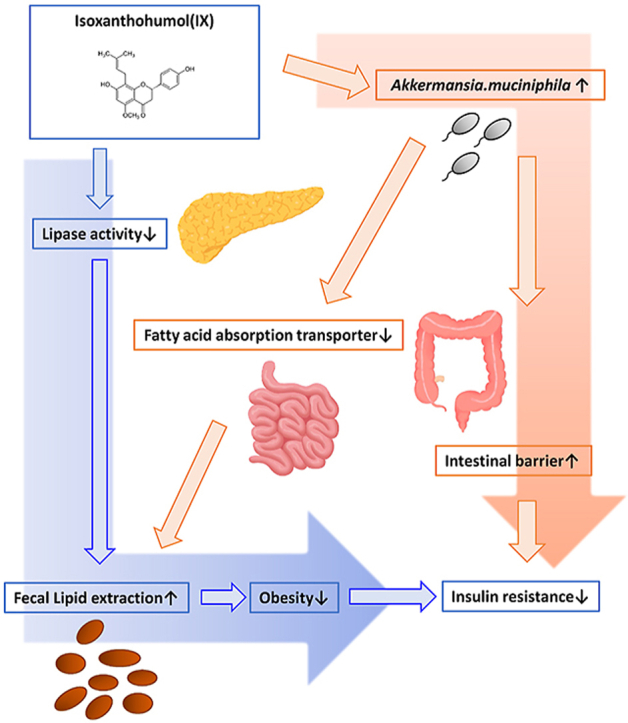
Image 1
Graphical abstract
Figure 1
Figure 1
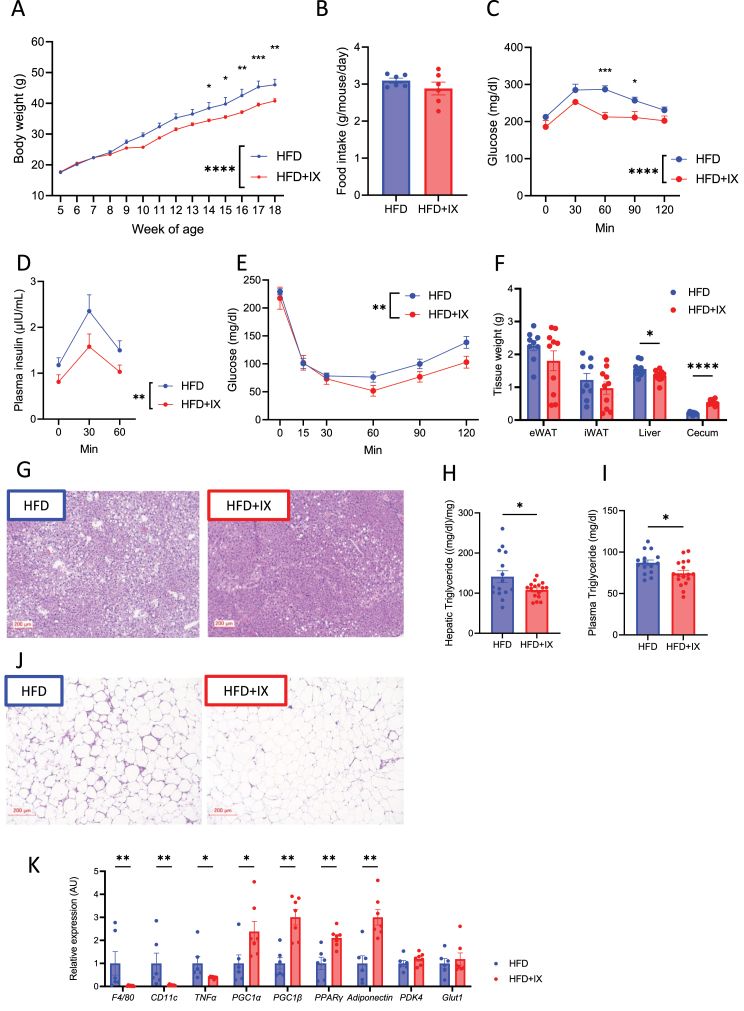
Isoxanthohumol (IX) suppresses body weight gain and improves glucose metabolism in mice on a high-fat diet (HFD). (A) Body weight and (B) daily food intake of mice treated with either an HFD (blue) or an HFD + IX (red) (n = 9–10 per group). (C) Oral glucose tolerance test (OGTT), (D) plasma insulin levels at 17 weeks old and (E) insulin tolerance test (ITT) at 16 weeks old. (F) Tissue weight at 20 weeks old (n = 9–10 per group). (G, J) Representative hematoxylin and eosin (H&E)-stained pictures of (G) liver and (J) epididymal adipose tissue at 20 weeks old. Scale bars, 200 μm. (H) Hepatic and (I) plasma triglyceride concentrations at 20 weeks old (n = 15–17 per group). (K) Quantitative PCR analysis of inflammatory and metabolic markers in the epididymal adipose tissues at 20 weeks old (n = 6–7 per group). ∗P < 0.05, ∗∗P < 0.01, ∗∗∗P < 0.001, ∗∗∗∗P < 0.0001, by two-way analysis of variance (ANOVA) followed by Bonferroni's multiple comparison tests (A, C, D, E) or unpaired two-tailed t test (B, F, H, I). ∗P < 0.05, ∗∗P < 0.01, ∗∗∗P < 0.001, followed by the Benjamini-Hochberg post-test (q < 0.05) (K). Data are presented as the mean ± SEM.
Figure 2
Figure 2
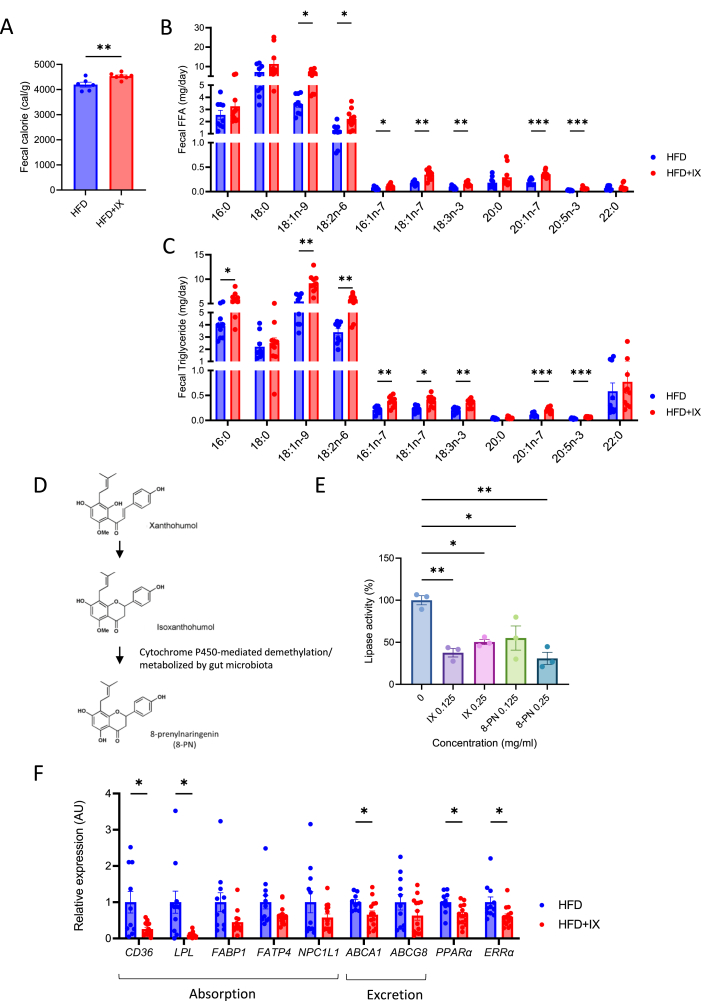
IX promotes intestinal lipid excretion. (A) Amount of energy in feces collected for 24 h from each mouse (n = 6–7 per group). (B, C) Concentrations of various classes of (B) fatty acids and (C) triglycerides in feces collected at 24 h from each mouse (n = 9–10 per group). (D) A simplified metabolic pathway of xanthohumol in the gut microbiota. (E) Lipase activity of IX and 8-prenylnaringenin at the indicated concentrations (n = 3 per group). (F) qPCR analysis of various lipid transporter-related genes in the jejunum of mice at 18 weeks old (n = 11–14 per group). ∗P < 0.05, ∗∗P < 0.01, ∗∗∗P < 0.001, by unpaired two-tailed t test for (A), unpaired t-test or Mann-Whitney U-test followed by the Benjamini-Hochberg post-test (q < 0.05) (F) and ANOVA, followed by Tukey-Kramer post doc for (E). ∗adjusted P < 0.05, ∗∗adjusted P < 0.01, ∗∗∗adjusted P < 0.001, by multiple Mann Whitney U tests (B and C). Data are presented as the mean ± SEM.
Figure 3
Figure 3
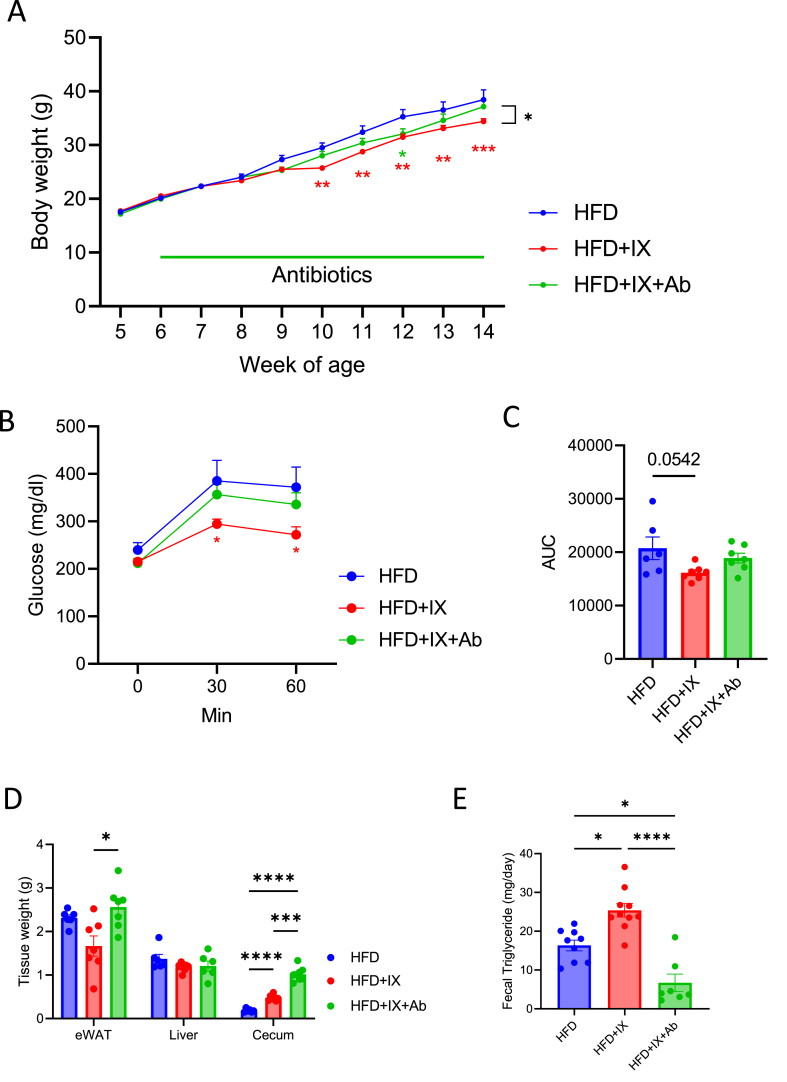
The gut microbiota established by IX improves metabolic dysfunction. (A) Body weight of mice treated with either an HFD (blue), an HFD + IX (red) or an HFD + IX + antibiotics (green) (n = 6–7 per group). (B) OGTT at 15 weeks old and (C) area under the curve (AUC) measured during OGTT (n = 6–7 per group). (D) Tissue weight at 18 weeks old (n = 6–7 per group). (E) Fecal triglyceride concentrations (n = 7–10 per group). ∗P < 0.05, ∗∗P < 0.01, ∗∗∗P < 0.001, ∗∗∗∗P < 0.0001, using ANOVA, followed by Tukey-Kramer postdoc for (A, C, D, E). Data are presented as the mean ± SEM.
Figure 4
Figure 4
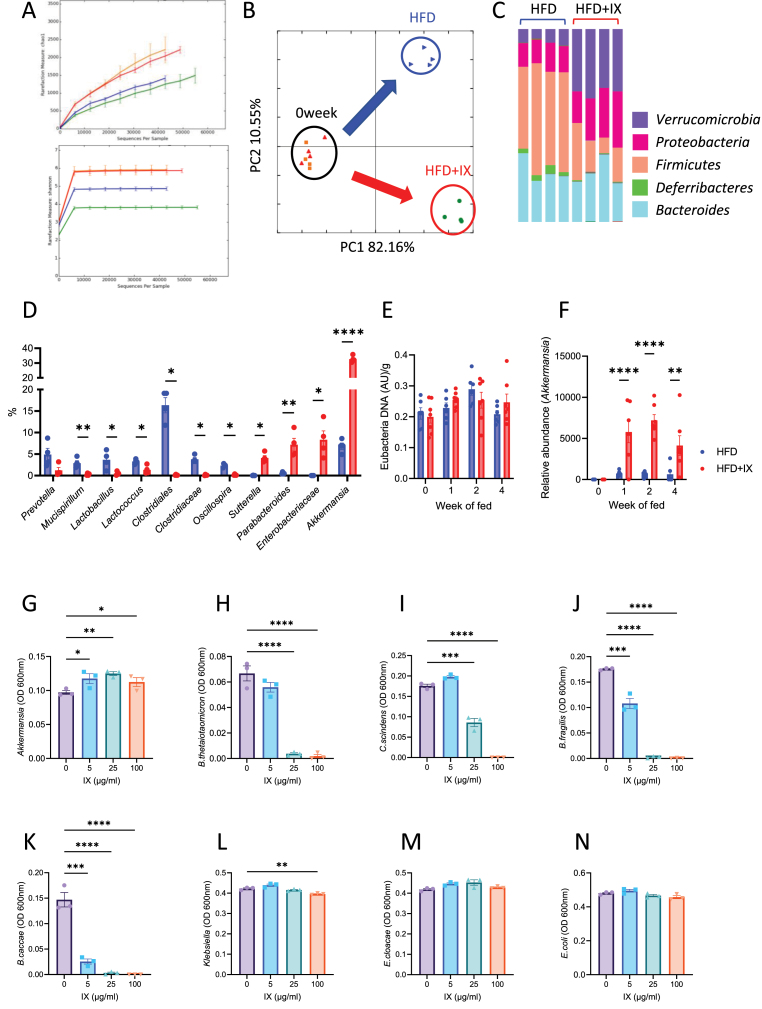
IX promotes the growth of A. muciniphila. (A) Rarefaction curves of Chao1 and Shannon entropy of fecal 16S rRNA sequencing data from HFD-fed mice with or without IX for 2 weeks (red: pre-HFD, blue: post-HFD orange: pre-HFD + IX, green: post-HFD + IX). (B) Principal coordinate analysis of weighted UniFrac distances. (C) Representation of bacterial phyla in the fecal bacteria of HFD-fed mice with or without IX for 2 weeks. (D) Relative abundances of bacteria that showed significant differences between the HFD and HFD + IX groups (n = 4 per group). (E) Eubacterial DNA levels per gram of feces at different time points (n = 6–7 per group). (F) Relative abundance of A. muciniphila normalized to eubacterial levels (n = 6–7 per group). (G)–(N) Growth of bacteria as single cultures in the presence or absence of IX at the indicated concentrations. ∗P < 0.05, ∗∗P < 0.01, ∗∗∗P < 0.001, ∗∗∗∗P < 0.0001, by unpaired t-test or Wilcoxon rank sum test (D, E) and ANOVA, followed by Bonferroni's multiple comparison test (F) or Tukey-Kramer post dot for (G-N). Data are presented as the mean ± SEM.
Figure 5
Figure 5
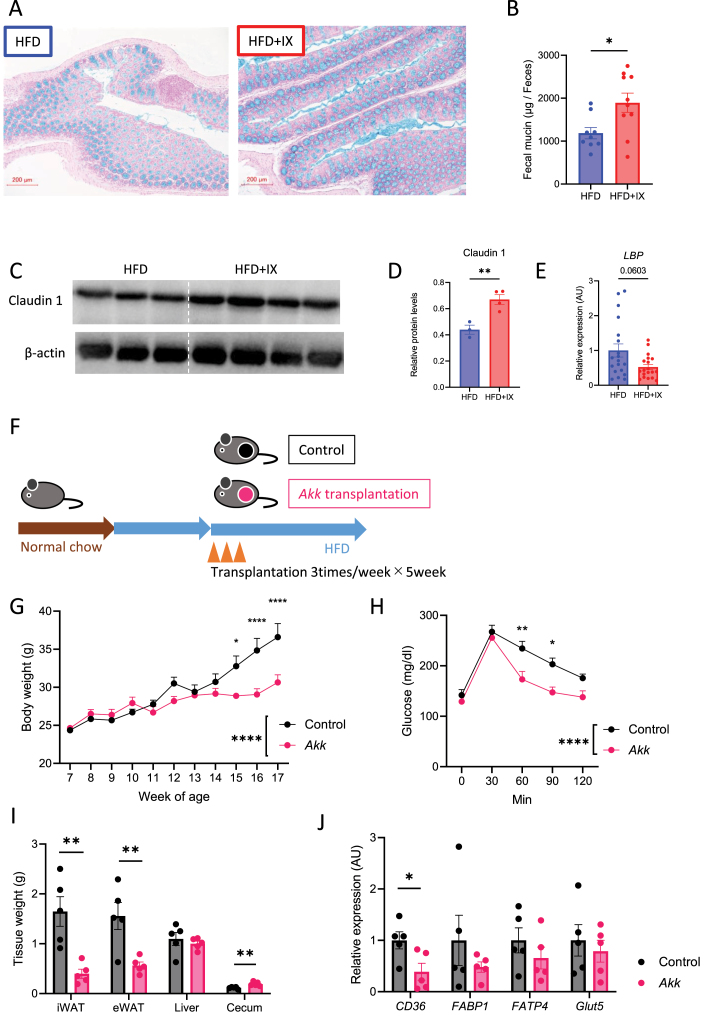
Compound IX enhances gut barrier function. (A) Representative alcian blue images of the colon. Scale bars, 200 μm. (B) Fecal mucin levels per gram feces of mice fed either an HFD or an HFD + IX (n = 9–10 per group). (C) Western blots for claudin1 and β-actin in the colon of mice at 20 weeks old. (D) Quantitation of claudin1 normalized by β-actin. (E) qPCR of the lipopolysaccharide binding protein in the liver (n = 19 per group). (F) Schematic overview of the transplantation of specific pathogen-free mice with A. muciniphila. (G) Body weights of transplanted mice (n = 5 per group). (H) OGTT. (I) Tissue weight. (J) qPCR of various nutrient transporter-related genes in the jejunum of the transplanted mice (n = 5 per group). ∗P < 0.05, ∗∗P < 0.01, using two-way ANOVA, followed by Bonferroni's multiple comparison tests for (G, H)Wilcoxon rank sum test (E) or by unpaired two-tailed t-test for (B, D, I, J). Data are presented as the mean ± SEM.
Figure 6
Figure 6
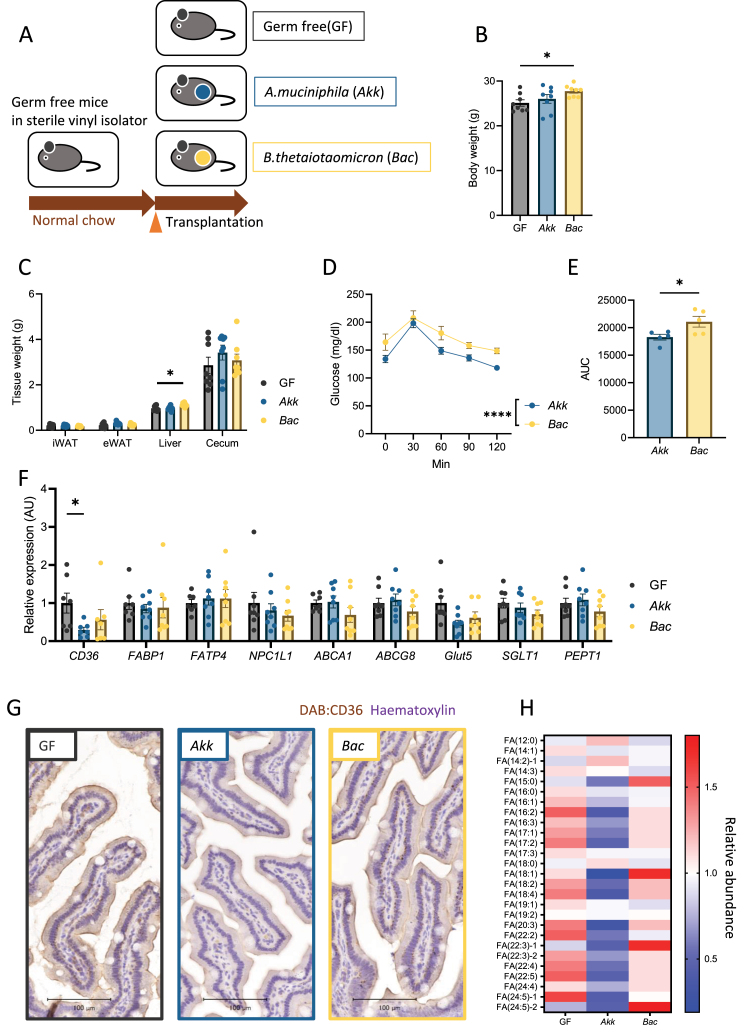
A. muciniphila suppresses fatty acid absorption via decreasing transporter-related genes in the small intestine. (A) Schematic overview of monocolonization of germ-free mice with A. muciniphila or Bacteroides thetaiotaomicron. (B) Body weight of monocolonized mice (n = 8 per group). (C) Tissue weight (D) OGTT (E) AUC of OGTT (F) qPCR of various nutrient transporter related genes in the jejunum of monocolonized mice (n = 8 per group). ∗P < 0.05, ∗∗P < 0.01, using two-way ANOVA, followed by Bonferroni's multiple comparison test for (C, D), or using ANOVA, followed by Tukey-Kramer post doc for (B, E, F). Data are presented as the mean ± SEM. (G) Representative CD36 images of the jejunum. Scale bars, 100 μm. (H) Heatmap showing saturated or unsaturated fatty acids detected in the plasma of monocolonized mice.
Figure 7
Figure 7
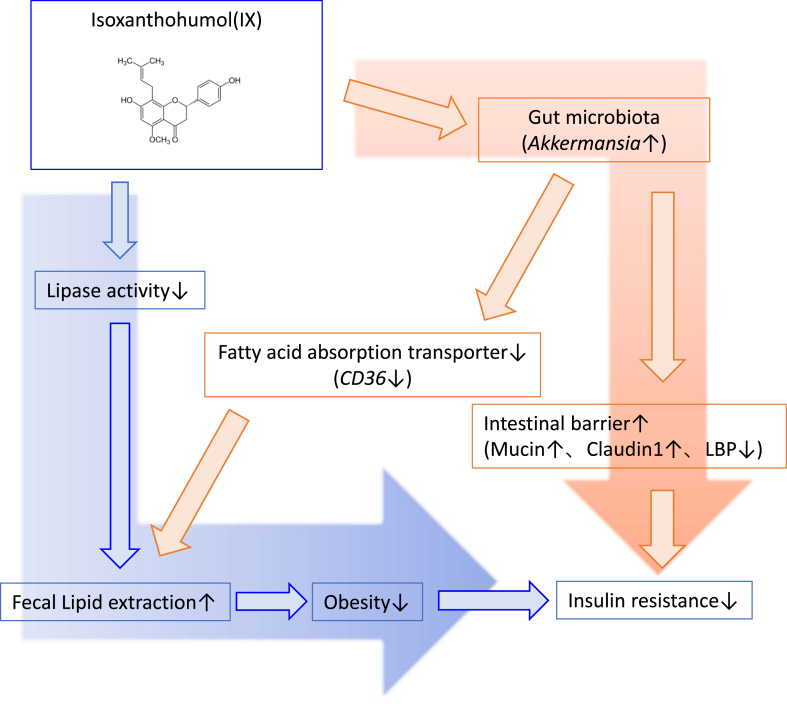
Proposed mechanisms of IX on obesity and insulin resistance. As a pharmacological pathway, IX inhibits lipase activity and reduces the expression of Cd36 in the small intestine, thereby increasing fecal lipid excretion and obesity. In the microbial pathway, IX improves insulin resistance by altering the microbial composition, specifically increasing the abundance of A. muciniphila and enhancing intestinal barrier function. The anti-obesity effect of IX is further enhanced by the inhibition of fat absorption promoted by the proliferation of A. muciniphila.

References

    1. Koh A., Backhed F. From association to causality: the role of the gut microbiota and its functional products on host metabolism. Mol Cell. 2020;78(4):584–596. - PubMed
    1. Ridaura V.K., Faith J.J., Rey F.E., Cheng J., Duncan A.E., Kau A.L., et al. Gut microbiota from twins discordant for obesity modulate metabolism in mice. Science. 2013;341(6150) - PMC - PubMed
    1. Turnbaugh P.J., Ley R.E., Mahowald M.A., Magrini V., Mardis E.R., Gordon J.I. An obesity-associated gut microbiome with increased capacity for energy harvest. Nature. 2006;444(7122):1027–1031. - PubMed
    1. Fujisaka S., Watanabe Y., Tobe K. The gut microbiome: a core regulator of metabolism. J Endocrinol. 2023;256(3) - PMC - PubMed
    1. Kimura I., Ichimura A., Ohue-Kitano R., Igarashi M. Free fatty acid receptors in health and disease. Physiol Rev. 2020;100(1):171–210. - PubMed

Publication types

Supplementary concepts