


Bioremediation of n-alkanes, polycyclic aromatic hydrocarbons, and heavy metals from wastewater using seaweeds
- PMID: 37713082
- PMCID: PMC10567841
- DOI: 10.1007/s11356-023-29549-8
Bioremediation of n-alkanes, polycyclic aromatic hydrocarbons, and heavy metals from wastewater using seaweeds
Abstract
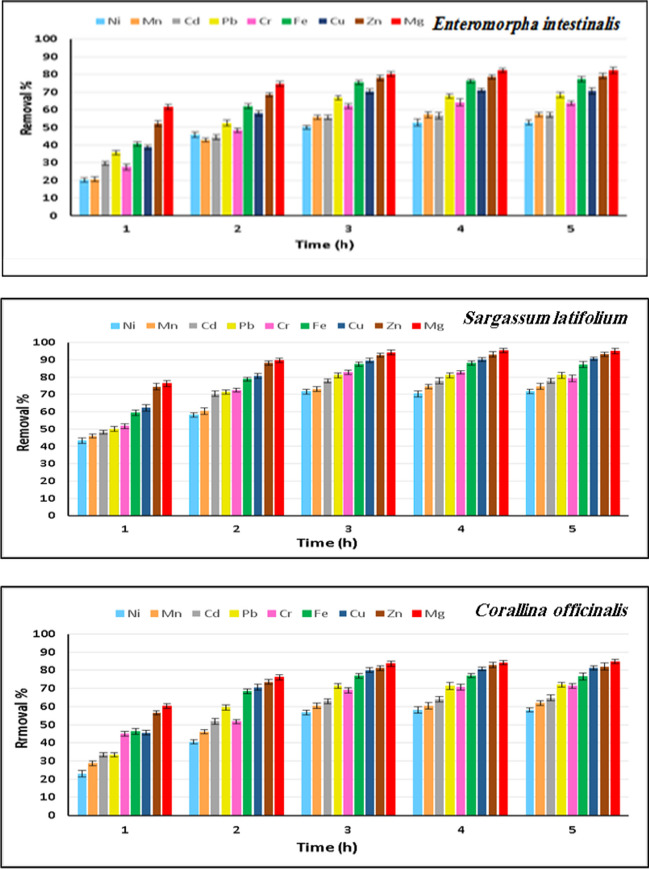
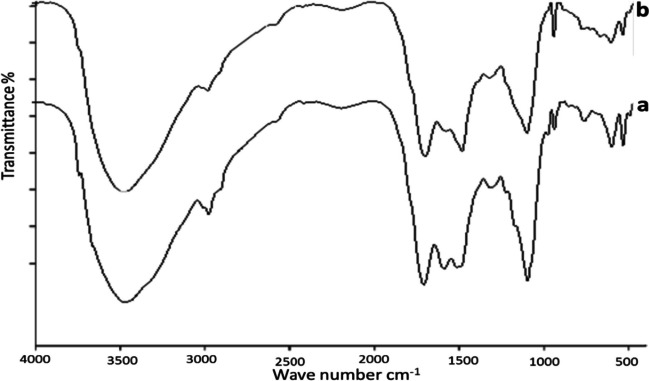
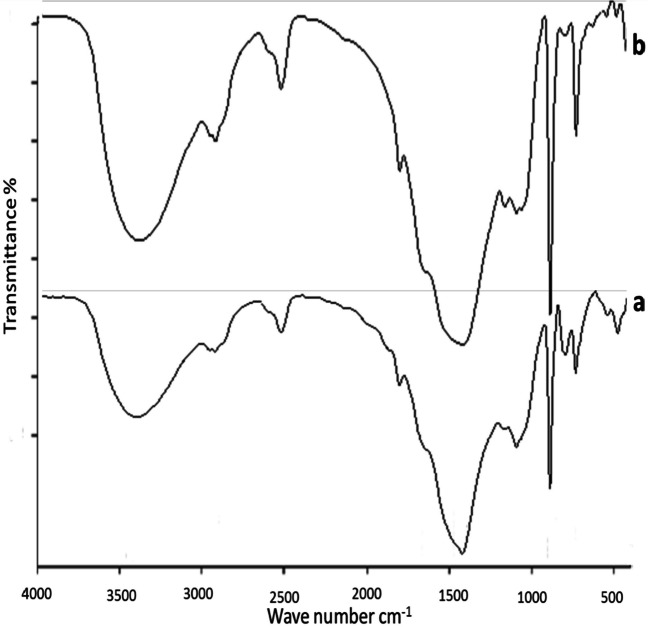
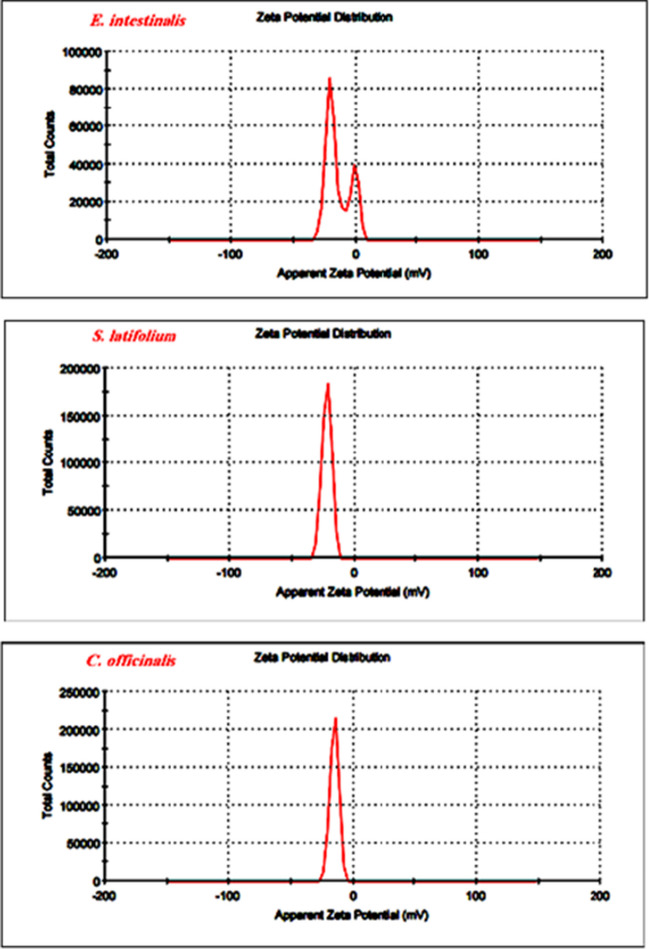
The removal of n-alkanes, polycyclic aromatic hydrocarbons, and heavy metals from wastewater using three dried seaweeds Ulva intestinalis Linnaeus (green alga), Sargassum latifolium (Turner) C.Agardh (brown alga), and Corallina officinalis Kützing (red alga) has been shown to evaluate their potential usage as inexpensive adsorbents. Under natural environmental conditions, numerous analytical methods, including zeta potential, energy dispersive X-ray spectroscopy (EDX), SEM, and FT-IR, are used in this study. The results showed that n-alkanes and polycyclic aromatic hydrocarbons adsorption increased with increasing contact time for all three selected algae, with a large removal observed after 15 days, while the optimal contact time for heavy metal removal was 3 h. S. latifolium dry biomass had more potential as bioadsorbent, followed by C. officinalis and then U. intestinalis. S. latifolium attained removal percentages of 65.14%, 72.50%, and 78.92% for light n-alkanes, heavy n-alkanes, and polycyclic aromatic hydrocarbons (PAHs), respectively, after 15 days. Furthermore, it achieved removal percentages of 94.14, 92.62, 89.54, 87.54, 82.76, 80.95, 77.78, 73.02, and 71.62% for Mg, Zn, Cu, Fe, Cr, Pb, Cd, Mn, and Ni, respectively, after 3 h. Carboxyl and hydroxyl from FTIR analysis took part in wastewater treatment. The zeta potentials revealed that algal cells have a negatively charged surface, and the cell surface of S. latifolium has a more negative surface charge than U. intestinalis and C. officinalis. Our study suggests that seaweeds could play an important role in wastewater treatment and thus help as an economical, effective, and ecofriendly bioremediation system for ecological health and life protection.
Keywords: Adsorption; Heavy metals; Marine macroalgae; Polycyclic romatic hydrocarbons; n-Alkanes.
© 2023. The Author(s).
Conflict of interest statement
The authors declare no competing interests.
Figures



References
-
- Agüera A, Plaza-Bolaños P, Fernández FGA (2020) Removal of contaminants of emerging concern by microalgae-based wastewater treatments and related analytical techniques. In: Varjani S, Pandey A, Tyagi RD, Ngo HH, Larroche C (eds) Current developments in biotechnology and bioengineering. Elsevier, pp 503–525
-
- Ahmad I, Abdullah N, Koji I, Yuzir A, Mohamad SE. Potential of microalgae in bioremediation of wastewater. Bull Chem React Eng Catal. 2021;16:413–429.
-
- Ahmad A, Banat F, Alsafar H, Hasan SW. Algae biotechnology for industrial wastewater treatment, bioenergy production, and high-value bioproducts. Sci Total Environ. 2022;806:150585. - PubMed
-
- Ahmed SF, Mofijur M, Parisa TA, Islam N, Kusumo F, Inayat A, Le VG, Badruddin IA, Khan TMY, Ong TMY. Progress and challenges of contaminate removal from wastewater using microalgae biomass. Chemosphere. 2022;286:131656. - PubMed
-
- Akl FM, Ahmed SI (2022) Factors affecting removal of polycyclic aromatic hydrocarbons from seawater by dry brown seaweed Padina pavonica. Indian Streams Res J 12(10):1–13. 10.9780/22307850, http://isrj.org/UploadedData/10578.pdf
MeSH terms
Substances
LinkOut - more resources
Full Text Sources
