


The evolution of aging and lifespan
- PMID: 37714733
- PMCID: PMC11147682
- DOI: 10.1016/j.tig.2023.08.005
The evolution of aging and lifespan
Abstract
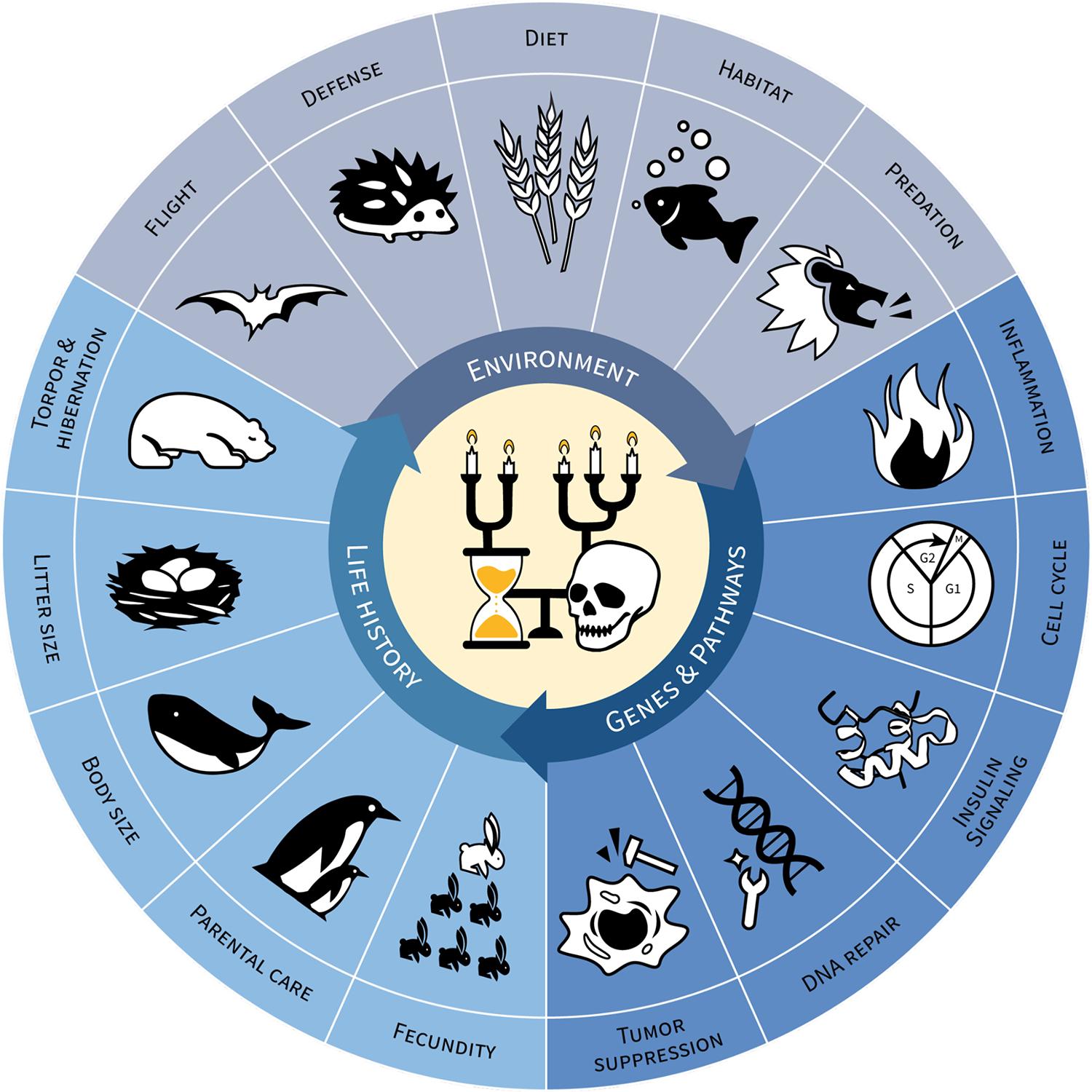
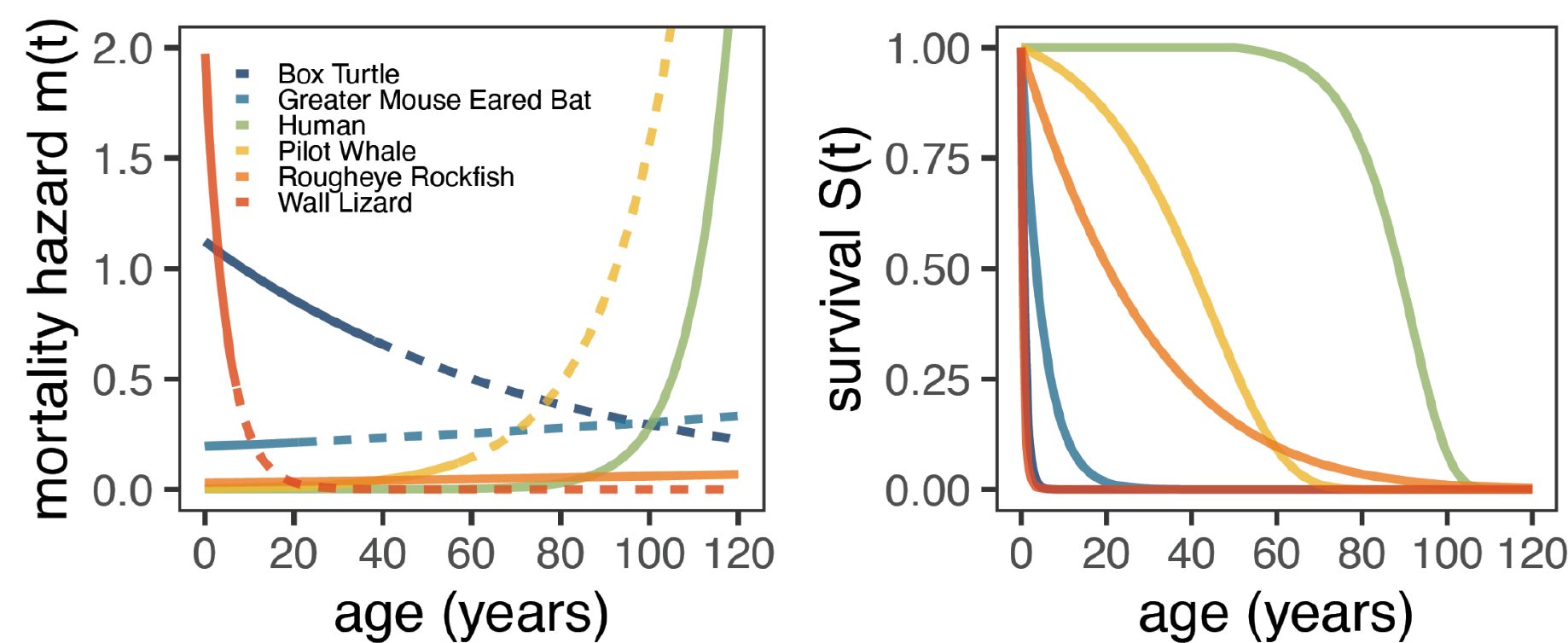
Aging is a nearly inescapable trait among organisms yet lifespan varies tremendously across different species and spans several orders of magnitude in vertebrates alone. This vast phenotypic diversity is driven by distinct evolutionary trajectories and tradeoffs that are reflected in patterns of diversification and constraint in organismal genomes. Age-specific impacts of selection also shape allele frequencies in populations, thus impacting disease susceptibility and environment-specific mortality risk. Further, the mutational processes that spawn this genetic diversity in both germline and somatic cells are strongly influenced by age and life history. We discuss recent advances in our understanding of the evolution of aging and lifespan at organismal, population, and cellular scales, and highlight outstanding questions that remain unanswered.
Keywords: aging; diversity; evolution; genetics; lifespan; mutation.
Copyright © 2023 The Author(s). Published by Elsevier Ltd.. All rights reserved.
Conflict of interest statement
Declaration of interests The authors declare no competing interests.
Figures
References
-
- Medawar PB (1952) An Unsolved Problem of Biology: An Inaugural Lecture Delivered at University College, London, 6 December, 1951
-
- Williams GC (1957) Pleiotropy, natural selection, and the evolution of senescence. Evolution 11, 398–411
-
- Hamilton WD (1966) The moulding of senescence by natural selection. J. Theor. Biol. 12, 12–45 - PubMed
-
- Fisher RA (1930) The genetical theory of natural selection, Clarendon Press
