


Determination of the cutoff point for Smartphone Application-Based Addiction Scale for adolescents: a latent profile analysis
- PMID: 37716941
- PMCID: PMC10504767
- DOI: 10.1186/s12888-023-05170-4
Determination of the cutoff point for Smartphone Application-Based Addiction Scale for adolescents: a latent profile analysis
Abstract
Backgrounds: The Smartphone Application-Based Addiction Scale (SABAS) is a validated 6-item measurement tool for assessing problematic smartphone use (PSU). However, the absence of established cutoff points for SABAS hinders its utilities. This study aimed to determine the optimal cutoff point for SABAS through latent profile analysis (LPA) and receiver operating characteristic curve (ROC) analyses among 63, 205. Chinese adolescents. Additionally, the study explored whether PSU screening with SABAS could effectively capture problematic social media use (PSMU) and internet gaming disorder (IGD).
Method: We recruited 63,205. adolescents using cluster sampling. Validated questionnaires were used to assess PSMU, IGD, and mental health (depression, anxiety, sleep disturbances, well-being, resilience, and externalizing and internalizing problems).
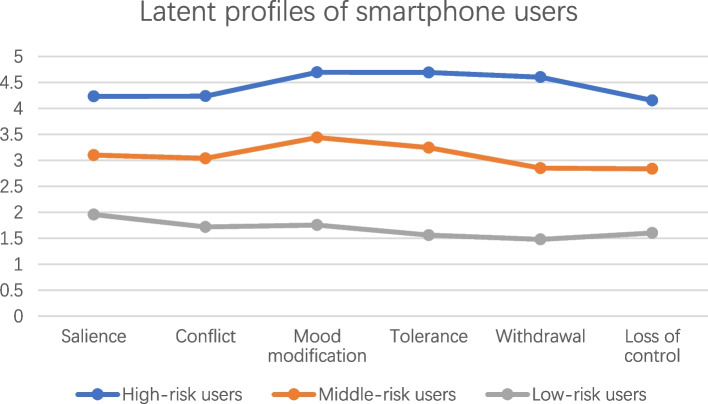
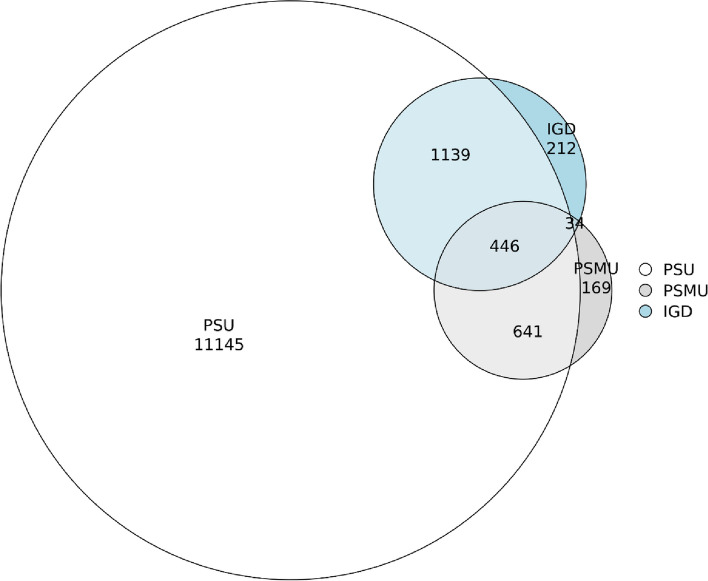
Results: LPA identified a 3-class model for PSU, including low-risk users (38.6%, n = 24,388.), middle-risk users (42.5%, n = 26,885.), and high-risk users (18.9%, n = 11,932.). High-risk users were regarded as "PSU cases" in ROC analysis, which demonstrated an optimal cut-off point of 23 (sensitivity: 98.1%, specificity: 96.8%). According to the cutoff point, 21.1% (n = 13,317.) were identified as PSU. PSU adolescents displayed higher PSMU, IGD, and worse mental health. PSU screening effectively captured IGD (sensitivity: 86.8%, specificity: 84.5%) and PSMU (sensitivity: 84.5%, specificity: 80.2%).
Conclusion: A potential ideal threshold for utilizing SABAS to identify PSU could be 23 (out of 36). Employing SABAS as a screening tool for PSU holds the potential to reliably pinpoint both IGD and PSMU.
Keywords: Internet gaming disorder; Problematic smartphone use; Problematic social media use; Smartphone Application-Based Addiction Scale.
© 2023. BioMed Central Ltd., part of Springer Nature.
Conflict of interest statement
The authors declare no competing interests.
Figures
References
-
- https://www.facebook.com/ashley.turner2. How Many People Have Smartphones Worldwide (Jun 2023). 2018. https://www.bankmycell.com/blog/how-many-phones-are-in-the-world. Accessed 5 Jun 2023.
-
- Geng Y, Gu J, Wang J, Zhang R. Smartphone addiction and depression, anxiety: the role of bedtime procrastination and self-control. J Affect Disord. 2021;293:415–421. - PubMed
Publication types
MeSH terms
LinkOut - more resources
Full Text Sources
Miscellaneous
