


A-to-I RNA editing by ADAR and its therapeutic applications: From viral infections to cancer immunotherapy
- PMID: 37718249
- PMCID: PMC10947335
- DOI: 10.1002/wrna.1817
A-to-I RNA editing by ADAR and its therapeutic applications: From viral infections to cancer immunotherapy
Abstract
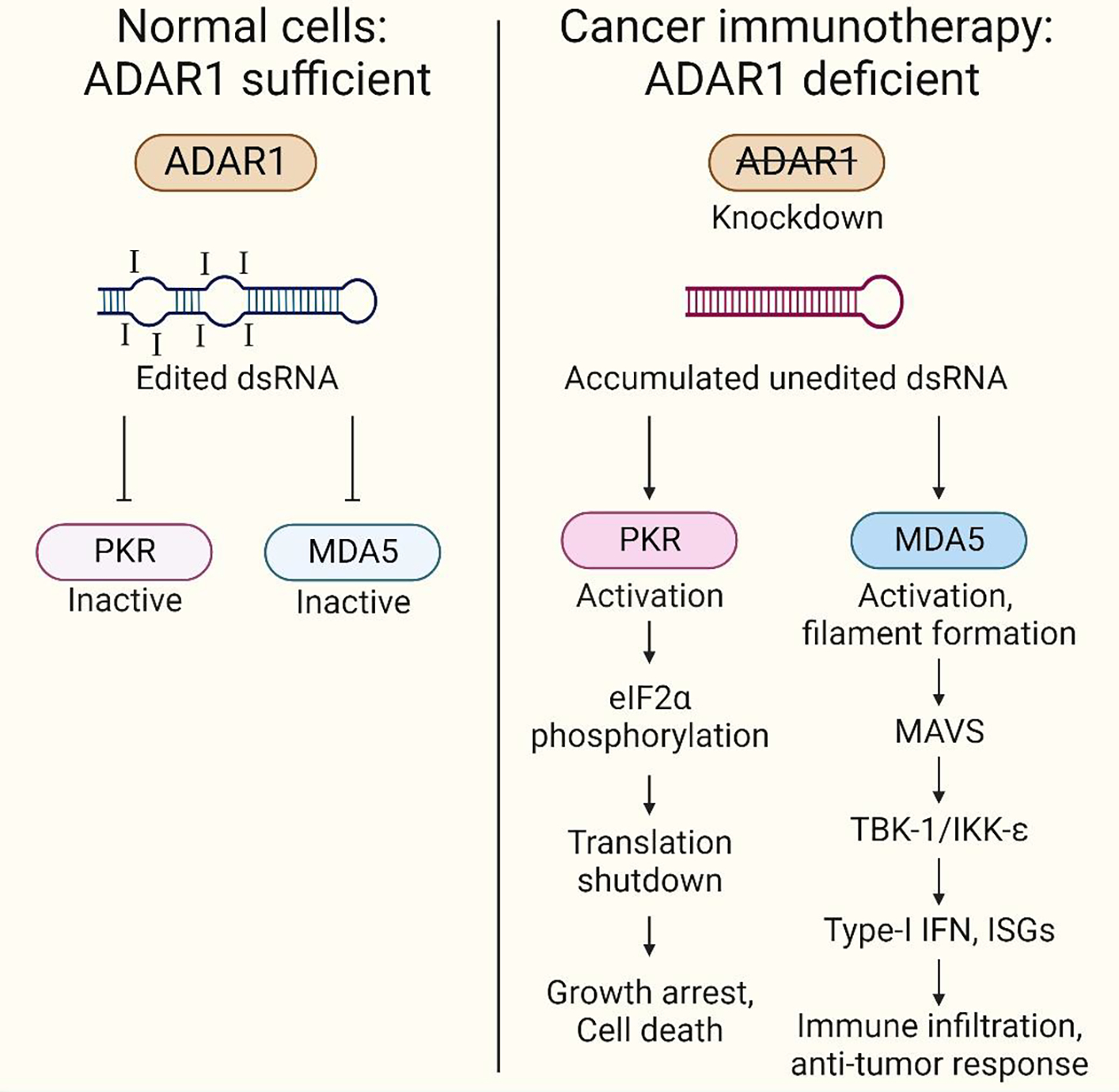
ADAR deaminases catalyze adenosine-to-inosine (A-to-I) editing on double-stranded RNA (dsRNA) substrates that regulate an umbrella of biological processes. One of the two catalytically active ADAR enzymes, ADAR1, plays a major role in innate immune responses by suppression of RNA sensing pathways which are orchestrated through the ADAR1-dsRNA-MDA5 axis. Unedited immunogenic dsRNA substrates are potent ligands for the cellular sensor MDA5. Upon activation, MDA5 leads to the induction of interferons and expression of hundreds of interferon-stimulated genes with potent antiviral activity. In this way, ADAR1 acts as a gatekeeper of the RNA sensing pathway by striking a fine balance between innate antiviral responses and prevention of autoimmunity. Reduced editing of immunogenic dsRNA by ADAR1 is strongly linked to the development of common autoimmune and inflammatory diseases. In viral infections, ADAR1 exhibits both antiviral and proviral effects. This is modulated by both editing-dependent and editing-independent functions, such as PKR antagonism. Several A-to-I RNA editing events have been identified in viruses, including in the insidious viral pathogen, SARS-CoV-2 which regulates viral fitness and infectivity, and could play a role in shaping viral evolution. Furthermore, ADAR1 is an attractive target for immuno-oncology therapy. Overexpression of ADAR1 and increased dsRNA editing have been observed in several human cancers. Silencing ADAR1, especially in cancers that are refractory to immune checkpoint inhibitors, is a promising therapeutic strategy for cancer immunotherapy in conjunction with epigenetic therapy. The mechanistic understanding of dsRNA editing by ADAR1 and dsRNA sensing by MDA5 and PKR holds great potential for therapeutic applications. This article is categorized under: RNA Processing > RNA Editing and Modification RNA in Disease and Development > RNA in Disease.
Keywords: ADAR; RNA editing; innate immunity.
© 2023 Wiley Periodicals LLC.
Conflict of interest statement
Conflict of Interest
Jin Billy Li is a founder of AIRNA Bio and an advisor of Risen Pharma.
Figures

References
Publication types
Grants and funding
LinkOut - more resources
Full Text Sources
Miscellaneous
