


Bevacizumab reduces peritumoral brain edema in lung cancer brain metastases after radiotherapy
- PMID: 37718465
- PMCID: PMC10626225
- DOI: 10.1111/1759-7714.15106
Bevacizumab reduces peritumoral brain edema in lung cancer brain metastases after radiotherapy
Abstract
Background: The aim of this study was to investigate the efficacy of bevacizumab (Bev) in reducing peritumoral brain edema (PTBE) after stereotactic radiotherapy (SRT) for lung cancer brain metastases.
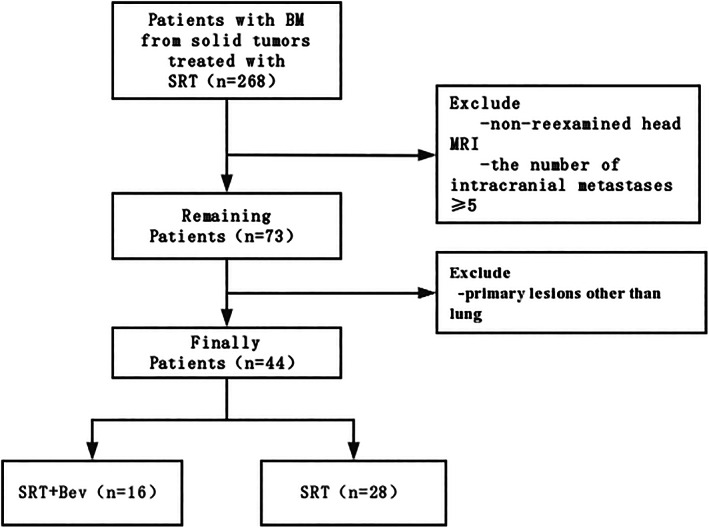
Methods: A retrospective analysis was conducted on 44 patients with lung cancer brain metastases (70 lesions) who were admitted to our oncology and Gamma Knife center from January 2020 to May 2022. All patients received intracranial SRT and had PTBE. Based on treatment with Bev, patients were categorized as SRT + Bev and SRT groups. Follow-up head magnetic resonance imaging was performed to calculate PTBE and tumor volume changes. The edema index (EI) was used to assess the severity of PTBE. Additionally, the extent of tumor reduction and intracranial progression-free survival (PFS) were compared between the two groups.
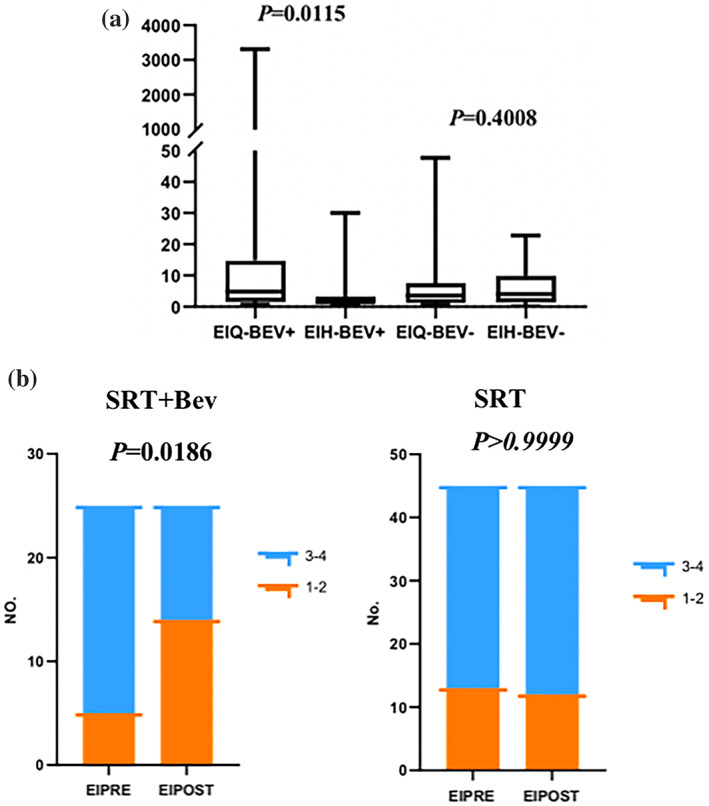
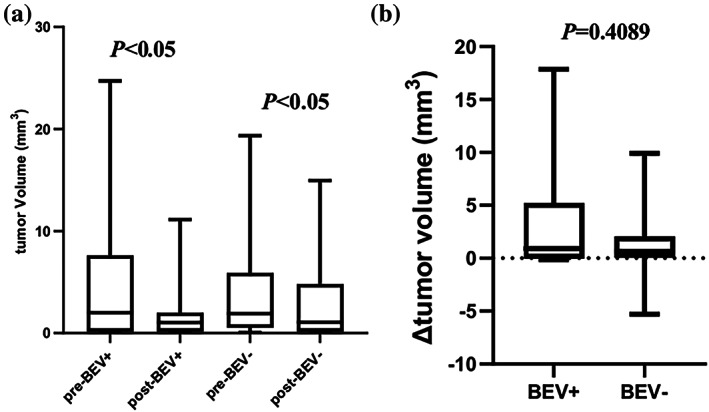
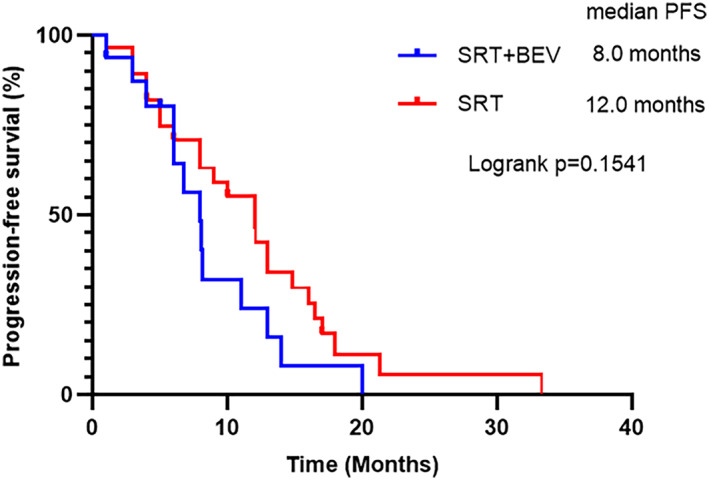
Results: The SRT + Bev group showed a statistically significant difference in EI values before and after radiotherapy (p = 0.0115), with lower values observed after treatment, but there was no difference in the SRT group (p = 0.4008). There was a difference in the distribution of EI grades in the SRT + Bev group (p = 0.0186), with an increased proportion of patients at grades 1-2 after radiotherapy, while there was no difference in the SRT group (p > 0.9999). Both groups demonstrated a significant reduction in tumor volume after radiotherapy (p < 0.05), but there was no difference in tumor volume changes between the two groups (p = 0.4089). There was no difference in intracranial PFS between the two groups (p = 0.1541).
Conclusion: Bevacizumab significantly reduces the severity of PTBE after radiotherapy for lung cancer. However, its impact on tumor volume reduction and intracranial PFS does not reach statistical significance.
Keywords: bevacizumab; brain metastases; lung cancer; peritumoral brain edema; radiotherapy.
© 2023 The Authors. Thoracic Cancer published by China Lung Oncology Group and John Wiley & Sons Australia, Ltd.
Conflict of interest statement
The authors declare that there are no conflicts of interest.
Figures
References
-
- Gonzalez J, Kumar AJ, Conrad CA, Levin VA. Effect of bevacizumab on radiation necrosis of the brain. Int J Radiat Oncol Biol Phys. 2007;67(2):323–326. - PubMed
-
- Carl CO, Henze M. Reduced radiation‐induced brain necrosis in nasopharyngeal cancer patients with bevacizumab monotherapy. Strahlenther Onkol. 2019;195(3):277–280. - PubMed
Publication types
MeSH terms
Substances
LinkOut - more resources
Full Text Sources
Medical
