


Extracellular matrix turnover in salivary gland disorders and regenerative therapies: Obstacles and opportunities
- PMID: 37719063
- PMCID: PMC10502366
- DOI: 10.1016/j.jobcr.2023.08.009
Extracellular matrix turnover in salivary gland disorders and regenerative therapies: Obstacles and opportunities
Abstract
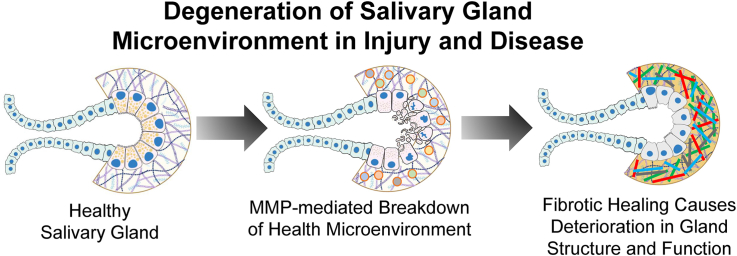
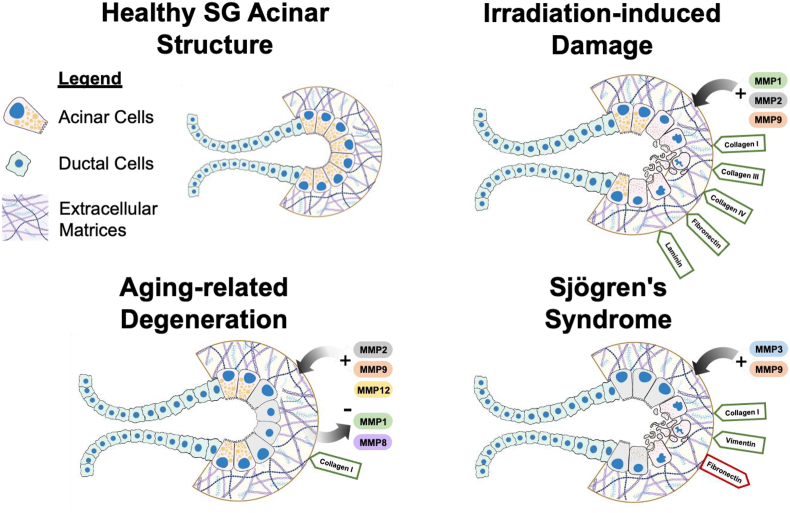
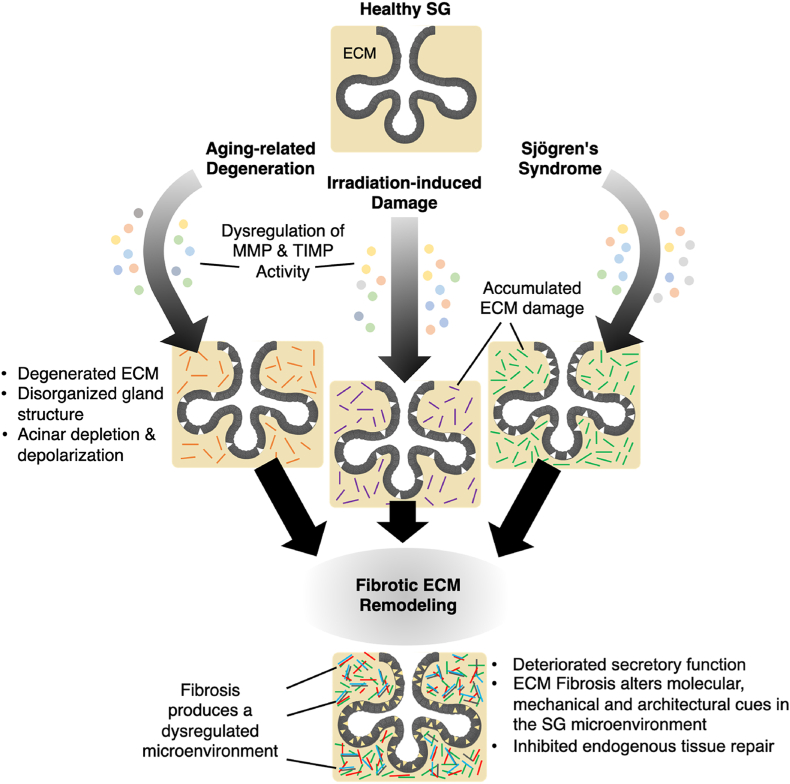
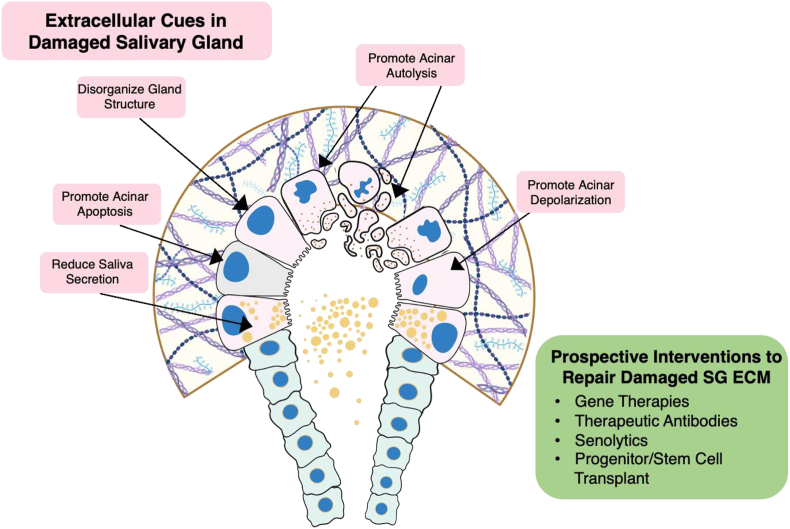
Salivary gland (SG) extracellular matrix (ECM) has a major influence on tissue development, homeostasis, and tissue regeneration after injury. During aging, disease, and physical insult, normal remodeling of the SG microenvironment (i.e. ECM) becomes dysregulated, leading to alterations in matrix composition which disrupt tissue architecture/structure, alter cell activity, and negatively impact gland function. Matrix metalloproteinases (MMPs) are a large and diverse family of metalloendopeptidases which play a major role in matrix degradation and are intimately involved in regulating development and cell function; dysregulation of these enzymes leads to the production of a fibrotic matrix. In the SG this altered fibrotic ECM (or cell microenvironment) negatively impacts normal cell function and the effectiveness of gene and stem cell therapies which serve as a foundation for many SG regenerative therapies. For this reason, prospective regenerative strategies should prioritize the maintenance and/or restoration of a healthy SG ECM. Mesenchymal stem cells (MSCs) have great potential for mitigating damage to the SG microenvironment by ameliorating inflammation, reducing fibrosis, and repairing the damaged milieu of extracellular regulatory cues, including the matrix. This review addresses our current understanding of the impact of aging and disease on the SG microenvironment and suggests critical deficiencies and opportunities in ECM-targeted therapeutic interventions.
Keywords: Aging; Extracellular matrix; Fibrosis; Matrix metalloproteinases; Salivary gland; Tissue remodeling.
Conflict of interest statement
The authors declare the following financial interests/personal relationships which may be considered as potential competing interests: Dr. Chen is a Board member and shareholder in StemBioSys, Inc. (San Antonio, TX). Dr. Marinkovic is a shareholder and member of the Scientific Advisory Board of StemBioSys, Inc. (San Antonio, TX). All other authors have no financial or competing interests to declare.
Figures
References
-
- Marinkovic M., Dean D.D., Chen X.D. In: A Roadmap to Non-hematopoietic Stem Cell-Based Therapeutics. Chen X.-D., editor. Academic Press; 2019. Maintenance and culture of MSCs; pp. 39–61. Published online 2019. - DOI
Grants and funding
LinkOut - more resources
Full Text Sources
