


The effects of a 6-month weight loss intervention on physical function and serum biomarkers in older adults with and without osteoarthritis
- PMID: 37719442
- PMCID: PMC10499923
- DOI: 10.1016/j.ocarto.2023.100376
The effects of a 6-month weight loss intervention on physical function and serum biomarkers in older adults with and without osteoarthritis
Abstract
Objective: To examine the effects of a 6-month weight loss intervention on physical function, inflammatory biomarkers, and metabolic biomarkers in both those with and without osteoarthritis (OA).
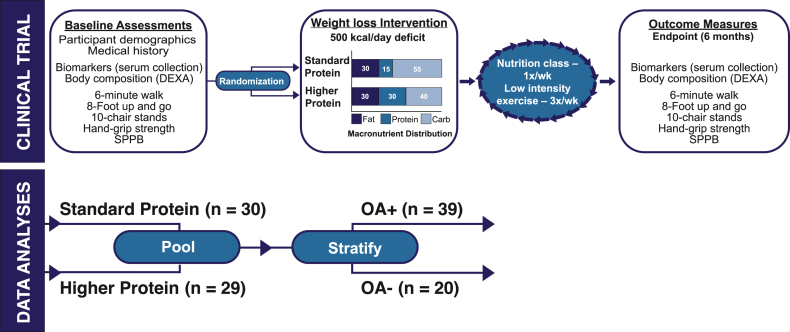
Design: 59 individuals ≥60 years old with obesity and a functional impairment were enrolled into this IRB approved clinical trial and randomized into one of two 6-month weight loss arms: a higher protein hypocaloric diet or a standard protein hypocaloric diet. All participants were prescribed individualized 500-kcal daily-deficit diets, with a goal of 10% weight loss. Additionally, participants participated in three, low-intensity, exercise sessions per week. Physical function, serum biomarkers and body composition data were assessed at the baseline and 6-month timepoints. Statistical analyses assessed the relationships between biomarkers, physical function, body composition, and OA status as a result of the intervention.
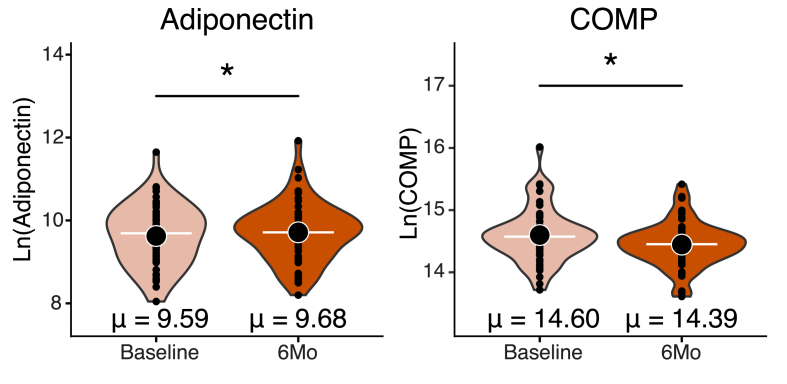
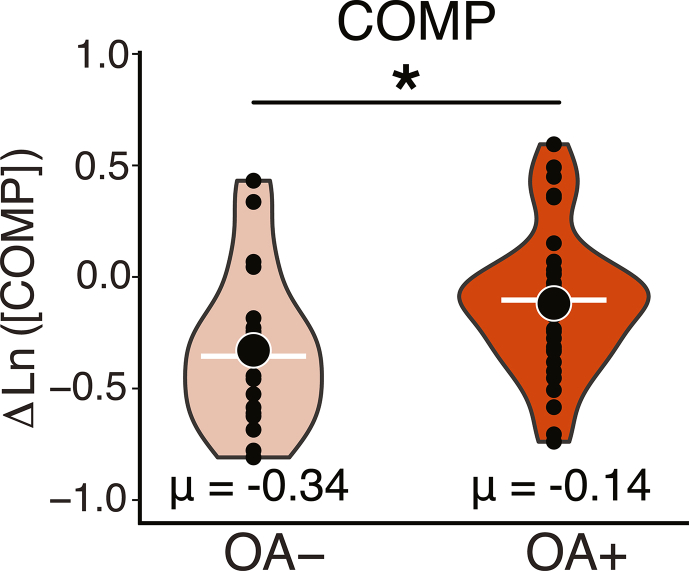
Results: No group effects of dietary intervention were detected on any outcome measures (multiple p > 0.05). During the 6-month trial, participants lost 6.2 ± 4.0% of their bodyweight (p < 0.0001) and experienced improved physical function on the Short-Performance-Physical-Battery (p < 0.0001), 8-foot-up-and-go (p < 0.0001), and time to complete 10-chair-stands (p < 0.0001). Adiponectin concentrations (p = 0.0480) were elevated, and cartilage oligomeric matrix protein (COMP) concentrations (p < 0.0001) were reduced; further analysis revealed that reductions in serum COMP concentrations were greater in OA-negative individuals.
Conclusions: These results suggest that weight loss in older adults with and without OA may provide a protective effect to cartilage and OA. In particular, OA-negative individuals may be able to mitigate changes associated with OA through weight loss.
Keywords: (3–6): Obesity; Biomarkers; Cartilage; Lifestyle intervention; Older adults; Osteoarthritis.
© 2023 The Author(s).
Conflict of interest statement
The authors declare that they have no known competing financial interests or personal relationships that could have appeared to influence the work reported in this paper.
Figures
References
-
- Griffin T.M., Guilak F. The role of mechanical loading in the onset and progression of osteoarthritis. Exerc. Sport Sci. Rev. 2005;33:195–200. - PubMed
Grants and funding
LinkOut - more resources
Full Text Sources
Miscellaneous
