


Accurate Classification of Non-ischemic Cardiomyopathy
- PMID: 37721634
- PMCID: PMC10651539
- DOI: 10.1007/s11886-023-01944-0
Accurate Classification of Non-ischemic Cardiomyopathy
Abstract
Purpose of review: This article aims to review the accurate classification of non-ischemic cardiomyopathy, including the methods, basis, subtype characteristics, and prognosis, especially the similarities and differences between different classifications.
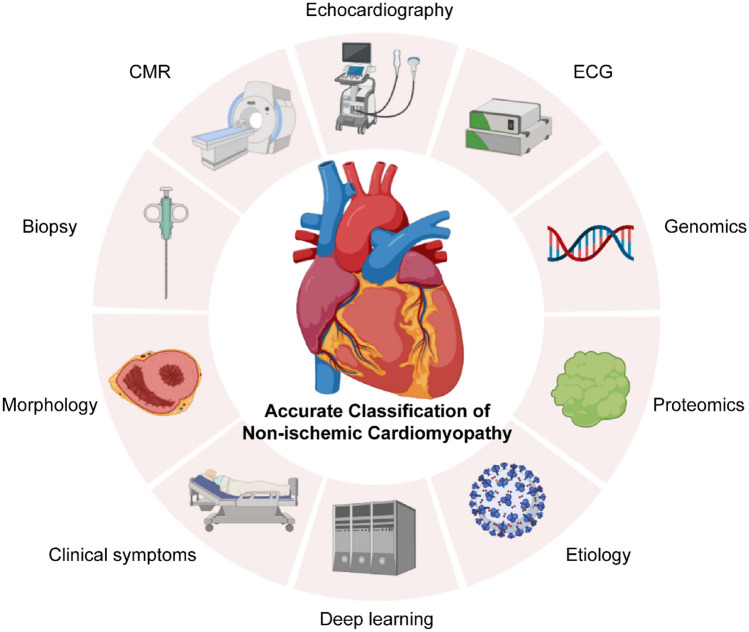
Recent findings: Non-ischemic cardiomyopathy refers to a myocardial disease that excludes coronary artery disease or ischemic injury and has a variety of etiologies and high incidence. Recent studies suggest that traditional classification methods based on primary/mixed/acquired or genetic/non-genetic cannot meet the precise needs of contemporary clinical management. This article systematically describes the history of classifications of cardiomyopathy and presents etiological and genetic differences between cardiomyopathies. The accurate classification is described from the perspective of morphology, function, and genomics in hypertrophic cardiomyopathy, dilated cardiomyopathy, restrictive cardiomyopathy, arrhythmogenic right ventricular cardiomyopathy, left ventricular noncompaction, and partially acquired cardiomyopathy. The different clinical characteristics and treatment needs of these cardiomyopathies are elaborated. Some single-gene mutant cardiomyopathies have unique phenotypes, and some cardiomyopathies have mixed phenotypes. These special classifications require personalized precision treatment, which is worthy of independent research. This article describes recent advances in the accurate classification of non-ischemic cardiomyopathy from clinical phenotypes and causative genes, discusses the advantages and usage scenarios of each classification, compares the differences in prognosis and patient management needs of different subtypes, and summarizes common methods and new exploration directions for accurate classification.
Keywords: Arrhythmogenic right ventricular cardiomyopathy; Dilated cardiomyopathy; Hypertrophic cardiomyopathy; Left ventricular noncompaction; Non-ischemia cardiomyopathy; Restrictive cardiomyopathy.
© 2023. The Author(s).
Conflict of interest statement
The authors declare that they have no conflict of interest.
Figures

References
-
- Maron BJ, et al. Contemporary definitions and classification of the cardiomyopathies: an American Heart Association Scientific Statement from the Council on Clinical Cardiology, Heart Failure and Transplantation Committee; Quality of Care and Outcomes Research and Functional Genomics and Translational Biology Interdisciplinary Working Groups; and Council on Epidemiology and Prevention. Circulation. 2006;113(14):1807–1816. doi: 10.1161/CIRCULATIONAHA.106.174287. - DOI - PubMed
-
- Maron BJ, et al. Prevalence of hypertrophic cardiomyopathy in a general population of young adults. Echocardiographic analysis of 4111 subjects in the CARDIA Study. Coronary Artery Risk Development in (Young) Adults. Circulation. 1995;92(4):785–9. - PubMed
Publication types
MeSH terms
LinkOut - more resources
Full Text Sources
Medical
Research Materials
