


Quantitative proteomics analysis of permethrin and temephos-resistant Ae. aegypti revealed diverse differentially expressed proteins associated with insecticide resistance from Penang Island, Malaysia
- PMID: 37721966
- PMCID: PMC10538732
- DOI: 10.1371/journal.pntd.0011604
Quantitative proteomics analysis of permethrin and temephos-resistant Ae. aegypti revealed diverse differentially expressed proteins associated with insecticide resistance from Penang Island, Malaysia
Abstract
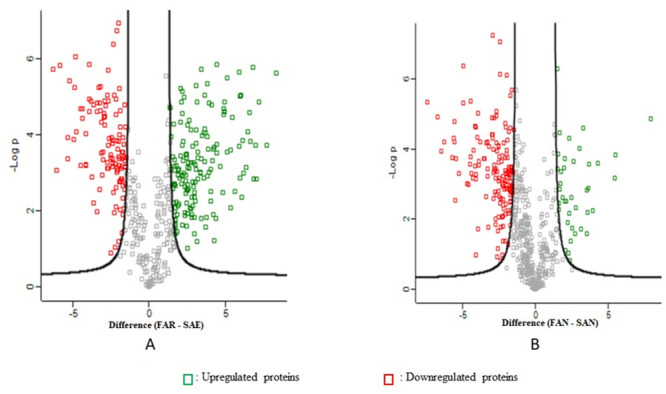
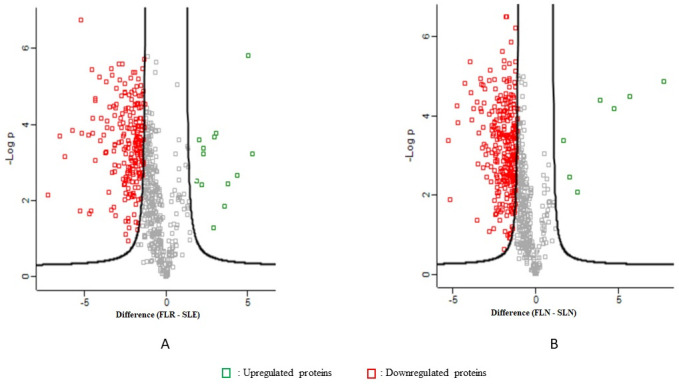
Synthetic insecticides are the primary vector control method used globally. However, the widespread use of insecticides is a major cause of insecticide-resistance in mosquitoes. Hence, this study aimed at elucidating permethrin and temephos-resistant protein expression profiles in Ae. aegypti using quantitative proteomics. In this study, we evaluated the susceptibility of Ae. aegypti from Penang Island dengue hotspot and non-hotspot against 0.75% permethrin and 31.25 mg/l temephos using WHO bioassay method. Protein extracts from the mosquitoes were then analysed using LC-ESI-MS/MS for protein identification and quantification via label-free quantitative proteomics (LFQ). Next, Perseus 1.6.14.0 statistical software was used to perform differential protein expression analysis using ANOVA and Student's t-test. The t-test selected proteins with≥2.0-fold change (FC) and ≥2 unique peptides for gene expression validation via qPCR. Finally, STRING software was used for functional ontology enrichment and protein-protein interactions (PPI). The WHO bioassay showed resistance with 28% and 53% mortalities in adult mosquitoes exposed to permethrin from the hotspot and non-hotspot areas. Meanwhile, the susceptibility of Ae. aegypti larvae revealed high resistance to temephos in hotspot and non-hotspot regions with 80% and 91% mortalities. The LFQ analyses revealed 501 and 557 (q-value <0.05) differentially expressed proteins in adults and larvae Ae. aegypti. The t-test showed 114 upregulated and 74 downregulated proteins in adult resistant versus laboratory strains exposed to permethrin. Meanwhile, 13 upregulated and 105 downregulated proteins were observed in larvae resistant versus laboratory strains exposed to temephos. The t-test revealed the upregulation of sodium/potassium-dependent ATPase β2 in adult permethrin resistant strain, H15 domain-containing protein, 60S ribosomal protein, and PB protein in larvae temephos resistant strain. The downregulation of troponin I, enolase phosphatase E1, glucosidase 2β was observed in adult permethrin resistant strain and tubulin β chain in larvae temephos resistant strain. Furthermore, the gene expression by qPCR revealed similar gene expression patterns in the above eight differentially expressed proteins. The PPI of differentially expressed proteins showed a p-value at <1.0 x 10⁻¹⁶ in permethrin and temephos resistant Ae. aegypti. Significantly enriched pathways in differentially expressed proteins revealed metabolic pathways, oxidative phosphorylation, carbon metabolism, biosynthesis of amino acids, glycolysis, and citrate cycle. In conclusion, this study has shown differentially expressed proteins and highlighted upregulated and downregulated proteins associated with insecticide resistance in Ae. aegypti. The validated differentially expressed proteins merit further investigation as a potential protein marker to monitor and predict insecticide resistance in field Ae. aegypti. The LC-MS/MS data were submitted into the MASSIVE database with identifier no: MSV000089259.
Copyright: © 2023 Shettima et al. This is an open access article distributed under the terms of the Creative Commons Attribution License, which permits unrestricted use, distribution, and reproduction in any medium, provided the original author and source are credited.
Conflict of interest statement
The authors have declared that no competing interests exist.
Figures


References
-
- Selvi S, Edah MA, Nazni WA, Lee HL, Tyagi BK, Sofian-Azirun M, et al. Insecticide susceptibility and resistance development in malathion selected Aedes albopictus (Skuse). Trop Biomed. 2010;27(3):534–50. - PubMed
-
- Chen CD, Nazni WA, Lee HL, Sofian-Azirun M. Susceptibility of Aedes aegypti and Aedes albopictus to temephos in four study sites in Kuala Lumpur City Center and Selangor State, Malaysia. Trop Biomed. 2005;22(2):207–16. - PubMed
-
- Chen CD, Nazni WA, Lee HL, Sofian-Azirun M. Weekly variation on susceptibility status of Aedes mosquitoes against temephos in Selangor, Malaysia. Trop Biomed. 2005;22(2):195–206. - PubMed
-
- Othman W-N, Ahmad NW, Lim LH, Dhang CC, Mustapha W-NW, Hadi AA, et al. Detection of Permethrin Resistance in Aedes albopictus Skuse, Collected from Titiwangsa Zone, Kuala Lumpur, Malaysia. Trop Med Parasitol. 2008;3:69–77.
Publication types
MeSH terms
Substances
LinkOut - more resources
Full Text Sources
Research Materials
